Boundary Waters Canoe Area Wilderness: A History of Protection
The Boundary Waters Canoe Area Wilderness (BWCAW) is that rare spot in America where you can pretend civilization never happened and actually get away with it. Spanning over 1.1 million acres in northeastern Minnesota’s Superior National Forest near lake superior, this glacial playground boasts more than 1,100 lakes and 1,200 miles of routes. It stands as the most visited bwca wilderness in the U.S., drawing over 100,000 paddlers, hikers, and anglers annually. Most visitors claim they are seeking solitude, even if they end up bumping into each other at a portage.
Situated right on the Canadian border, this area shares vibes with Quetico Provincial Park across the international boundary. You will find no motors on most lakes and no logging allowed within these protected borders. It is just you, your vessel, and the distinct possibility of getting rained on for three straight days. This destination is perfect for those who think a vacation means carrying a 60-pound pack while stepping over slick rocks.
Table of Contents
A Sarcastic Stroll Through History
The Boundary Waters didn’t just pop up yesterday. Indigenous peoples like the Ojibwe called this home for millennia, paddling birchbark canoes and harvesting wild rice. They left behind rock art that makes modern graffiti look amateur. Europeans eventually arrived and turned the area into a fur-trade superhighway.
In 1688, French explorer Jacques de Noyon became the first recorded white explorer to paddle through. By the 1700s, Voyageurs were hauling beaver pelts in giant canoes and singing shanties. They likely complained about the bugs just as much as we do today.
Fast-forward to the mining booms of the late 1800s when everyone wanted gold, silver, or iron. People eventually realized this place was special, leading President Theodore Roosevelt to create the Superior National Forest in 1909. Roads started creeping in, causing folks to panic about losing the wilderness.
A century of protection battles followed this designation. The Shipstead-Newton-Nolan Act of 1930 banned dams and shoreline logging within 400 feet of key waters. The Thye-Blatnik Act later bought out private resorts and lands to restore the natural state.
The 1964 Wilderness Act made it official, but motors and logging lingered like a guest who won’t leave a party. The big finale came with the 1978 Boundary Waters Canoe Area Wilderness Act. This legislation banned logging and restricted motors on most lakes, setting the stage for the quiet paddling we enjoy today.
Conservation and Environmental Battles
Conservation in the BWCAW resembles a never-ending family feud between developers and paddlers. Groups like Save the Boundary Waters, Friends of the Boundary Waters, and The Conservation Fund have spent decades fighting permits. They push legislation to block toxic mining near the wilderness to prevent irreversible damage.
Sulfide-ore copper mining poses a threat of leaching chemicals into the watershed. Recent efforts involve land swaps and federal bills to consolidate protections. The U.S. Forest Service, specifically the eastern region office, manages the land with science-backed forest management rules to keep the ecosystem healthy.
Permits limit crowds, and strict no-trace ethics keep the campsites clean. Research conducted here actually pioneered wilderness management strategies used globally. It serves as a model for balancing recreational use and preservation, provided the mining threats are kept at bay.
The Latest Assault: Mining Shenanigans and the Greed Games of 2026 – Because Clean Water is So Last Decade
Ah, the Boundary Waters – that serene slice of wilderness where the biggest drama used to be whether your canoe would tip over or if the loons were judging your paddling skills. But fast-forward to 2026, and we’ve got a fresh plot twist straight out of a bad eco-thriller: the resurgence of mining threats, courtesy of some high-stakes political maneuvering. If you thought the conservation battles were over, think again. This place has been dodging bulldozers like a pro for decades, but the latest round feels like a sequel nobody asked for, complete with foreign mining giants, congressional loopholes, and enough acid mine drainage potential to make your fishing rod curl up in horror.
Let’s break it down, shall we? Back in 2023, under the Biden administration, the U.S. Department of the Interior slapped a 20-year mineral withdrawal on over 225,000 acres in the Superior National Forest’s Rainy River Watershed. This wasn’t some whim – it came after years of scientific studies showing that sulfide-ore copper mining (the kind that digs up copper, nickel, and other goodies) could unleash a toxic cocktail of sulfuric acid, heavy metals, and forever chemicals into the interconnected lakes and streams. We’re talking irreversible pollution that could turn crystal-clear waters into something resembling battery acid soup, wiping out fish populations, wild rice beds, and the entire ecosystem that makes the BWCAW a UNESCO-worthy wonder. The U.S. Forest Service even concluded it would cause “unacceptable risk” – fancy speak for “this is a terrible idea, don’t do it.”
But hey, why let science get in the way of progress? Enter 2025-2026, stage right: A new administration under Trump rolls in, and suddenly, old pro-mining opinions from the first Trump era get dusted off. In August 2025, Deputy Interior Secretary Kate MacGregor reinstated a legal memo that greenlit lease renewals for Twin Metals Minnesota, a subsidiary of the Chilean mining behemoth Antofagasta. This company has its eyes on the Maturi Deposit near Birch Lake – a spot that’s basically the BWCAW’s front door. Their plan? An underground mine that promises jobs and critical minerals for things like electric vehicles and tech gadgets. Sounds noble, right? Except critics point out that the minerals would likely get shipped overseas for processing, benefiting foreign pockets more than local ones, while leaving Minnesotans with the cleanup bill if things go south.
The real kicker came in January 2026, when the Interior Department submitted the 2023 mining ban to Congress under the Congressional Review Act (CRA) – a law originally meant for quick reviews of last-minute regulations, not longstanding land protections. This move was unprecedented, like using a sledgehammer to crack a walnut. It kicked off a 60-day clock, allowing lawmakers to fast-track a reversal. Cue Rep. Pete Stauber (R-MN), who represents the district and has long championed mining for economic reasons, introducing House Joint Resolution 140 on January 12. The House passed it on January 21 along mostly partisan lines – Republicans arguing it would boost jobs in a rural area hit hard by economic shifts, while Democrats and environmentalists called it a “backdoor attempt” to gut protections.
As of mid-February 2026, the resolution is staring down a Senate vote, potentially as early as the week of February 9. If it passes and gets signed (spoiler: the White House is all in), poof – the 20-year ban vanishes, opening the floodgates for Twin Metals to renew leases and start digging. Proponents tout it as a win for American energy independence and local employment, claiming modern mining tech can minimize risks. Stauber and supporters emphasize the need for domestic sources of copper and nickel amid global supply chain woes, painting it as a pragmatic move for national security and green tech transitions.
But let’s not sugarcoat the sarcasm here: The environmental fallout could be epic in the worst way. Sulfide-ore mining has a notorious track record – think Mount Polley disaster in Canada or the Gold King Mine spill in Colorado, where leaks poisoned rivers for miles. In the BWCAW, a single breach could contaminate downstream waters flowing into Quetico, Voyageurs National Park, and even Lake Superior, affecting wildlife, tourism (which pumps $500 million annually into the local economy), and Indigenous communities who’ve stewarded these lands forever. Groups like Save the Boundary Waters, the Sierra Club, NRDC, and the Wilderness Society are sounding alarms, warning this sets a dangerous precedent: If CRA can retroactively nuke a three-year-old land order, what’s next? Every national monument or protected area could be fair game for a quick congressional undo button.
Politically, it’s a classic divide. On one side, a push driven by Republican lawmakers and the current administration, framed around economic growth and reducing reliance on foreign minerals (ironically, from a foreign-owned company). Critics, including Ranking Member Jared Huffman (D-CA), slam it as “twisting the CRA into a weapon to erase public land protections,” potentially putting every cherished wild spot at risk. Democrats and conservationists argue the real greed is in prioritizing short-term profits over long-term sustainability, especially when studies show the jobs created might not outweigh the tourism dollars lost or the cleanup costs if pollution hits.
Environmental groups aren’t taking this lying down – they’re rallying paddlers, anglers, and anyone with a soft spot for unspoiled nature to bombard senators with calls to vote no. Lawsuits are likely brewing, too, challenging the CRA’s applicability here. And let’s be real: The BWCAW has survived bigger threats before, thanks to bipartisan efforts in the past. But this latest assault feels particularly sneaky, like sneaking a chainsaw into a no-logging zone under cover of bureaucracy.
In the end, it’s a reminder that wilderness doesn’t protect itself – it needs stubborn advocates who see beyond the dollar signs. If you’re planning a trip, maybe pack an extra dose of activism with your fly rod. Because nothing ruins a perfect cast like the thought of mining sludge in your walleye. Fingers crossed the Senate holds the line, or we might all be fly fishing in hazmat suits by 2030.
Planning Your Boundary Waters Trip
Proper travel planning and gathering trip ideas is the difference between a dream vacation and a rescue mission. The main content of your preparation involves selecting your access location from over 80 options. You must reserve a quota permit through the official government system well in advance.
Selecting BWCA Entry Points and Popular Entry Points
With so many options, picking an entry point is half the battle. Popular spots fill up fast, while remote ones offer solitude but require more grit. You should check the quota season availability on the official website before getting your heart set on a specific lake. Additionally, researching specific bwca entry points helps in identifying the best routes for your skill level.
Moose Lake (Entry Point 27) is often called the “Canoe Highway.” It offers easy tow-boat shuttles and quick access to the border, making it great for families. It can get crowded, but the convenience is hard to beat for a first canoe trip.
Sawbill Lake is a classic choice with an outfitter right nearby. It leads to beautiful chains of lakes and offers solid fishing opportunities. You can find good route options here whether you are a novice or an expert.
Mudro Lake (EP 23) leads to Fourtown and beyond. This entry point sees fewer people than Moose Lake and offers rugged, scenic routes. It is an excellent choice if you want to escape the main traffic lanes quickly.
Brule Lake (EP 41) is a massive body of water that allows you to head in multiple directions. Once you escape the immediate entry area, it becomes much quieter. Be warned that big water means big waves if the wind picks up. A successful canoe trip requires attention to detail.
Access from the Gunflint Trail near Grand Marais offers a different flavor of wilderness. This eastern side of the wilderness area tends to be rockier and more dramatic. It is a favorite for those who love cliffs and deep, cold lakes.
Permits, Rules, and Privacy Policy
You need a permit year-round, but the quota system applies from May through September. Group sizes are limited to nine people and four watercraft to maintain the wilderness feel. You cannot leave any trace, which means packing out every scrap of trash before exiting the bwca entry zone.
Cans and glass bottles are strictly prohibited to reduce litter and weight. You must use designated latrines and fire grates at established campsites. Following these rules helps protect the natural resources for the next generation of paddlers.
Hiking the Boundary Waters Canoe Area Wilderness: A Photo Gallery
Yes, the Boundary Waters Canoe Area has hiking options for those who prefer boots over paddles. There are about 12 trails and 18 paths total, ranging from short jaunts to multi-day epics. You won’t find dispersed camping in most spots, so you must stick to designated sites.
The Eagle Mountain Trail is a short but steep hike to Minnesota’s highest point at 2,301 feet. The views of the lakes and forests from the top are spectacular. It is worth the effort if you enjoy claiming bragging rights.
The Angleworm Lake Trail offers a 12-mile loop around the lake. It is primitive and peaceful, making it great for solitude seekers. You likely won’t see many other hikers on this path.
The Caribou Rock Trail and others along the border provide scenic overlooks and waterfalls. These trails give you that “middle of nowhere” feeling without needing a boat. Backpacking here often means planning portages if you mix hiking with a canoe route.
Fly Fishing Boundary Waters Canoe Area Wilderness
Boundary Waters Canoe Area Wilderness (BWCAW) is prime fly-fishing territory—pristine lakes teeming with aggressive smallmouth bass, toothy northern pike, occasional lake trout in deeper waters, and even some walleye if you’re lucky and persistent. But here’s the sarcastic truth: you could show up with a single beat-up Woolly Bugger and still catch fish because these fish are hungry and haven’t seen a ton of pressure. That said, if you’re not packing the right flies, you’re basically volunteering to be the camp comedian who “almost” caught something.
Since you’re heading in from Montana (@Saltwateronfly—love the handle; nothing says “I fish hard” like saltwater flies in freshwater wilderness), here’s my no-BS Top 10 flies you absolutely cannot leave home without. These are battle-tested picks pulled from BWCA veterans, guides, forums, and folks who’ve actually paddled and cast instead of just theorizing from their couch. Focus is on versatile, durable patterns that cover the main species: smallmouth (your bread-and-butter explosive fighter), pike (the freight-train eaters), and bonus shots at lakers or walleye.
Prioritize sizes 2-8 for most (bigger for pike, smaller for finesse smallies), with wire leaders or heavy tippet for toothy pike. Bring extras—these lakes will eat flies like I eat campfire s’mores.
- Woolly Bugger (Olive, Black, Brown) – Sizes 6-12 The undisputed king of BWCA flies. Strip it slow near rocky drop-offs or weed edges for smallmouth; let it sink and twitch for pike or walleye. It’s a leech/crayfish/minnow imitation that works year-round. Guides swear by it as the “if all else fails” fly. Bring a dozen; you’ll lose half to pike teeth or snags. Sarcasm level: High. If this doesn’t catch fish, blame the weather, not the fly.
- Clouser Deep Minnow (Chartreuse/White, White/Red, or Blue/White) – Sizes 2-6 Gets down quick in deeper water or when smallies are sulking. The weighted eyes make it dive like a fleeing baitfish—perfect for casting from a rocking canoe. Chartreuse/white is a BWCA cheat code for smallmouth and pike. Veterans call it essential for searching water. Pro tip: Strip erratically like something’s injured; fish can’t resist.
- Deceiver (White/Red, Chartreuse, or Natural Baitfish Colors) – Sizes 2-1/0 Lefty Kreh’s classic—long, flowing, and deadly on pike and big smallies. Tie or buy articulated versions for extra movement. Red/white screams “Cisco minnow” to northern pike; chartreuse for murky days. Strip fast or slow—either way, it’ll get hammered. Don’t skimp; this is your big-fish insurance.
- Dahlberg Diver (Yellow, Frog Green, or Natural) – Sizes 2-4 The topwater beast. This deer-hair diver pushes water like crazy, creating a wake that drives pike and smallies nuts. Cast near lily pads or rocky points at dawn/dusk; let it sit, then chug it. Explosive strikes guaranteed. If you’re not into topwater drama, why even go to the Boundary Waters?
- Popper (Deer Hair Frog, Foam Popper, or Hard Popper in Green/Brown/White) – Sizes 2-6 Surface magic for smallmouth and pike during low-light or warm evenings. Frog patterns rule around weeds; white or chartreuse for open water. The splash and pop imitates a struggling critter—fish explode on these. Bring foam versions for durability; deer hair gets chewed up fast. Nothing beats the sound of a smallie inhaling one off the surface.
- Crayfish Pattern (Rubber-Legged or Weighted, Olive/Brown) – Sizes 4-8 Smallmouth live on crayfish in rocky shallows. Bounce these along the bottom near structure; use short strips. Rubber legs add lifelike movement. Essential for mid-summer when bass are gorging on bottom prey. If the fish are ignoring everything else, tie one on—they’ll usually cave.
- Muddler Minnow or Sculpin (Natural, Olive, or Black) – Sizes 4-8 Killer sculpin/crayfish/minnow hybrid. Great for smallmouth on rocky shores; pike love them too. Let it sink, then strip or jig it. The deer-hair head pushes water and looks buggy. A timeless pattern that covers a ton of bases in the BWCA’s varied structure.
- Leech Pattern (Big Ugly, Bunny Leech, or Woolly Bugger Variant in Black/Olive) – Sizes 4-8 Leeches are everywhere in these lakes. Bunny strips or articulated versions undulate like the real thing. Slow-strip near drop-offs for smallies; troll or strip for pike. Overlaps with Woolly Bugger but adds extra wiggle—great backup when buggers get shredded.
- Mouse Pattern (Moorish Mouse or Deer Hair Mouse, Natural/Gray) – Sizes 2-4 Nighttime or low-light pike candy. Skitter it across the surface like a swimming rodent—pike go feral. Smallies smash them too on occasion. Fun as hell and deadly in calm bays. If you’re camping on a big lake with pike, this is your after-dinner entertainment.
- Drunk and Disorderly or Big Articulated Streamer (White/Chartreuse or Natural) – Sizes 2-1/0 For the trophy pike hunters. Big, flashy, articulated flies that move like wounded baitfish. Strip aggressively; pike can’t ignore the chaos. This is your “go big or go home” fly—perfect for those remote lakes where the big girls lurk. Bring wire leader; they’ll bite through mono like it’s floss.
Honorable mentions if you have room: Murdich Minnow (white/chartreuse for pike/smallies), Half & Half (hybrid Clouser/Deceiver), or a simple Bunny Fly for pike. For lake trout in deeper spots, go heavier sinking lines with big white/gray streamers.
Pack smart—use a small fly box or Altoids tin to save weight (portages hate excess gear). Bring nippers, forceps, and extra tippet (15-20 lb for pike). And remember: In the BWCA, the fish are wild, the water’s cold, and the bugs are merciless. But when that smallie or pike slams your fly and the canoe rocks like it’s in a storm… yeah, that’s why we paddle in.
Tight lines from Billings to the border waters—may your backcast stay clear of the pines and your net stay full. If you hook a monster, post a pic; I’d love to live vicariously through @Saltwateronfly’s feed.
Camping and Wilderness Living
Camping in the Boundary Waters Canoe Area Wilderness is a primitive affair. You won’t find established campgrounds with showers like you might in a state park. There are 2,200 designated sites, but they are first-come, first-served.
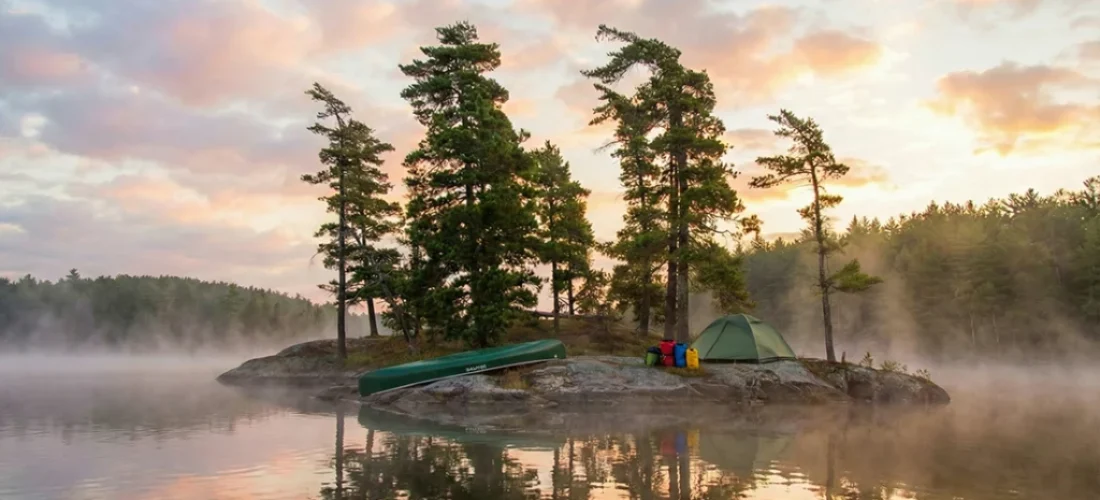
You paddle or hike in, claim a spot, and set up your tent on pine needles. Sites are scattered on islands and shores, offering varying degrees of comfort. Some have epic sunsets, while others are buggy swamps you settle for when tired.
Winter camping is possible for the truly adventurous. Dog sledding trips are popular in the colder months when the lakes freeze over. However, summer remains the peak season, so booking your entry permit early is critical.
A proper gear guide for this region emphasizes weight reduction. You have to carry everything across portages, so every ounce matters. Leave the heavy coolers at home and opt for dehydrated meals and lightweight stoves.
A Personal Perspective from the 1970s
My first paddle into the Boundary Waters happened in the 1970s. Back then, “lightweight” gear meant a canvas tent that weighed as much as your regrets. We didn’t have fancy pouches of beef stroganoff or ergonomic backpacks.
We lived on Melba toast and Spam. Spam was the miracle meat that lasted forever and tasted exactly like you’d expect. Oatmeal glued itself to the pot every morning, and we ate whatever fish we could catch.
Portaging was absolute torture with wooden yokes. The packs dug into our shoulders like angry badgers as we staggered over rocks. We would flip the canoe and drop it with a thud that echoed for miles.
Camp was simply a flat spot near the water where we started a fire with wet matches. Dinner was fresh walleye or smallmouth fried in bacon grease if we were lucky. That fish tasted like freedom because we had earned it by nearly drowning in a rapid.
We paddled until our arms fell off and camped under stars so bright they mocked city lights. The loons sounded like deranged wolves in the night. There was no GPS, no weather apps, and certainly no menu close button for the rain. And done in a Aluminum Grumman Canoe, a little heft on portages.
That trip hooked me on the waters canoe lifestyle. The Boundary Waters Canoe Area hasn’t changed much since, remaining wild and demanding. Once you hit the water, you realize you hâve safely connected with nature in a way modern life rarely allows. All of this lead to rafting the Frank Church and Bob Marshall Wilderness areas.
Frequently Asked Questions
Do I need a permit for the Boundary Waters Canoe Area?
Yes, permits are mandatory year-round for all visitors. From May through September, you need a quota permit for overnight paddle or hiking trips. Day use also requires a permit, which is self-issued at the entry point.
Can I bring glass bottles or cans?
No, cans and glass bottles are strictly prohibited in the BWCAW to prevent litter and injuries. You must repackage all food and beverages into reusable plastic containers or bags before entering the wilderness.
Are motors allowed in the Boundary Waters?
Motors are banned on the vast majority of lakes to preserve the quiet wilderness character. However, a few specific large lakes do allow limited motor use with horsepower restrictions. Always check the regulations for your specific route.
What is the best time of year to visit?
Late summer (August and September) is often considered the best time due to fewer bugs and stable weather. June and July offer great fishing but can have intense mosquito activity. Winter offers solitude for skiing and dog sledding.
Can I camp anywhere I want?
No, you must camp at designated U.S. Forest Service campsites. These sites are marked with a fire grate and a wilderness latrine. They are available on a first-come, first-served basis, so it is wise to find a spot early in the afternoon.
Final Thoughts on the Boundary Waters Canoe Area Wilderness
The Boundary Waters Canoe Area Wilderness is a testament to stubborn conservation. It survives because people fought to keep motors and mines out of the waters canoe area. It offers a place where you can strip away the noise of modern life.
Whether you enter through the Gunflint Trail or a western entry point, embarking on a canoe trip here transforms you. You will curse the mosquitoes and the heavy packs, but you will love the silence. It is a national forest treasure that demands respect and preparation.
So, pack your gear, check the current conditions, and paddle out. Just remember to leave no trace so the next person can pretend they are the first one there. The Boundary Waters will be waiting.