Explore El Morro National Monument: A Haven of Regeneration for the Soul
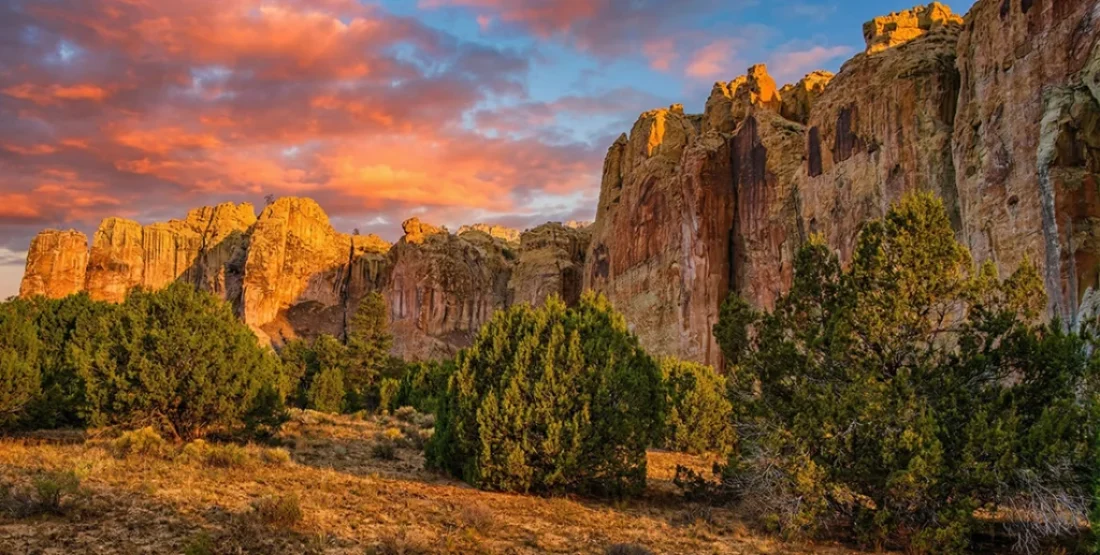
Picture a 200-foot sandstone cliff rising out of the New Mexico desert. Now imagine it covered in signatures, messages, and artwork spanning over 2,000 inscriptions and more than 700 years of history. That is El Morro National Monument, and it remains one of the most fascinating stops you will ever make in the Southwest.
This is not your typical national monument where you stare at rocks and wonder what the big deal is. El Morro tells real stories from real people who passed through this remote corner of western New Mexico. We are talking about Ancestral Puebloans, Spanish conquistadors, American pioneers, and everyone in between who stopped here for one critical reason.
They stopped for water. The monument sits about 42 miles southwest of Grants along New Mexico Highway 53. It is remote, quiet, and absolutely worth the drive.
Cell service is spotty out here in the high desert. You should download any maps or information you need before you head out. Getting lost is easy if you are unprepared.
Table of Contents
Just to the west is the San Juan River for Some Excellent Fly Fishing
The Water That Started Everything
At the base of this massive sandstone bluff sits a natural pool that collects rainwater and snowmelt. In a landscape where water is scarce, this pool was like finding a winning lottery ticket. The Zuni people called this place A’ts’ina, meaning place of writings on the rock.
For centuries, travelers knew they could count on this reliable waterhole hidden beneath the cliff. They followed the ancient Zuni-Acoma Trail to find it. Finding water was a matter of life and death in this arid region.
Travelers would stop, refill their supplies, and rest in the shade of the cliff. While resting, they felt compelled to leave their mark on the soft stone. This turned the site into a massive, open-air history book.
Some carved elaborate messages while others kept it simple with just their names and dates. This reliable waterhole became a famous registry of the Southwest. Without this waterhole hidden in the shadows, the history on the rock would not exist.
President Theodore Roosevelt recognized the historical value of these inscriptions. He declared it a national monument in 1906. It was one of the first sites protected under the Antiquities Act specifically for its cultural resources rather than just natural features.
Spanish Conquistadors Leave Their Mark
Fast forward to 1605 when Don Juan de Oñate became the first European to carve an inscription at El Morro. His message was boastful about discovering the Pacific Ocean. He claimed this feat after conquering Acoma Pueblo.
Spanish governors, soldiers, and missionaries continued the tradition over the next 200 years. These Spanish conquistadors left signatures that serve as colonial timestamps. Some inscriptions are poetic while others are vengeful.
One famous 1632 message discusses avenging a murdered priest. Reading these inscriptions is like scrolling through a 400-year-old social media feed. Everyone was oversharing their journey on the inscription rock.
The soft Zuni Sandstone made carving relatively easy. This explains why so many people left their mark. Unfortunately, this same softness is now a conservation challenge.
Erosion threatens these historical records daily. The National Park Service uses modern technology to monitor the rock face. They work hard to protect what remains for future generations.
American Pioneers Add to the Story
When Americans arrived in the 1800s following the Mexican-American War, they added their own inscriptions. Army Lieutenant James H. Simpson documented many of the existing carvings in 1849. He also added a few of his own.
Gold Rush travelers, military expeditions, and even the short-lived Camel Corps left their marks here. This era marked a busy time for the reliable waterhole. dusty travel made this stop essential for survival.
American travelers carved their names to prove they survived the journey. Women travelers were less common but not absent. The Baley sisters carved their names in 1858.
This is a rare example of female representation on the rock. American travelers often listed their hometowns as well. It provides a map of migration across the continent.
By the late 1800s, railroad routes bypassed El Morro. Foot traffic decreased significantly. This was a good thing for the preservation of the monument.
If tourist traffic had continued at earlier levels, the surface might be destroyed. There might not be much inscription surface left today. The stopping point became less critical as technology advanced.
Stargazing Under Pristine Skies
Here is something most visitors do not know. El Morro earned International Dark Sky Park certification in 2019. The monument sits at elevations between 7,200 and 7,500 feet.
It is far from any large cities. The night skies here are phenomenal. The Milky Way stretches across the sky like a cosmic river on clear nights.
Star photographers love this place. The sandstone bluff makes a dramatic foreground for night sky shots. Rangers occasionally host stargazing programs with telescopes.
The monument offers a nine-site campground that is a popular campsite for astronomers. It operates on a first-served basis and is incredibly peaceful. Imagine waking up to zero light pollution.
In our over-lit modern world, places like this remind us what we are missing. Many Indigenous stories involve the stars. Experiencing this darkness connects you to the ancients.
The ancestral puebloans at Atsinna would have seen these same views. The recreation area allows you to sleep under this blanket of stars. It is a profound experience.
Two Trails Worth Your Time
The monument offers two main hiking options starting from the morro visitor center. The Inscription Loop Trail is a half-mile paved path accessible to most visitors. It takes you past hundreds of petroglyphs and inscriptions.
You will see that famous Don Juan de Oñate carving from 1605 here. Bring binoculars because some of the best inscriptions are carved higher up on the rock face. The trail is mostly shaded and easy.
It is perfect for families or anyone wanting a quick experience. You can walk inscription routes without getting too tired. The scenery is stunning even from the bottom.
The Headland Trail is more ambitious at 2 miles round trip. It includes the Inscription Loop then climbs 200 feet via switchbacks. It takes you to the top of the sandstone bluff.
| Trail Name | Distance | Difficulty | Key Features |
|---|---|---|---|
| Inscription Loop Trail | 0.5 mile loop | Easy / Paved | Inscriptions, Petroglyphs, The Pool |
| Headland Trail | 2.0 mile loop | Moderate / Strenuous | Atsinna Ruins, Box Canyon Views, Zuni Mountains |
Up there you will find the Atsinna pueblo ruins. You also get panoramic views of the surrounding landscape including the distant Zuni Mountains. The headland trail offers a different perspective of the high desert.
Winter ice can close the upper section of the Headland Trail. Check with rangers at the el morro visitor center before you go. Dogs are welcome on a leash.
There is no entrance fee beyond the standard national parks pass. This makes it an affordable adventure. Enjoy the park trails responsibly.
Why These Inscriptions Matter
You might wonder why old graffiti deserves protection. The difference is context and age. These are not random tags on a city wall.
They are primary historical sources. They document who traveled through this region and when. The morro inscription collection is a timeline of humanity.
For Indigenous peoples, the petroglyphs represent spiritual symbols. For historians, the Spanish inscriptions provide firsthand accounts of colonial exploration. The el morro inscription catalog is vast.
American carvings capture westward expansion. They show the reality of 19th-century travel. The monument preserves multiple overlapping cultures in one location.
You can see how different groups interacted with this landscape. That multilayered story is increasingly rare. Historical sites often get erased or homogenized in the modern world.
Modern visitors are strictly prohibited from adding their own marks. The soft sandstone makes it vulnerable to damage. Touch the rock and you transfer oils from your skin.
This accelerates erosion. Look but do not touch is the rule here. Preserving the morro inscription history requires everyone’s cooperation.
Planning Your Visit
The morro visitor center has exhibits and a short film. Knowledgeable rangers can answer your questions. It is worth spending 20 minutes inside before hitting the trails.
You will appreciate the inscriptions more when you understand their context. Every el morro visitor should watch the orientation film. It sets the stage for what you are about to see.
Spring and fall offer the most comfortable temperatures for camping hiking activities. Summers get hot, although the elevation helps. Winter can be beautiful with snow on the bluff.
Check the hours visitor center keeps before driving. Trail closures are possible in winter. There is a small picnic area if you want to pack lunch.
The nearest towns are Grants and Gallup. Both are about an hour away. Bring any food or supplies you will need.
Gas up before you leave. There is nothing out here. This is true high desert wilderness.
Combine your visit with nearby el malpais national monument. You can see dramatic lava flows and caves there. The two sites are only about 15 miles apart.
The Geology Behind the Cliff
El Morro sits on the southwestern flank of the Zuni Mountains. These mountains formed during massive geological upheaval about 75 to 50 million years ago. The sandstone itself is much older.
It dates back about 150 million years. This area was once covered by massive sand dunes. These ancient dunes were part of a vast field.
Over millions of years, the sand compacted. It cemented into the Zuni Sandstone we see today. The cross-bedding visible in the rock face shows the original dune structure.
Some inscriptions are carved right into these sloping layers. This creates interesting visual effects. Geologists love this place as much as historians do.
Basalt flows from the Zuni-Bandera volcanic field underlie the low country. This volcanic activity happened much more recently. It occurred within the last million years or so.
Conservation Challenges
Protecting the inscriptions is an ongoing challenge. Early preservation attempts actually caused damage. Well-meaning people outlined inscriptions with chalk.
They also applied sealants that trapped moisture. This accelerated erosion significantly. Today, the conservation approach is much more sophisticated.
The National Park Service uses high-resolution photography. They use 3D scanning to create detailed records. If erosion continues, at least we will have digital archives.
Climate change poses another threat. Changes in precipitation patterns cause the sandstone to expand and contract. This leads to cracking and flaking.
There is no easy fix for natural weathering. Visitor impact is carefully managed. The paved Inscription Loop keeps foot traffic away from fragile areas.
Cultural Significance Today
For Zuni and Acoma Pueblo communities, El Morro is not just history. It is a living connection to their ancestors. The pueblo ruins represent sophisticated architecture.
Community organization at atsinna pueblo was complex. It deserves respect and recognition. Spanish inscriptions document a brutal period of colonial expansion.
They are uncomfortable reminders of conquest. However, preserving difficult history is important. It helps us understand our current society.
American inscriptions capture the ambition of westward expansion. Reading names from the Gold Rush makes that era feel real. It is more immediate than a textbook description.
The monument shows how stories intersect. It serves as a physical reminder that history is layered. It involves many different perspectives.
What Makes El Morro Special
El Morro is not flashy like the Grand Canyon. It is not as famous as Yellowstone. It is a subtle place that rewards attention.
You have to slow down. You must really look at the inscriptions. This appreciation makes the morro national monument experience profound.
The combination of natural beauty and history is rare. Where else can you walk past 700-year-old petroglyphs? You see conquistador signatures and pioneer carvings in one loop.
The remote location adds to the appeal. You will not fight crowds here. On a weekday, you might have the el morro national monument trails to yourself.
That solitude lets you connect with the place. For photographers, the possibilities are endless. Morning light on the sandstone cliff is spectacular.
You can capture dramatic storm clouds or star trails. Close-up details of individual inscriptions make compelling images. Bring your camera and plenty of memory cards.
Beyond the Monument
The surrounding area offers additional exploration. The Zuni Pueblo is nearby and welcomes respectful visitors. Check ahead about visiting hours.
El malpais national monument and National Conservation Area lies to the east. It features lava tubes and cinder cones. The massive lava flows give el malpais national its name.
The Ice Cave and Bandera Volcano are privately operated attractions. They are worth adding to your itinerary. Route 66 runs through nearby Grants.
This is great for classic American road trip nostalgia. The town has decent motels. You can find restaurants if you need to overnight nearby.
Serious adventurers might explore the Continental Divide Trail. It passes through this region. You can enjoy a day hike on this famous route.
Practical Tips for Your Visit
Navigating the logistics requires some preparation. You should visit the gov website or official website for the park before leaving home. Look for the alerts section in the main content.
Some browsers allow you to use a main content skip to find alerts faster. Ensure the website belongs to the National Park Service. Look for secure websites that start with “https”.
Use the search search function on the site to find maps. You can also toggle the news toggle to see current conditions. If the menu covers the screen, hit close menu or menu close to see the page.
Always review the privacy policy if you sign up for newsletters. There is also a vulnerability disclosure policy linked in the footer. Most users will never need the vulnerability disclosure or disclosure policy information.
Download the National Park Service app. Cell service is unreliable. Having offline information is helpful.
Wear sturdy shoes for the paved path. The Headland Trail requires proper hiking footwear. Bring more water than you think you need.
The morro visitor center typically opens at 9 AM. Hours visitor center staff are available vary seasonally. Check the official site for current hours visitor times.
Rangers are happy to answer questions. Ask them which inscriptions to look for. They know the best viewpoints on the Headland Trail.
If you are camping, arrive early. The nine sites operate on a first-served basis. They fill up during peak season.
You will usually find availability on weekdays. The campground is basic but free. It is perfectly located for photography.
Supporting the Monument
National monuments like el morro national depend on visitor support. Your entrance fees help fund maintenance. They also support ranger programs.
Consider supporting preservation efforts through donations. The national park foundation is a great place to start. You might see a park foundation sign near the visitor center.
This foundation sign often explains how donations are used. The national park foundation sign usually lists current projects. You can also find information on how to stay connected with park news.
The Western National Parks Association operates the bookstore. Purchasing guides supports educational programs. A guidebook makes a great souvenir.
You can follow the park on social media. Check their photo gallery online for inspiration. Remember to read the privacy policy before engaging online.
Follow Leave No Trace principles during your visit. Pack out everything you pack in. Respect the wildlife and the rock.
Share your experience responsibly. Avoid geotagging sensitive spots. Promote the el morro national monument itself.
Conclusion of El Morro National Monument
El Morro National Monument proves that you do not need massive waterfalls to create a memorable experience. Sometimes the most powerful places are the quiet ones. They make you slow down and look closely.
You start to think about the people who came before you. This sandstone bluff has watched over 700 years of human history. It saw indigenous communities thrive and explorers push into the unknown.
American pioneers headed west seeking new lives. All of them stopped at this same reliable waterhole. Many felt compelled to record their presence on the inscription rock.
When you visit El Morro National Monument, you are not just looking at old signatures. You are witnessing the enduring human desire to be remembered. It is a profound connection to the past that stays with you long after you leave.