Ultimate Guide to Grand Staircase-Escalante National Monument: History, Hikes, and Nearby National Park Shenanigans
Buckle up, adventure seekers! If you’re craving a trip that’s equal parts jaw-dropping geology, Indiana Jones-level exploration, and “did I just step onto Mars?” vibes, then Grand Staircase-Escalante National Monument (GSENM) in southern Utah is your jam. Spanning nearly 1.9 million acres of rugged, otherworldly terrain, this place is a playground for hikers, fossil hunters, and anyone who loves a good “where the heck am I?”
So you’re craving a trip that’s raw, wild, and ridiculously beautiful. You want something beyond the crowded parking lots and paved paths of more famous destinations. This is your definitive, no-nonsense Ultimate Guide to Grand Staircase-Escalante National Monument History Hikes and Nearby National Park Shenanigans.
Forget what you think you know about Southern Utah; this place changes the game. Spanning a massive portion of the state, this wilderness area covers nearly 1.9 million square miles of pure, rugged desert. To visit Grand Staircase-Escalante National Monument is to accept a challenge, and GSENM is where you go to get lost and find yourself all at once.
If you’re looking for a genuine adventure in stunning canyon country, you’re in the right place. This guide covers the essential information for your travel planning. This is the complete Ultimate Guide to Grand Staircase-Escalante National Monument History Hikes and Nearby National Park Shenanigans.
Table of Contents
The History of Grand Staircase-Escalante: A Geologic Soap Opera
Picture this: a landscape so dramatic it could star in its own Netflix series, complete with cliffhangers (literally) and a cast of dinosaurs, Native Americans, and Mormon pioneers. That’s GSENM’s history in a nutshell. Established in 1996 under President Bill Clinton, this national monument was the federal government’s way of saying, “Hey, this chunk of Utah is too wild and gorgeous to mess with.” But the story goes way deeper than a presidential pen stroke.
Geologic Drama: The Grand Staircase Takes Shape
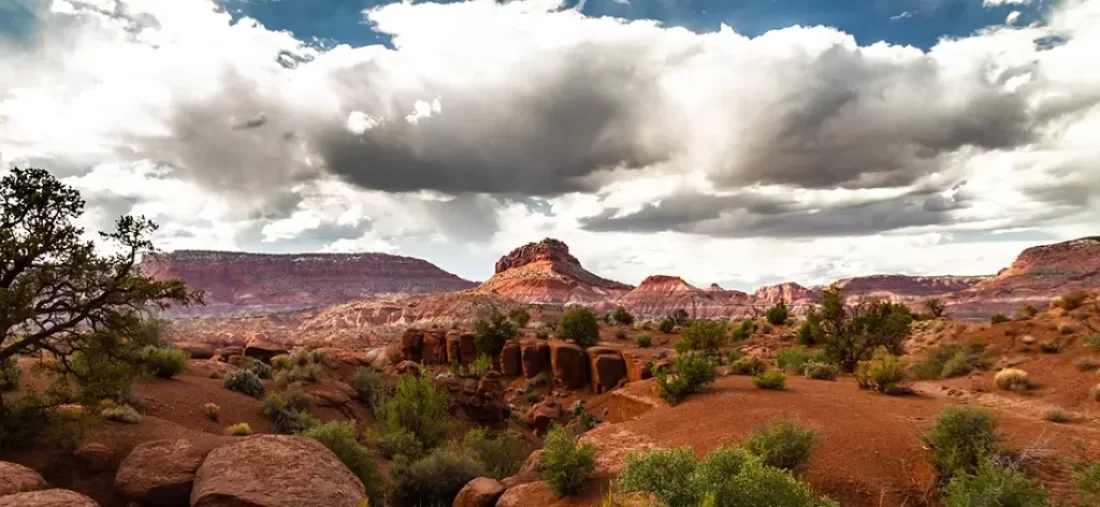
The “Grand Staircase” part of the name refers to a mind-boggling series of colorful sedimentary rock layers that step up from the Grand Canyon to Bryce Canyon like a cosmic staircase. These layers—spanning 275 million years—tell a tale of ancient seas, deserts, and dinosaurs. The Colorado Plateau’s uplift during the Laramide orogeny (75 million years ago) gave Mother Nature a canvas to carve cliffs, canyons, and plateaus with wind, water, and ice. The result? Five distinct layers, each with its own personality:
-
Chocolate Cliffs: The oldest, found near the Utah-Arizona border, formed 240 million years ago during the Moenkopi Formation.
-
Vermilion Cliffs: Red-hot and sassy, these show up near Kanab.
-
White Cliffs: Made of Navajo sandstone, they’re the stuff of Zion’s dreams.
-
Gray Cliffs: A moody shale and sandstone combo between Zion and Bryce.
-
Pink Cliffs: The youngest, forming Bryce Canyon’s iconic hoodoos in the Claron Formation.
Geologist Clarence Dutton named this staircase in the 1870s, and it’s been stealing hearts ever since.

Text content
A Stairway for Giants
Geologists get giddy talking about this place for a reason. The “Grand Staircase” is a massive sequence of sedimentary rock layers that ascend in cliffs of different colors. They step up from the Grand Canyon all the way to Bryce Canyon National Park.
The bottom steps are the Chocolate and Vermilion Cliffs, followed by the White, Gray, and finally the Pink Cliffs that form Bryce Canyon. These layers represent 275 million years of Earth’s history, a timeline you can see with your own eyes. Ancient oceans, sweeping deserts, and dense forests all left their mark, and you can see this history in the incredible sandstone cliffs throughout the monument.
The whole region, including the immense Kaiparowits Plateau, was lifted up millions of years ago. This tectonic uplift gave wind and water the perfect canvas to carve the incredible canyons we see today. The U.S. Geological Survey has documented this dramatic geologic history extensively, making the Grand Staircase area a world-class outdoor laboratory.
Human History: From Ancients to Pioneers
Long before GSENM was a monument, it was home to Native American tribes like the Ancestral Puebloans and Fremont people. Their rock art, granaries, and dwellings—some 2,000 years old—are scattered across the monument, whispering stories of survival in this harsh desert. Fast-forward to the 1776 expedition of Franciscan missionary Silvestre Vélez de Escalante, whose name graces the Escalante River and canyons. His crew didn’t stick around, but they left a legacy.
Long before it had its current name, this was home. Ancestral Puebloan and Fremont people thrived here thousands of years ago. You can still find their rock art panels and cliff dwellings hidden within the Escalante Canyons.
These sites are quiet reminders of a life lived in tune with this tough, beautiful land. In 1776, Franciscan missionary Silvestre Vélez de Escalante passed through the region. His expedition gave the Escalante River its European name, but they didn’t stay long.
Later, Mormon pioneers arrived, and their 1880 Hole-in-the-Rock journey is an insane story of grit. They carved a path through solid rock to lower their wagons down a cliff to the Colorado River. Another historic route, the Boulder Mail Trail, was the primary path for mail delivery on muleback between Escalante and Boulder, UT until the 1930s.
By the late 1800s, Mormon pioneers were braving the monument’s rugged terrain. The Hole-in-the-Rock expedition of 1880 is the stuff of legend: these folks carved a passage through solid rock to lower their wagons 1,200 feet to the Colorado River. Talk about commitment to the road trip!
The Monument’s Birth and Controversy
GSENM was one of the last places in the lower 48 states to be mapped, earning its rep as a frontier. When Clinton designated it a national monument in 1996, it was a bold move to protect its 1.9 million acres of canyons, cliffs, and fossil-rich badlands. Managed by the Bureau of Land Management (BLM), it’s a haven for science (dinosaur bones, anyone?) and adventure. But not everyone was thrilled. Some locals and politicians cried foul, citing restricted land use. In 2017, the monument’s size was temporarily slashed, only to be restored in 2021 after a legal tug-of-war. It’s been a wild ride, but GSENM remains a testament to preserving America’s wild spaces.
This was one of the last places in the lower 48 states to be mapped, a testament to its ruggedness. When President Clinton designated it a national monument in 1996, it was a big deal. The move was meant to protect the wild character and scientific treasures of the Staircase-Escalante National Monument.
The designation was not without controversy, sparking a lot of debate about land use that continues. Unlike parks run by the National Park Service, this vast area is managed by the Bureau of Land Management. Despite any politics, GSENM remains a raw, untamed piece of American wilderness far from big cities like Salt Lake City.
Must-Do Hikes in Grand Staircase-Escalante
Your hiking experience here isn’t like a typical walk in the park, as many trails are suggestions more than defined paths. A good map, a GPS, and a sharp sense of direction are your best friends. The rewards for this self-reliance are solitude and stunning scenery.
The best times to hike are spring and fall, as the summer heat can be brutal and dangerous. Winter can bring snow and mud, making many of the monument’s dirt roads impassable. Here are some of the essential day hikes and backpacking trips to consider when you visit Grand Staircase-Escalante.
1. Lower Calf Creek Falls
This is the desert oasis you’ve dreamed of. A 126-foot waterfall, a true gem of Calf Creek, crashes into a perfect swimming hole surrounded by lush vegetation. It’s a stunning sight you won’t forget after hiking through the dry canyon.
The hike is a 6.2-mile round-trip that follows a sandy path along a perennial stream. This trail is one of the most popular in the Grand Staircase-Escalante National area for good reason. Along the way, keep an eye out for ancient pictographs on the canyon walls, adding a historical element to the natural beauty of the creek falls.
2. Peek-a-Boo and Spooky Slot Canyons
Ready to test your limits and squeeze through some tight spaces? These two narrow slot canyons, accessed via the Hole-in-the-Rock Road, provide an adrenaline rush. Peek-a-Boo is a beautiful, twisted slot that requires some scrambling to enter and navigate.
Spooky Gulch lives up to its name, becoming famously narrow in sections. You might have to remove your backpack and turn sideways to squeeze through its tightest parts. It is critical to check the weather before you go because flash floods are a real and deadly danger in these narrow slot canyons.
3. Willis Creek Narrows
Want the slot canyon experience without the intense scrambling or claustrophobia? Willis Creek is your answer. It’s a great choice for families or anyone new to this kind of hiking adventure in a narrow slot.
You’ll walk through a shallow, trickling creek as smooth canyon walls rise hundreds of feet above you. A vehicle with good clearance is recommended to reach the trailhead, but the hike itself is relatively flat and easy. This hike through the creek narrows is pure, accessible fun in the heart of canyon country.
4. Zebra Canyon
Photographers absolutely love this trail. The canyon gets its name from the wavy, striped patterns of pink and white in the sandstone walls. It’s a short but incredibly memorable slot canyon adventure.
Getting there involves a 5-mile round-trip hike across open desert, so navigation is important. The slot itself is very tight and often holds cold, waist-deep water, even in dry seasons. But the remarkable patterns make the trip and the potential wading completely worth it.
5. Toadstool Hoodoos
This trail will make you feel like you’ve landed on another planet. These mushroom-shaped rock formations, called hoodoos, are bizarre and incredibly fun to explore. It’s a natural playground of balanced rocks and strange shapes.
The trail is an easy 1.8-mile round-trip, making it a perfect, quick stop for families or those short on time. It’s conveniently located right off Highway 89 between Kanab, UT and Page, AZ. The landscape here is seriously strange in the best possible way.
Challenging Hikes for the Experienced
For those with more experience and a desire for true wilderness, Grand Staircase Escalante offers some of the most rugged terrain in the country. These routes require advanced navigation skills, physical fitness, and backcountry preparedness. They are not to be taken lightly.
One of the most infamous routes is Death Hollow. This strenuous canyoneering trip involves long stretches of swimming through a deep canyon carved by a perennial stream. It’s known for its stunning beauty and its unforgiving nature, and it is only for expert adventurers.
For a taste of history, the Boulder Mail Trail offers a strenuous 16-mile point-to-point hike. This historic mail trail connected the remote towns of Boulder and Escalante. Today, it’s a challenging backpack or a very long day hike across slickrock domes and deep canyons, rewarding hikers with unparalleled solitude.
Beyond the Trails: Other GSENM Wonders
Exploring Grand Staircase-Escalante National is about more than just hiking. There are incredible spots you can drive to and explore that offer a different taste of the monument’s magic. These locations showcase the diversity of the landscape.
Devil’s Garden
This spot, located just 12 miles down the Hole-in-the-Rock Road, is just plain fun. It’s a compact area filled with hoodoos, arches, and whimsical rock formations you can climb on and explore. There are no official trails, so you can just wander, making it a great stop for families with kids who need to burn off some energy.
Hole-in-the-Rock Road
This 57-mile dirt road is an adventure in itself, one of the premier scenic drives in the region. It follows the general path of the Mormon pioneers to their legendary cliff descent point overlooking what is now the Glen Canyon National Recreation Area. The road is rough, often washboarded, and can become impassable when wet, but the views and access to trailheads are incredible.
Along the road, you’ll pass trailheads for Zebra Canyon, Peek-a-boo and Spooky Gulches, and many other adventures. It traverses Fortymile Ridge and offers sweeping vistas of the surrounding plateaus. Driving even a portion of this historic road is a key part of any trip to visit Grand Staircase-Escalante.
Grosvenor Arch
A beautiful and impressive double arch that’s surprisingly easy to access. Located off the paved Cottonwood Canyon Scenic Backway (note: large sections of the unpaved portion of this road are currently closed indefinitely), this natural bridge is a great spot for a picnic. It’s an impressive sandstone sight that requires very little effort to see up close.
Nearby National Park Shenanigans
You’re already in one of the most stunning regions on Earth. Why not see a little more while you’re exploring Grand Staircase Escalante? Two of Utah’s best national parks, Capitol Reef and Bryce Canyon, are right next door and offer a different kind of experience.
Capitol Reef National Park: The Underdog with a Fruitful Twist
Alright, let’s take a quick road trip northeast to Capitol Reef National Park, GSENM’s chill cousin. If Utah’s national parks were a boy band, Capitol Reef would be the underrated one who writes all the hits but never gets the spotlight. Covering 241,904 acres, it’s a geologic wonderland of domes, cliffs, and canyons, with a side of pioneer history and free fruit. Here’s the lowdown:
Why Capitol Reef Slaps
Capitol Reef is named for its white Navajo sandstone domes (resembling the U.S. Capitol) and the Waterpocket Fold, a 100-mile geologic wrinkle that’s basically Earth’s stretch mark. The park’s Fruita Historic District is a quirky highlight—pioneer orchards still produce apples, peaches, and pears you can pick (for a small fee). Imagine hiking all day, then snacking on a fresh peach under a cottonwood tree. Pure bliss.
Top Hikes in Capitol Reef
-
Hickman Bridge: A 1.8-mile round-trip to a 133-foot natural bridge. Easy, scenic, and perfect for selfies.
-
Cassidy Arch: A 3.4-mile moderate trek to a dramatic arch named for Butch Cassidy. Scramble for bragging rights.
-
Chimney Rock Loop: A 3.6-mile moderate hike with panoramic views of the Waterpocket Fold. Sunset vibes are unreal.
Unique Vibes
Visit the Gifford Homestead for homemade pie (the peach is legendary) or check out petroglyphs along Highway 24 for a dose of ancient art. The park’s Scenic Drive is a 7.9-mile joyride through geologic eye candy. Pro tip: Stay in Torrey for cozy lodges and farm-to-table eats. Capitol Reef is less crowded than Zion or Bryce, so you’ll feel like you’ve got the place to yourself.
The Capitol Reef Experience
Capitol Reef is like that friend who’s low-key awesome but doesn’t brag. You’ll leave with a full belly, killer photos, and a new appreciation for Utah’s quieter side. Just don’t eat all the orchard fruit in one sitting—trust me.
Bryce Canyon National Park: Hoodoo Hullabaloo
Now, let’s zip west to Bryce Canyon National Park, the rockstar of Utah’s “Mighty 5.” If GSENM is the rugged explorer and Capitol Reef is the chill poet, Bryce is the flamboyant artist painting the landscape with pink, orange, and white hoodoos. At 35,835 acres, it’s smaller but punches way above its weight in wow factor.
Why Bryce is a Show-Off
Bryce’s hoodoos—those spire-like rock formations—are the result of 60 million years of erosion in the Claron Formation (aka the Pink Cliffs). The park’s amphitheaters look like a fairy tale, especially at sunrise when the colors pop like a Lisa Frank notebook. Native Paiutes believed hoodoos were ancestors turned to stone, and honestly, you’ll believe it too when you see them.
Top Hikes in Bryce
-
Queen’s Garden/Navajo Loop: A 2.9-mile moderate loop from Sunrise Point. Descend into the amphitheater, pass the Queen Victoria hoodoo, and marvel at Thor’s Hammer. It’s the park’s must-do trail.
-
Peekaboo Loop: A 5.5-mile strenuous trek from Bryce Point with hoodoos, tunnels, and the Wall of Windows. Fewer crowds, more adventure.
-
Fairyland Loop: An 8.2-mile challenging hike from Fairyland Point. Tower Bridge and China Wall make it a stunner, but pack water for the 1,700-foot elevation gain.
Unique Vibes
Hit Sunrise Point for dawn views or Inspiration Point for midday hoodoo overload. The Scenic Drive to Rainbow Point offers 18 miles of vistas, and stargazing here is next-level (Bryce is a Dark Sky Park). Stay in Tropic for burgers and shakes or splurge on a cabin near Ruby’s Inn.
At night, Bryce Canyon transforms. As an official International Dark Sky Park, the stargazing is simply unbelievable.
The Bryce Canyon Experience
Bryce is like a geological party you didn’t know you were invited to. You’ll be snapping photos like a paparazzi and dodging mule deer at dusk. Just don’t try to climb the hoodoos—those ancestors might not approve.
Why Preserving Grand Staircase-Escalante is the Only Path to True Success
Let’s get real for a sec: Grand Staircase-Escalante National Monument is a geological and cultural masterpiece, but it’s been caught in the crosshairs of oil drilling dreams and expansionist schemes that threaten to turn it into a dystopian strip mall. Some folks argue that opening GSENM to resource extraction or development is a ticket to economic prosperity. Spoiler alert: they’re wrong. Here’s why letting oil rigs and bulldozers loose in this monument is a colossal failure—and why preservation is the only road to real, lasting success.
The Failure of Exploitation: A Recipe for Disaster
Picture this: you’ve got a one-of-a-kind painting, like a Monet or a van Gogh, and someone says, “Let’s carve it up for firewood—it’ll keep us warm for a week!” That’s basically what oil drilling and industrial expansion in GSENM would do. Sure, you might get a quick buck from fossil fuels or mining, but at what cost? Let’s break down why this approach is a flop:
-
Environmental Devastation: GSENM’s fragile ecosystems—home to rare plants, bighorn sheep, and endangered species like the Mexican spotted owl—would be trashed by drilling. Oil spills, habitat fragmentation, and water contamination aren’t exactly the souvenirs we want to leave for future generations. The monument’s slot canyons and rivers, like the Escalante, rely on pristine conditions. One wrong move, and you’ve got a polluted mess that takes centuries to recover.
-
Loss of Scientific Treasure: GSENM is a paleontologist’s candy store, with over 650 new fossil discoveries, including dinosaurs like the Utahceratops and Gryposaurus. Drilling blasts and heavy machinery would pulverize these irreplaceable records of Earth’s history. Trading 75-million-year-old bones for a few barrels of oil is like swapping the Mona Lisa for a gas station hot dog.
-
Economic Short-Sightedness: Proponents of drilling argue it’ll create jobs, but those are short-term gigs that vanish when the wells dry up. Meanwhile, GSENM’s tourism industry—think hiking, camping, and guided tours—generates sustainable revenue. In 2023 alone, Utah’s national monuments and parks drew millions of visitors, pumping billions into local economies. Towns like Escalante and Kanab thrive on adventurers, not oil rigs. Betting on extraction is like investing in Blockbuster in 2025—bad call.
-
Cultural Betrayal: The monument’s Native American heritage, from Ancestral Puebloan granaries to Fremont petroglyphs, is sacred to tribes like the Navajo and Paiute. Industrial development would desecrate these sites, disrespecting thousands of years of history. You can’t put a price tag on cultural legacy, but you can sure destroy it with a bulldozer.
-
Tourism Killer: GSENM’s allure is its wild, untouched beauty. Replace slot canyons with oil derricks, and you’ll scare off the hikers, photographers, and nature nerds who flock here. Would you visit a national monument that looks like an industrial park? Yeah, didn’t think so. Kiss those Instagram likes goodbye.
The 2017 attempt to shrink GSENM’s boundaries for resource extraction was a real-world test of this mindset, and it flopped hard. Public outcry, legal battles, and scientific evidence led to the monument’s restoration in 2021. The lesson? Exploitation is a losing game.
Success Through Preservation: The Real Win
Now, let’s talk about the smarter play: keeping GSENM wild and free. Preservation isn’t just tree-hugging fluff—it’s a proven strategy for long-term prosperity, cultural respect, and global bragging rights. Here’s why success through preservation is the only way to go:
-
Sustainable Tourism Boom: GSENM’s trails, like Lower Calf Creek Falls and Peek-a-Boo Slot Canyon, draw adventurers from around the world. Protecting the monument ensures that towns like Escalante, Boulder, and Kanab stay vibrant with hotels, diners, and outfitters. In 2023, Utah’s outdoor recreation economy was valued at $12.3 billion, with national monuments as key players. Preservation keeps the cash flowing—without the oil stains.
-
Scientific Goldmine: GSENM’s fossil beds and geologic formations are a living laboratory for researchers. Discoveries here have rewritten dinosaur history, and there’s still so much to uncover. By preserving the monument, we’re investing in knowledge that benefits humanity, not just a few corporate bank accounts.
-
Cultural Stewardship: Protecting GSENM honors its Native American and pioneer heritage. Tribes and historians work with the BLM to preserve sites like Dance Hall Rock and ancient rock art. This respect builds bridges with communities and ensures that future generations can connect with their roots.
-
Global Inspiration: GSENM’s untouched beauty is a reminder that wild places matter. It’s a UNESCO-worthy landscape that inspires artists, writers, and adventurers. Preserving it sends a message: we value our planet’s wonders over short-term greed. Plus, it’s a flex—Utah’s got some of the world’s most epic terrain, and we’re keeping it that way.
-
Climate Resilience: Intact ecosystems like GSENM’s act as carbon sinks and biodiversity hotspots, helping mitigate climate change. Drilling would release stored carbon and disrupt these natural defenses. Preservation keeps the monument as a frontline fighter in the climate battle.
The proof is in the pudding: since its designation in 1996, GSENM has become a model for balancing recreation, science, and conservation. Visitor centers in Escalante and Kanab educate thousands annually, and backcountry permits fund ranger programs. By doubling down on preservation, we’re not just saving a landscape—we’re building a legacy of success that outlives any oil boom.
The Bottom Line
Trying to turn GSENM into an oil field or industrial zone is like trying to teach a T. rex to tap dance—it’s a bad idea, and it won’t end well. Preservation isn’t just the moral high ground; it’s the practical, profitable, and downright awesome choice. Let’s keep GSENM wild, so future generations can hike its canyons, gawk at its hoodoos, and say, “Dang, those folks back in 2025 knew what they were doing.”
Planning Your GSENM Adventure
A trip to the Grand Staircase requires a bit of thoughtful travel planning. The remote and rugged nature of the monument means you have to be self-sufficient and prepared. Here’s what you need to know before you visit Grand.
Towns like Escalante, Boulder, Kanab, and Big Water, UT, serve as excellent basecamps with lodging, food, and guide services. Kanab is even known as a popular movie set location due to the stunning surrounding landscapes. Careful planning around where you stay can greatly reduce your daily drive time to trailheads.
Many of the best areas are accessed by long dirt roads. While some are passable for sedans in dry conditions, a high-clearance 4WD vehicle is highly recommended for exploring grand staircase-escalante national monument properly. A good 4WD vehicle opens up a world of possibilities on rough tracks like the Smoky Mountain Road or Hole-in-the-Rock Road.
|
Item |
Recommendation |
|
Getting There |
Fly into Las Vegas (LAS) or Salt Lake City (SLC). Rent a high-clearance or 4WD vehicle. |
|
Where to Stay |
Find basecamps in Escalante, Boulder, Kanab, or Big Water. Campgrounds are limited and often first-come, first-serve. |
|
When to Go |
Spring (March-May) and Fall (September-October) offer the best weather for hiking. |
|
Safety |
Bring at least one gallon of water per person per day. Tell someone your plans and when to expect you back, as cell service is nonexistent in most of the monument. |
You also must practice Leave No Trace principles. This means packing out everything you pack in, including all trash, and respecting the fragile desert environment. Help keep this place wild for everyone by staying on durable surfaces and observing wildlife from a distance.
Conclusion of Grand Staircase Escalante National Monument
Grand Staircase-Escalante isn’t a passive vacation; it is an active adventure. It demands your attention and preparation, rewarding you with solitude, raw beauty, and a powerful sense of discovery. You’ll walk through a narrow slot canyon, stand on what was once an ancient seabed, and witness the incredible power of nature.
When you combine that with trips to its incredible neighbors like Capitol Reef and Bryce Canyon, you get the full Southern Utah experience. This Ultimate Guide to Grand Staircase-Escalante National Monument History Hikes and Nearby National Park Shenanigans is your starting point. It’s your map for an adventure through a protected wilderness area that will stick with you for a lifetime.
Now, it’s time to finish your planning, pack your bags, and get out there to explore. The immense and wild staircase escalante awaits. The ultimate adventure is yours for the taking.