Explore John Day Fossil Beds National Monument: A Guide
People frequently search for “John Day National Park” assuming this magnificent location holds that specific title. However, the correct designation is the John Day Fossil Beds National Monument. This distinction is important for managing expectations regarding amenities and layout.
The monument spans more than 14,000 acres of the high desert in eastern Oregon. It is not a single contiguous park but is divided into three separate districts. These are the Clarno Unit, the Sheep Rock Unit, and the famous Painted Hills Unit.
The National Park Service manages this spectacular collection of geological history. One of the best features is that they do not charge an admission fee. It is entirely free to explore these vast fossil beds.
Travelers often look for hiking trails or nearby camping options online. If you have heard rumors about the John Day River being a prime spot for smallmouth bass, those stories are accurate. The river offers incredible fishing opportunities amidst scenic canyons.
This guide will help you navigate the complexities of planning a trip here. From ancient paleontological history to modern outdoor adventures, this monument delivers on all fronts.
Table of Contents
Understanding the Three Units
The John Day Fossil Beds National Monument is spread out over a large area of central Oregon. The three units are quite distant from one another, requiring significant driving time. You cannot simply walk from one area to the next.
Painted Hills Unit
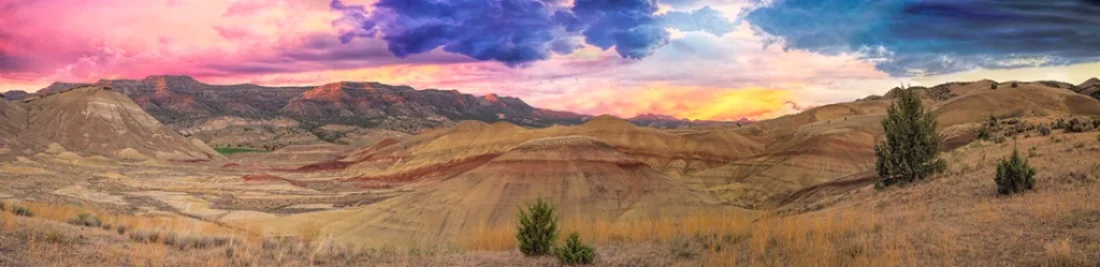
The Painted Hills Unit is likely the most photographed section of the monument. Located near the town of Mitchell, it features rolling mounds of stratified soil. The colors range from deep reds and golds to blacks and lavenders.
This unit showcases the result of climate changes over millions of years. It is an excellent spot for photography, especially during the late afternoon. The low light accentuates the vibrant bands of color in the hills.
Sheep Rock Unit
The Sheep Rock Unit serves as the headquarters for the monument. It is located near Kimberly and Dayville. This area houses the Thomas Condon Paleontology Center and the historic Cant Ranch.
The landscape here is dominated by green volcanic clay and towering basalt cliffs. It offers a diverse range of trails and experiences. Visitors can explore the mesmerizing Blue Basin within this unit.
Clarno Unit
The Clarno Unit is the furthest west, situated near the town of Fossil. It is known for its dramatic Palisades, which are towering volcanic lahar formations. This unit preserves the oldest fossil layers in the monument.
Visitors to the Clarno Unit can see visible fossils embedded in the rocks. It is a quieter, more remote section compared to the others. The drive here takes you through some of the most rugged terrain in eastern Oregon.
How 40 Million Years Created Oregon’s Fossil Wonderland
To understand this landscape, you must picture the region 45 million years ago. Instead of a high desert, a lush semitropical forest covered the area. It resembled a modern jungle more than the arid plains you see today.
Palm trees and avocado trees grew in abundance during this Eocene era. Ancient crocodiles swam in the rivers alongside the ancestors of modern horses. It was a wet, warm environment teeming with life.
Massive large rhino-like brontotheres roamed through the dense vegetation. These beasts were as large as modern delivery trucks. They wandered the forest floor searching for soft plants to eat.
Volcanic activity eventually altered the landscape dramatically. Eruptions blanketed the region in ash and mudflows, burying the flora and fauna. This rapid burial is what preserved such a detailed fossil record.
As time marched on, the climate began to cool and dry out. The jungles gave way to deciduous forests and eventually grasslands. New creatures arrived to adapt to the changing world.
Three-toed horses darted across the open plains, evolving for speed. Saber-toothed cats and other carnivorous mammals stalked the herds. The rock layers at the monument capture this evolution in perfect sequence.
The colored bands you observe in the hills serve as a timeline. Red layers indicate warmer, wetter periods where soil oxidized. Yellow and tan bands suggest cooler, drier eras.
The Legacy of Thomas Condon
In the 1860s, a frontier minister named Thomas Condon moved to the area. He had a keen interest in geology and began collecting strange rocks he found. He soon realized he was holding the remains of extinct creatures.
Condon shipped these specimens to major museums on the East Coast. His discoveries alerted the scientific community to the importance of the John Day basin. He became Oregon’s first State Geologist and a professor at the University of Oregon.
Native tribes, including the Northern Paiute and Sahaptin peoples, have called this land home for millennia. They lived here long before any paleontologist arrived. Their history is deeply intertwined with the river and the land.
The river and the monument take their name from John Day, a fur trader. He was robbed near the river in 1811 and suffered significant hardships. While his personal story is tragic, his name lives on through this magnificent landscape.
Congress officially designated the area as the John Day Fossil Beds National Monument on October 26, 1974. The primary goal was to protect these scientific resources. Today, it stands as a testament to the biological history of North America.
Thomas Condon Paleontology Center
The Thomas Condon Paleontology Center is the crown jewel of the Sheep Rock Unit. It functions as both a museum and an active research facility. It is the best place to start your visit.
Inside, you will find a stunning photo gallery of fossils and landscapes. Exhibits display hundreds of real specimens found within the park boundaries. You can see the skulls of large rhino-like brontotheres and tiny ancestral horses.
Enormous windows allow visitors to look directly into the paleontology lab. You can watch scientists meticulously clean and prepare fossils. It is a rare opportunity to see science in action.
The center provides a wealth of information about the natural features of the region. Rangers are available to answer questions and help plan your day. The gov website lists current operating hours, which vary by season.
Note that this facility is an official government organization building. The website belongs to the National Park Service. Always check the official government sources for the most accurate updates.
Where to Sleep Under Desert Stars
There are no campgrounds located within the monument boundaries. The Park Service restricts camping to protect the sensitive fossil beds. You must look for accommodation outside the park limits.
However, eastern Oregon offers excellent camping nearby. Several state parks and BLM lands provide great spots to pitch a tent. You just need to plan your location based on which unit you are visiting.
Clyde Holliday State Recreation Site is a fantastic option near the Sheep Rock Unit. It sits right on the banks of the John Day River. They offer hot showers and reservable sites.
Cottonwood Canyon State Park is located further north on the lower river. It is a newer park with vast open spaces and cabins. It serves as a great base for anglers.
The Bureau of Land Management (BLM) oversees several primitive sites. Locations like Priest Hole and Burnt Ranch are popular with locals. These spots are usually first-come, first-served.
Near the towns of Mitchell and Fossil, you can find county parks and private campgrounds. Bear Hollow County Park offers a rustic experience near the fossil beds. Always carry cash, as some self-pay stations do not accept cards.
Weather is a major factor for campers. Summer temperatures frequently exceed 100 degrees Fahrenheit. The sun is intense, and shade is rare in the high desert.
Spring and fall are ideal times to camp. You might see wildflowers blooming or the cottonwoods turning gold. Nights can be chilly, so bring warm layers.
Water is scarce in this region. Always pack more water than you think you will need. Cell service is unreliable, so download maps ahead of time.
Hiking Trails of the Monument
The trails here are generally short but visually impactful. Most hikes are designed to showcase specific geological features. You can easily do multiple hikes in a single day.
Painted Hills Unit Trails
Painted Cove Trail: This is a short, quarter-mile loop. A boardwalk takes you directly through the vibrant red and lavender hills. It is the most colorful walk in the entire monument.
Carroll Rim Trail: This 1.6-mile trail offers a bit of a challenge. It climbs 400 feet to a panoramic viewpoint. From the top, you can see the full expanse of the Painted Hills.
Painted Hills Overlook Trail: This is a flat, half-mile path. It leads to the iconic postcard view of the hills. It is perfect for those with limited time.
Sheep Rock Unit Trails
Blue Basin Overlook Loop: This is arguably the best hike in the monument. It covers 3.25 miles and climbs into the blue-green clay badlands. The views of the river valley from the rim are spectacular.
Island in Time Trail: Located in the Blue Basin, this one-mile trail stays low in the canyon. It features replica fossils along the path. The turquoise walls tower above you, creating an otherworldly atmosphere.
Flood of Fire Trail: This trail climbs to a viewpoint of the distinct rock layers. It shows the boundary where massive lava flows covered the landscape. It is a great lesson in geology.
Clarno Unit Trails
Trail of Fossils: This quarter-mile loop wanders through large boulders. You can spot actual fossilized leaves and nuts in the rocks. It is the best place to see fossils in their natural state.
Clarno Arch Trail: This trail connects with the Trail of Fossils. It climbs steeply to the base of the Palisades. You get a close-up view of a natural rock arch high in the cliff.
Chasing Smallmouth Bass on the John Day River
The John Day River is one of the longest free-flowing rivers in the continental United States. It is also a premier destination for fishing. The river teems with aggressive smallmouth bass.
These fish were introduced decades ago and have thrived. They are known for their high numbers rather than massive size. Catching 50 fish in a day is a common occurrence.
The bass here generally range from 8 to 12 inches. However, large rhino-like fights come from even the smaller fish. Occasionally, lucky anglers land bass close to 20 inches.
The prime season runs from late spring through summer. As the water warms, the bass become incredibly active. They will strike at almost anything that hits the water.
Topwater fishing is excellent here. Using foam poppers or floating bug patterns can yield explosive strikes. It is visually exciting fishing.
Subsurface flies like Woolly Buggers are also very effective. Olive and black colors mimic the natural prey in the river. Crayfish patterns are another staple, as bass feed heavily on them.
A 6-weight fly rod is the standard tool for this river. It has enough backbone to cast into the wind but makes fighting the fish fun. Spin fishing with small jigs or crankbaits works equally well.
Many anglers choose to float the river. A multi-day float trip allows you to access remote water. You can camp on gravel bars and fish sections that road-bound anglers cannot reach.
The float from Clarno to Cottonwood is a classic route. It spans roughly 40 miles of canyon water. This section requires a boater pass during peak season.
For those without a boat, bank access is available. Cottonwood Canyon State Park provides miles of river frontage. Highway access near Service Creek and Spray is also good.
While bass are the main draw in summer, the river also holds steelhead. The steelhead run occurs in the cooler months. Always check the regulations, as they can change based on fish returns.
Planning Your Visit to the Monument
A successful trip requires some logistical planning. The sheer size of the area means you need a reliable vehicle. Gas stations are often 50 miles apart.
Start your journey at the Thomas Condon Paleontology Center. It is the information hub for the entire monument. The rangers there are a great resource for current road conditions.
Download maps before you leave home. The gov website belongs to the park service and has printable maps. Do not rely on your phone’s GPS, as signals disappear in the canyons.
When driving between the Painted Hills Unit and the Sheep Rock Unit, allow for an hour of travel time. The drive is scenic but winds through mountain passes. Watch for livestock and wildlife on the roads.
Bring plenty of food and snacks. There are very few dining options near the fossil beds. The towns of Mitchell, Dayville, and Fossil have small markets and cafes, but hours can be limited.
For trip ideas, consider staying in a central location like Prineville or John Day. This allows you to tackle one unit per day without moving your luggage. It makes the logistics much simpler.
Water activities are limited within the monument itself. However, nearby reservoirs offer boating and swimming. Ochoco Reservoir and Prineville Reservoir are good side trips if you need to cool off.
Wildlife and Nature
The monument is not just about dead animals in rocks. The high desert ecosystem supports a variety of living wildlife. You need to keep your eyes peeled while hiking.
Mule deer and pronghorn antelope are common sights. They often graze near the Painted Hills in the early morning. Rocky Mountain elk can also be seen, particularly in the winter months.
Birdwatchers will find plenty to see. Golden eagles and red-tailed hawks soar above the cliffs. The river corridor attracts herons, osprey, and kingfishers.
Reptiles are abundant in the summer heat. You might encounter lizards scurrying across the trail. Rattlesnakes are present, so always watch where you step and keep your hands out of crevices.
Reason This Monument Deserves More Attention
The John Day Fossil Beds National Monument often flies under the radar. It does not have the name recognition of Crater Lake or Yellowstone. Yet, it offers a profound look into the past.
The colors of the Painted Hills Unit are unlike anything else in the Pacific Northwest. They are a bucket-list sight for anyone who appreciates natural beauty. The silence of the desert there is deeply restorative.
The scientific value of the beds is immense. The continuous record of 40 million years of life is rare globally. It allows us to see how life adapts to catastrophic climate change.
The crowds here are manageable compared to major national parks. You can often find solitude on the trails. It feels like a private adventure rather than a theme park.
The surrounding towns offer a glimpse into authentic rural Oregon. The hospitality is warm, even if the amenities are simple. It is a chance to slow down and disconnect from the digital world.
This destination provides education, adventure, and stunning scenery in one package. It connects you to the national monument oregon experience in a unique way. It is a reminder of how ancient and dynamic our planet truly is.
Whether you are marveling at a fossilized skull or casting a fly for bass, the John Day basin leaves a lasting impression. It is a place that invites you to look closer and think deeper. It is truly Oregon’s hidden gem.