Explore Mount St. Helens National Volcanic Monument
Mount St. Helens National Volcanic Monument is the place you go when you want your landscapes raw and honest. It is where you stand on a ridge, look straight into a shattered crater, and feel very small in the best way. The scale of the destruction and recovery here is unlike anything else in the Pacific Northwest.
If you love hiking, backcountry adventure, geology, or just big stories written in ash and lava, this destination belongs high on your list. The 110,000 acre National Volcanic Monument offers a front-row seat to the earth’s power. This guide walks you through the eruption story, the best places to visit, the top trails, and the trip planning details you actually need.
Table of Contents

The Eruption That Changed Everything
Before 1980, Mount St. Helens was called the Mount Fuji of America because of its clean, symmetrical shape. On May 18, that perfect cone became a broken amphitheater. The Pacific Northwest gained one of its wildest outdoor classrooms in a single morning.
In the weeks leading up to the big eruption, earthquakes rattled the area and steam explosions punched holes through the snowpack. The north flank started to bulge outward, which geologists carefully measured and tracked. If you want to review that buildup, the ArcGIS Story of the May 1980 Eruption lays it all out with maps and photos.
At 8:32 a.m., a magnitude 5.1 quake hit. The over-steepened north side slid away in the largest landslide ever recorded. A tremendous lateral explosion ripped through the mountainside instantly.
The blast created a stone-filled wind that moved at supersonic speeds. It toppled trees across hundreds of square miles. The tremendous lateral explosion leveled the forest as if the giant firs were mere toothpicks.
A mushroom-shaped column of ash rose thousands of feet skyward within minutes. Searing flows of gas and rock destroyed everything in their path. Pumice poured from the crater, covering the ridges in deep layers of rock.
Mud scoured the river valleys, carrying debris all the way to the Columbia River. The eruption lasted for nine hours. By evening, the surrounding landscape lay gray and lifeless.
Fifty-seven people died that day. Entire valleys were rearranged. Gray ash fell across several states, turning day into night in Eastern Washington.
The ash drifted downwind, coating towns and blocking roads. Researchers later described the damage in work like the paper on persistent volcanic ash impacts on Douglas firs. The ecology was dramatically changed in an instant.
Instead of scraping everything clean and planting rows of neat little trees, Congress made a different call. In 1982, Congress created the Mount St. Helens National Volcanic Monument. They directed the Forest Service to let the land respond naturally.
You can see how that early thinking shows up in the Comprehensive Management Plan from 1985. It still guides a lot of decisions today. Nature handles the recovery here, not human landscapers.
Reason This Broken Volcano Is Worth Your Time
You have options in Washington. You could go gaze at Mount Rainier or ski groomers at the resorts. Why choose this place where the top is missing?
Because this mountain wears its scars where you can see them. You are not guessing what happened here. The story is laid out in tree casts, blast lines, log rafts, and a smoking crater.
The Geological Survey continues to keep close watch through their Cascades Volcano Observatory. They track gas, quakes, and swelling inside the mountain. Their current monitoring tools are explained at the USGS observatory page.
It is still active. That is part of what makes it fascinating rather than scary. Seeing how the gray landscape lay dormant before life returned is a powerful experience.
Mount St. Helens National Volcanic Monument: Key Areas And Viewpoints
The monument spreads across the north, west, and south sides of the mountain within Gifford Pinchot National Forest. Each side feels different. The access points and services vary a lot.
Visitor Centers, Viewpoints, And Learning Hubs
Before you head straight for trailheads, it helps to orient yourself. Several main facilities act as launch pads for your visit within the Gifford Pinchot National Forest. Here is a breakdown of the key stops.
| Location | Fees | Season / Notes |
|---|---|---|
| Johnston Ridge Observatory | Closed | Closed until 2027 due to landslide damage on the forest road. |
| Science and Learning Center at Coldwater | 5 dollar day use fee | Acts as a primary learning center with education programs and trail access. |
| Castle Lake Viewpoint | No fee | A scenic overlook above a lake formed by debris. |
| Elk Rock Viewpoint | No fee | Open most of the year with broad views of the blast zone. |
| Sediment Retention Structure | No fee | Army Corps facility managing cement-like slurries and mudflows. |
| Weyerhaeuser Forest Learning Center | Varies | Located near milepost 33, focusing on forestry and timber recovery. |
| Blue Lake and surrounding areas | No day fee | Requires a Sno Park permit in winter for recreation. |
If you like context, head to the Coldwater area and spend some time at the Science and Learning Center. It acts as both an education hub and a trailhead staging area. You can learn more about it directly through the Forest Service Coldwater overview.
The official USFS site for the monument gathers high level information on closures fees and area history. You can reach that from the agency destination page at this monument listing. Checking this before you drive is critical.
You will drive some winding forest road routes getting into this country. If anything seems off in your GPS routing, report it. The option to report a map error through Google Maps is available to help the next hiker.
North Side And Blast Zone
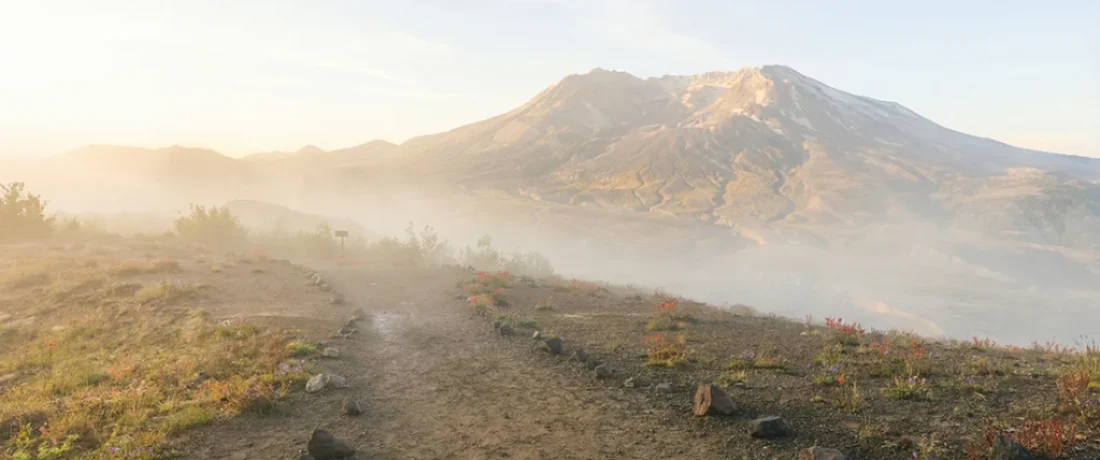
The north side was ground zero for the lateral explosion ripped event. It still looks dramatically different than the other flanks. You will see bleached snags and open pumice flats.
Whole ridges were shaved clean by heat and wind. With Johnston Ridge Observatory closed until at least 2027, access has changed. Most visitors now enter through places like the South Coldwater trailhead.
South Coldwater trailhead is currently walk-in only. Build that extra distance into your day if you want to reach the higher trails. Details and status are on the Forest Service trailhead listing.
This side shows recovery at every stage. You pass old blast shadows with twisted trunks. Then you drop into valleys buzzing with birds and new forest.
South Side, Lava Landscapes, And Forest
The south side of the Gifford Pinchot National Forest feels quieter. It is more forested and in some places almost gentle. Here you get the Ape Cave lava tube and classic woods.
This area mixes lush greenery with sharp edges from older eruptions. Blue Lake and the nearby winter areas draw snowshoers during the colder months. A Sno Park permit is needed from early December through March.
Grab that pass ahead of time through the state Sno Park permit page. If you like to support local shops, you can also buy from one of the many vendors. A list is available at this vendor directory.
The southern trailheads also get you closer to Ape Cave and lava canyons. It is a good zone if you want a more rounded weekend. You can mix serious hikes with mellow walks and camping.
Hiking Trails You Should Put On Your List
You came here to move, not just stare at interpretive panels. The Mount St. Helens National Volcanic Monument holds more than two hundred miles of trails. Options range from one hour walks to brutal multi-day loops.
Easy Walks With Big Payoff
Some days you do not want to destroy your legs but you still want big scenery. The monument has several low stress routes. These work well for families or acclimation.
- Coldwater Lake boardwalk and shoreline paths. These short routes explore a lake that did not exist before 1980. Interpretive signs explain how the landslide dammed the valley. It connects the eruption story to the water you see today.
- Castle Lake Viewpoint stroll. Walking around the parking and overlook at Castle Lake gives great views. You can see over the water to the surrounding hills. It is an easy quick stop if you are just scouting.
- Elk Rock roadside wander. Park and take in the Toutle River valley. Watch how the old channel and newer erosion features snake through the plain. On clear days the mountain looks brutally chopped.
Moderate Trails With Classic Views
If you like to earn your views with a bit of sweat, the mid grade routes hit a sweet spot. You will get crater views and lake overlooks. You get a good sense of the blast zone without extreme exhaustion.
- Boundary Trail segments. The Boundary Trail winds for many miles around the north side. You can hike sections as out and back routes. Popular stretches run from the Coldwater area or the old Johnston corridor.
- Truman Trail from the east side. Access shifts with road closures around Windy Ridge. When open, the Truman Trail carries you out across open pumice flats. You feel how close the blast came to erasing entire hillsides.
- Blue Lake area hikes. Trails around Blue Lake offer a mix of forest and lava features. It is less about crater shots here. It is more about soaking up the smaller details.
Hardcore Options For The Trail Obsessed
If you call thirty mile loops “a good warmup,” St Helens does not disappoint. You just have to be honest with yourself about conditions. The terrain is rugged and exposed.
- Loowit Trail circumnavigation. This rough loop circles the whole volcano. Expect deep gullies and rock hopping. The sand feels like walking on a treadmill. It is usually a two to three day backpacking trip.
- Mount Margaret backcountry. You can step into a chain of high lakes from trailheads near Norway Pass. This area offers rocky ridges and remote camps. Overnight permits are often managed under the larger forest plan. Read the latest from the management hub before you build your itinerary.
Climbing To The Crater Rim
You can stand on the broken rim of the volcano and look straight down. It is not a technical mountaineering route in summer. However, it is a serious climb with thousands of feet of gain.
Summit access is tightly regulated. Any travel above 4,800 feet requires a Mount St. Helens climbing permit. Those permits are sold through the federal booking system.
From April 1 through October 31, daily numbers are capped. Permits are sold online only. There are no walk up slots in the busy season.
Most climbers use the Monitor Ridge route in snow free months. During winter, the route starts from Marble Mountain Sno-Park and follows Worm Flows. Both are strenuous and very exposed to weather.
Ash rose thousands of feet from this spot decades ago. Now, climbers stand there watching steam vent from the dome. On good days, you see a crevassed glacier inside the crater.
If you visit multiple public lands, consider the Interagency Annual Pass. It is described at this pass overview. That eighty dollar pass covers many day use fees across the country.
Volcano Safety, Weather, And Seasonal Access
This is active country shaped by mudflows and landslides. It is not just pretty sunsets and flowers. You do not need to be scared, but you must be informed.
Scientists at the Cascades Volcano Observatory track earthquakes and gas emissions around the clock. You can see their current tools and alert levels at this USGS page. That constant work helps hikers stay safe.
Trip planning starts with current conditions. The state parks agency posts active alerts for recreation corridors at this park alerts page. For drive day decisions, check the live highway map.
The state transportation site keeps a live map at this road conditions map. Pair those with updated mountain weather at this National Weather Service site. This helps you avoid rude surprises.
Winter flips the script completely. Road gates drop and storm cycles bury signs. Simple routes suddenly become serious winter travel.
Sno Park permits are needed at many snow parking areas. This includes access points like Marble Mountain. Current rules sit at this state Sno Park permit page.
If you shift into full winter mode, cross check with local vendors. Make sure you have the right pass for your chosen lot. That list lives at this vendor lookup tool.
Staying, Camping, And Logistics
Lodging around Mount St. Helens is a patchwork of forest campgrounds and private cabins. You will also find a handful of motels in Castle Rock and Kelso. Options shift as logging and demand change.
If you plan to mix your volcano visit with overnights at Washington state parks, book ahead. Campgrounds and cabins book through a central reservation portal. For federal campgrounds, use the standard federal systems.
Some people prefer to base in Castle Rock or Woodland. They day trip up into the monument from the I-5 corridor. This works well in shoulder season when flexibility helps dodge rain.
Extra Resources And Deep Dives For Volcano Nerds
If you finish a long day on the trail and still want more, the resources are endless. A lot of the serious research is archived online. The Mount St. Helens Institute also provides educational context.
The booklet “Dark Noon” captures stories from the 1980 event. It includes local eyes and historic records. You can access a digital version through the Washington State Historical Society archives.
For full context on recovery management, view the Forest Service plan at this planning portal. It shows how early decisions still shape your modern trail map. Pair that with long form volcanic research at this A Volcano Rekindled study.
The monument sits inside a bigger landscape of protected lands. If you enjoy preserved volcanic terrain, you might like exploring other monuments. Newer places such as Baaj Nwaavjo I’tah Kukveni in Arizona offer a comparison.
That story map sits at this overview of the monument. Farther south, desert mountains like the Santa Rosa and San Jacinto range protect high peaks. Their model is described at this monument summary.
Responsible Travel And Ethics
How you travel matters as much as where you go. Mount St. Helens has been a living science lab for decades. Sloppy travel can mess with long-running research.
Stay on marked trails across pumice flats. Pack out every scrap. Camp only where it is clearly allowed.
Many research plots look like open ground. However, they hold instruments or subtle markers. Walking off-trail can damage them without you realizing it.
On the bureaucratic side, every big land project runs on contracts. If you encounter issues with federal work, there are ways to speak up. The Office of Inspector General takes reports on contractor issues at this USDA contractor fraud page.
Common Questions About The National Volcanic Monument
Do I need a pass to visit the monument?
Yes, a pass required status applies to many areas. The Johnston Ridge and Coldwater Lake areas typically charge a day use fee. The National Forest Recreation Pass or the America the Beautiful pass are accepted at most federal sites.
Can I drive all the way to the crater?
No, there is no road to the crater. The closest you can drive is the Johnston Ridge Observatory area when the road is open. To see the crater rim up close, you must climb the mountain on foot.
What happened to Spirit Lake?
The eruption pushed the water out of Spirit Lake and then filled it back up with debris. Today, a massive log mat still floats on the surface. It contains thousands of toppled trees stripped of their bark.
Is Ape Cave part of the monument?
Ape Cave is located on the south side of the mountain in the Gifford Pinchot National Forest. It is a massive lava tube you can hike through. It requires a specific reservation and parking pass during the busy season.
Did the ash really travel that far?
Yes, the gray ash fell as far away as the Great Plains. It turned day into night in Eastern Washington. The ash rose high enough to circle the globe eventually.
What are the cement-like slurries?
These are called lahars. The heat melted glaciers instantly, sending water and rock rushing down the valleys. These flows scoured the landscape and filled rivers with concrete-like mud.
Conclusion of Mount St Helens National Volcanic Monument
Mount St. Helens National Volcanic Monument will not win a beauty contest against every snowy peak on your feed. But it does something better. It tells the truth about how mountains grow, break, and start over.
You get a smoking crater instead of a perfect summit. You find lakes that came from disaster instead of glaciers. Wildflower fields bloom through the gray landscape lay of pumice.
The science is current and the trails are wild. The lesson is simple. Nature hits hard, recovers slowly, and keeps moving.
If that mix of raw landscape and heavy history speaks to you, carve out the time. Check the alerts and grab your maps. Secure your climbing permit if you want the rim.
Let Mount St. Helens National Volcanic Monument rearrange the way you look at mountains. It is an acre national volcanic experience you will not forget. The turning day for your perspective on geology starts here.