Discover Trails and Tales at Petroglyph National Monument
Petroglyph National Monument is one of those places that sneaks up on you.
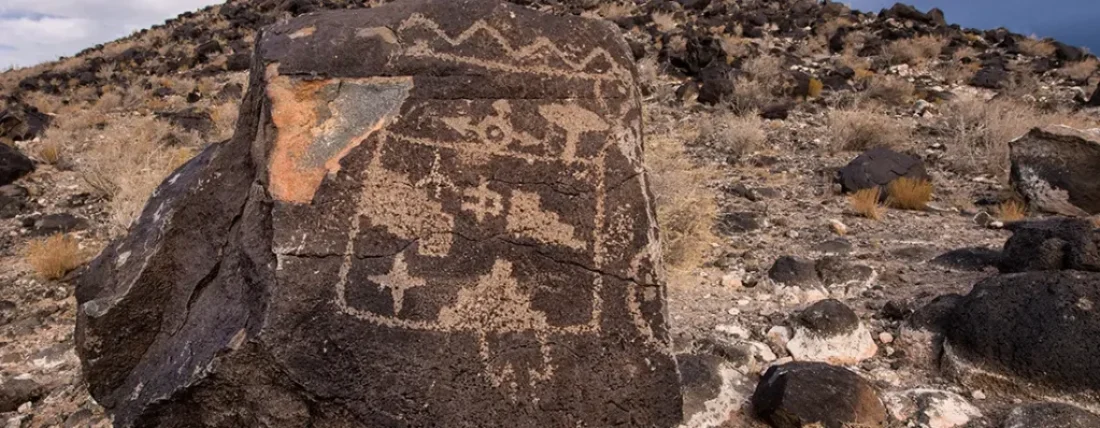
Petroglyph National Monument. The place where ancient people decided that basalt boulders were basically the original Instagram, and instead of posting thirst traps, they pecked in spirals, birds, funky little handprints, and what I can only assume are prehistoric memes about how much the neighbor’s flute-playing sucked at 3 a.m.
If you’re expecting Yellowstone-level drama with geysers and bears photobombing your selfies, pump the brakes. This is Albuquerque’s 7,200-acre backyard full of 20,000+ rock carvings made by Ancestral Puebloans (and some later Spanish settlers who apparently couldn’t resist adding their own “Juan wuz here” tags). It’s like an outdoor museum where the exhibits are glued to the ground and the security guards are rattlesnakes.
The monument is split into several areas, but the three canyons everyone actually visits for petroglyphs are Boca Negra, Piedras Marcadas, and Rinconada. The rest are either “permit-only because archaeologists are gatekeeping” or “good luck finding parking, sucker.” Let’s break down the Big Three so you don’t show up in flip-flops and existential regret.
You turn off a normal city street in NW Albuquerque, park beside houses and strip malls, and suddenly you are walking into 7,200 acres of lava rock, desert plants, and thousands of carved stones that carry messages from hundreds of years ago.
If you are planning a trip to Petroglyph National Monument or just wondering if it is worth a stop, you are in the right place.
Table of Contents
Discover Trails and Tales at Petroglyph National Monument, a Stretch the Legs Side Trip.
What Is Petroglyph National Monument, Really
Think of Petroglyph National Monument as a huge outdoor gallery where the walls are black basalt and the art is chipped straight into the rock.
More than 20,000 petroglyphs are scattered along a volcanic escarpment on the west side of Albuquerque, many made by Ancestral Puebloan people between about 1300 and 1700.
Early Spanish settlers added crosses and brands, which you can still see beside spirals, animal figures, and strange masked shapes that feel like a coded story you are trying to read.
This valuable record serves as a testament to the diverse groups who traveled through the Rio Grande Valley.
The monument was officially created in 1990 after years of local effort to keep development from swallowing these sacred places.
Indian Petroglyph State Park, which is now the Boca Negra unit, had already been protected in the 1970s, and it helped spark a bigger push to safeguard the whole escarpment area.
Today the National Park Service co manages the land with the City of Albuquerque.
You can see that shared care reflected on the city’s detailed open space page about Petroglyph National Monument.