Fly Fishing South Carolina’s Chattooga, Lower Saluda, and Whitewater Rivers: A 5-Day Adventure
Picture this: you’re standing knee-deep in a crystal-clear river, the sun peeking through a canopy of ancient trees, a gentle breeze carrying the scent of pine, and your fly rod twitching with the promise of a feisty trout. Welcome to South Carolina’s fly fishing paradise, where the Chattooga, Lower Saluda, and Whitewater Rivers serve up some of the best trout action in the Southeast. This guide is your ticket to a 5-day fly fishing adventure, complete with National Forest camping spots, a rundown of the best flies for each fish species, and tips on how to use them—all wrapped in a casual, humoristic tone to keep you grinning like a kid with a new rod. Whether you’re a seasoned angler or a newbie who thinks “nymph” is just a fancy word for a bug, this guide’s got you covered. Let’s dive in!
South Carolina Moments
I spent 30 years of traveling through South Carolina, fly fishing, Hiking and causing mischief. Much of my time was spent in the Myrtle Beach area. Fly Fishing the surf.
Table of Contents
Why South Carolina? The Unsung Hero of Fly Fishing
South Carolina might not be the first place that pops into your head when you think of fly fishing—Montana and Colorado tend to hog the spotlight—but the Palmetto State’s mountain streams and tailwaters are a hidden gem. The Chattooga River, a National Wild and Scenic River, dances along the Georgia-South Carolina border, offering wild browns, rainbows, and brookies. The Lower Saluda River, a chilly tailwater below Lake Murray, is a trout haven right near Columbia. And the Whitewater River? It’s a remote, waterfall-dotted beauty that’ll make you feel like you’ve stepped into a postcard. Add in the lush Sumter National Forest for camping, and you’ve got a recipe for a trip that’s equal parts adventure and relaxation.
Over the next five days, we’ll explore these rivers, hook some trout, and camp under the stars. I’ll break down the best access points, the flies that’ll make fish leap into your net, and how to cast them without looking like you’re swatting a swarm of bees. Plus, we’ll keep it light—because fly fishing is supposed to be fun, not a calculus exam. Ready to pack your waders and hit the road? Let’s plan your epic South Carolina fly fishing trip!
Day 1: Chattooga River – The Wild and Scenic Star
Morning: Setting Up Camp in Sumter National Forest
You’ve just rolled into Oconee County, where the Chattooga River flows through the Sumter National Forest like a ribbon of liquid adventure. First things first: let’s get you settled at a campsite. The Burrells Ford Campground is your go-to spot—free, right on the Chattooga, and so close to the water you could cast a line from your tent (though I wouldn’t recommend it unless you want to hook your sleeping bag). It’s primitive, with no hookups, but there are pit toilets and a vibe that screams “I’m one with nature.” To get there, take Highway 107 from Walhalla, SC, follow signs to Burrells Ford Road, and park at the lot after a short drive. It’s a quick hike to the river, so you’ll be fishing in no time.
If you’re craving a few more amenities, Cherry Hill Campground is nearby and costs about $10 a night. It’s got flush toilets, showers, and RV-friendly sites, but you’ll still feel like you’re in the wild. Both spots are in the Andrew Pickens Ranger District of Sumter National Forest, surrounded by hiking trails and waterfalls that’ll make your Instagram followers jealous. No BLM land here—South Carolina’s public lands are mostly National Forest—but Sumter’s got you covered for dispersed camping if you want to rough it. Just check regulations with the Forest Service to avoid any “whoops, I camped in a restricted zone” moments.
Afternoon: Hitting the Chattooga at Burrells Ford
After pitching your tent, grab your rod and head to the Chattooga’s Burrells Ford access point. This stretch is a mix of pocket water, riffles, and deep pools, home to wild brown trout, stocked rainbows, and the occasional brookie. The river’s a designated Wild and Scenic beauty, so expect stunning scenery—and maybe a few kayakers zipping by, hoping not to reenact scenes from Deliverance.
Fish Species and Flies:
-
Rainbow Trout: These flashy fish love fast water and are suckers for a Blue-Winged Olive (BWO) (size 16-20). Cast it upstream in riffles during hatches, which are common year-round but peak in February. Let it drift naturally—don’t yank it like you’re starting a lawnmower. A Pheasant Tail Nymph (size 16-18) is your go-to for deeper runs. Bounce it along the bottom with a split shot to get it down where the rainbows are chilling.
-
Brown Trout: Browns are the sneaky ninjas of the Chattooga, hiding in deeper pools and under overhanging vegetation. A Woolly Bugger (size 8-12, olive or black) is your best friend. Swing it through slow water or strip it like you’re teasing a cat with a laser pointer. For dry fly action, try a Quill Gordon (size 12-14) in spring (April-June) when hatches are popping. Cast near structure and let it sit like a lazy bug sunbathing.
-
Brook Trout: These native beauties are rarer, found in smaller tributaries like the East Fork. A Parachute Adams (size 14-16) works wonders during summer evenings. Cast to the head of pools and twitch it gently—think “flirty bug,” not “epileptic seizure.” A Copper John (size 16-18) nymph is great for subsurface action; drift it through plunge pools for best results.
Technique Tips: The Chattooga’s clear water means stealth is key. Approach like you’re sneaking into a movie theater after the film’s started. Use a long leader (9-12 feet) and light tippet (5X or 6X) to avoid spooking fish. The Delayed Harvest section (Highway 28 bridge to Reed Creek) is catch-and-release with artificial lures only from November 1 to May 14, so check regs and bring barbless hooks.
Evening: Campfire and Fish Tales
Back at Burrells Ford, fire up your camp stove for some instant noodles (or go gourmet with a freeze-dried meal if you’re fancy). Swap stories around the campfire about the one that got away—because every angler’s got a whopper of a tale. Check the USGS stream gauge for Burrells Ford to plan tomorrow’s fishing; if flows are way above or below normal, you might need to adjust your spots.
Day 2: Chattooga River – Exploring Ellicott Rock Wilderness
Morning: Breakfast and a Hike to Ellicott Rock
Rise and shine, angler! After a hearty camp breakfast (pro tip: instant oatmeal with a splash of whiskey is a mountain tradition—kidding, mostly), lace up your hiking boots for a trek to the Ellicott Rock Wilderness Area. This upper stretch of the Chattooga is wilder than a raccoon in your cooler, with pristine brown trout habitat. From Burrells Ford, follow the Chattooga River Trail north toward the North Carolina state line. It’s about a 2-3 mile hike, but the plunge pools and solitude are worth every step.
Afternoon: Fishing the Upper Chattooga
This section is a brown trout bonanza, with fish that’ll test your skills like a pop quiz in trigonometry. The water’s fast and rocky, so watch your step—falling in is a great way to become the river’s least popular bobber.
Fish Species and Flies:
-
Brown Trout: These bad boys love structure, so target pools near boulders. A Muddler Minnow (size 8-10) is killer for simulating sculpins. Strip it erratically through deep water to trigger strikes. For nymphs, a Hare’s Ear (size 14-16) with a bead head gets down to where the big browns lurk. Drift it through tailouts for maximum effect.
-
Rainbow Trout: Rainbows here are feisty and love a Caddis Dry Fly潇 (size 14-16, tan or green) during spring and summer hatches. Skate it across the surface to mimic a struggling bug—fish lose their minds over it. A Prince Nymph (size 12-16) is a solid subsurface option; bounce it through riffles.
-
Brook Trout: If you find a small tributary, try a Royal Wulff (size 14-16) for surface action. Cast short and precise to avoid snagging branches. A Zebra Midge (size 18-20) is a great nymph choice for these picky eaters; drift it slowly through calm pools.
Technique Tips: The upper Chattooga’s pocket water calls for short, accurate casts. Aim for 20-30 foot casts to avoid spooking fish. Dry-dropper rigs (a dry fly with a nymph trailing) are deadly here—think of it as a two-for-one deal for trout. Keep an eye out for hatches like Blue Quills or Hendricksons (March-April) and match your flies accordingly.
Day 3: Lower Saluda River – Urban Trout Oasis
Morning: Breaking Camp and Heading to Columbia
Pack up your gear and drive about 2 hours to the Lower Saluda River, just below Lake Murray in Columbia. This tailwater fishery is a trout paradise thanks to cold water releases from the dam, averaging 55°F year-round. Set up camp at Dreher Island State Park, a short drive from the river. It’s got tent sites, RV hookups, showers, and lake views for about $20-30 a night. If you prefer dispersed camping, check Sumter National Forest’s nearby Cedar Creek area, but call the ranger station for regulations.
Afternoon: Fishing the Lower Saluda
The Lower Saluda is a 10-mile stretch of trout-filled water that feels like a mountain stream in the middle of civilization. Access points include Saluda Shoals Park and Riverbanks Zoo (yes, you can fish near a zoo—how cool is that?). The river’s stocked with 40,000 trout annually, mostly rainbows, with some browns and rare brookies.
Fish Species and Flies:
-
Rainbow Trout: These stockers love a San Juan Worm (size 10-12, red or pink). Cast it into deep holes and let it drift with the current—think of it as a gummy worm for fish. A Soft Hackle Pheasant Tail (size 14-16) is great for swinging through riffles; give it a gentle twitch to mimic an emerging insect.
-
Brown Trout: Browns hide in deeper pools near the dam. A Sculpin Streamer (size 6-10, olive or brown) works wonders when stripped slowly along the bottom. For dry flies, a Light Cahill (size 14-16) during evening hatches (summer months) will bring them to the surface.
-
Brook Trout: Rare here, but you might find them in quieter eddies. A Klinkhammer (size 14-16) is a great emerger pattern; let it sit in the film during low-light conditions. A Flashback Pheasant Tail (size 16-18) is a solid nymph choice for subsurface fishing.
Technique Tips: Water releases from Lake Murray Dam can change flows fast, so check South Carolina Electric and Gas’s website or call (800) 830-5253 for schedules. Use a sink-tip line or split shot to get flies down in deeper holes. Fish early mornings or late afternoons for better hatches and less kayak traffic.
Evening: City Vibes and Fishy Dreams
After fishing, head to Columbia for a burger at The Whig or some BBQ at Midwood Smokehouse. Back at Dreher Island, watch the sunset over Lake Murray and plan tomorrow’s Whitewater River adventure. Check your gear—those rocks in the Saluda can be hard on waders.
Day 4: Whitewater River – Remote Wilderness Gem
Morning: Journey to Jocassee Gorges
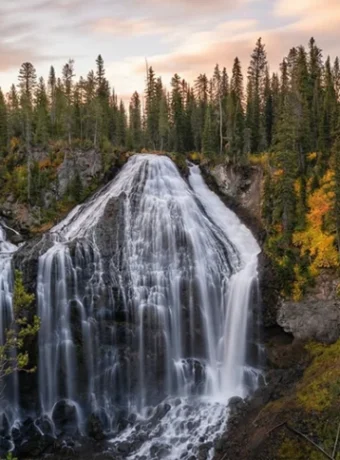
Drive about 1.5 hours northwest to the Whitewater River in the Jocassee Gorges area. This freestone stream flows through dense forests and past 400-foot waterfalls, making it the most scenic of our trio. Set up camp at Oconee State Park, a nearby gem with tent sites for $20-30, cabins, and hiking trails. For dispersed camping, Sumter National Forest’s Foothills Trail area offers options, but check with the ranger station for permits.
Afternoon: Fishing the Whitewater River
Access the Whitewater via Highway 130 to Whitewater Falls Road, then hike the trails to the river. It’s remote, with runs, riffles, and deep pools teeming with wild browns, rainbows, and stocked trout. The water’s cool thanks to heavy tree cover, but spring can be dicey due to high flows, so stick to summer or fall.
Fish Species and Flies:
-
Brown Trout: These wild fish love the Whitewater’s deep pools. A Zonker (size 8-10, white or black) mimics baitfish; strip it through slow water. A Gold-Ribbed Hare’s Ear (size 14-16) is a killer nymph for drifting through riffles.
-
Rainbow Trout: Stocked rainbows are plentiful near access points. A Elk Hair Caddis (size 14-16, tan or black) is perfect for summer hatches; skate it across riffles. A Bead Head Pheasant Tail (size 16-18) works for nymphing in deeper runs.
-
Brook Trout: Found in small tributaries, brookies love a Stimulator (size 12-14, yellow or orange) for dry fly action. Cast to the edges of pools. A Copper John (size 16-18) is great for nymphing in fast water.
Technique Tips: The Whitewater’s rugged terrain demands careful wading—bring a wading staff if you’re clumsy like me. Use short casts (15-25 feet) to target specific pools and avoid snagging trees. A dry-dropper rig with a Stimulator and Copper John is a great combo for covering both surface and subsurface. Check for both SC and NC fishing licenses, as the river crosses state lines.
Evening: Waterfall Views and Campfire Chats
Hike to Whitewater Falls for a breathtaking view before heading back to Oconee State Park. Grill some hot dogs and laugh about the time you tried to cast into a headwind and ended up with a fly in your hat. Check your flies for damage—those rocks are fly-eaters.
Day 5: Mix and Match – Pick Your Favorite River
Morning: Choose Your Adventure
Your final day is a wildcard—head back to your favorite river or mix it up. Feeling the Chattooga’s wild vibes? Hit the Delayed Harvest section for stocked rainbows. Craving the Lower Saluda’s urban access? Fish near Saluda Shoals for a quick session. Or return to the Whitewater for its serene wilderness. If you’re torn, the Chattooga’s Burrells Ford is a great choice for a final fling—easy access and plenty of fish.
Afternoon: Fine-Tuning Your Technique
Spend your last day refining your skills. Focus on matching the hatch—watch for caddisflies, mayflies, or stoneflies and swap flies accordingly. Try a Terrestrial (size 12-14, like a Chernobyl Ant) for all three rivers in summer; trout love these chunky bugs. Practice your roll cast to avoid those pesky trees, and work on your drift—think “natural bug floating downstream,” not “drunk bug doing cartwheels.”
Evening: Packing Up and Reflecting
Back at camp, pack up your gear and take a moment to soak in the experience. You’ve battled trout, hiked through stunning forests, and maybe even fallen in the river once or twice (no judgment). Head to the Chattooga River Fly Shop for a souvenir fly or grab dinner in Clayton, GA, at Fortify Kitchen and Bar for a fancy end to your trip.
Side Quests, Time Warps & Waterfall Diversions
Because even trout bums need to take off the waders and look cultured once in a while.
There’s only so much time you can spend in a river before your fingers prune up like a raisin and your knees start making Rice Krispie sounds. These are the moments when it’s time to become… a tourist. Don’t panic—these stops are scenic, weird, historical, or all three. You might even impress someone back home with your newfound appreciation for Civil War tunnels and 19th-century cemeteries.
📍 Stumphouse Tunnel & Issaqueena Falls – Walhalla, SC
When your trout mojo fizzles, go stand in a giant hole instead.
This is a half-finished railroad tunnel from the 1850s that now serves as a cool, damp reminder of how the South never quite got around to finishing its trains. Bring a flashlight, channel your inner ghost hunter, and try not to trip over the beer cans. Afterward, take a quick stroll to Issaqueena Falls—a 100-foot stunner named after a legendary Native American girl who may or may not have faked her own death. Romantic and gravity-powered? Yes, please.
📍 Old Pickens Church – Tamassee, SC
Nothing says “road trip vibes” like an abandoned town and a bunch of gravestones.
This little brick church is all that remains of a once-bustling 19th-century town that got left behind when progress went elsewhere (probably to the nearest Bojangles). It’s peaceful, oddly beautiful, and perfect for stretching your legs while pondering life, mortality, and whether that trout you lost yesterday is still laughing.
📍 South Carolina State Museum – Columbia, SC
For when your wading boots are still wet and you’re craving air-conditioning and enlightenment.
Four stories of art, history, science, and dinosaurs (because why not?) in the heart of the capital. There’s a planetarium if you want to pretend you’re looking at a hatch chart in the stars, and plenty of Civil War stuff to remind you why tailwaters are better than musket balls. Bonus: it’s minutes from BBQ and beer. Think of it as troutless education with indoor plumbing.
📍 Oconee Station & Station Cove Falls – Near Oconee State Park
Fort + waterfall = the original multitasking.
Oconee Station was once a military outpost where soldiers stared into the forest and waited for something exciting to happen. Spoiler: not much did. But today it’s a great pit stop for history buffs and waterfall junkies alike. The short hike to Station Cove Falls is worth it—especially if your knees are still mad about the last boulder hop.
📍 Chattooga Belle Farm – Long Creek, SC
Moonshine, peaches, disc golf, and views. If that’s not heaven, it’s at least rural South Carolina.
Once a working farm, now a working farm that also happens to sell booze, host weddings, and serve up orchard views that’ll make you question your city life. You can sip apple brandy and stare at the Blue Ridge like a proper Appalachian poet—or just stock up on homemade jelly and hit the road.
📍 Historic Downtown Newberry – Between Saluda & Whitewater
Small town charm, opera houses, and antique stores filled with “What is this?”
Newberry is where you go when you need a break from river rocks and want to feel fancy for an hour. Grab a coffee, poke around shops full of things your grandma might call “real furniture,” and maybe catch a show at the Newberry Opera House. Or just use the clean public restroom and pretend you’re cultured.
📍 Jocassee Gorges Scenic Byway (Hwy 130)
Because sometimes the road is the destination. Especially when it’s got hairpin turns and misty lake views.
This stretch is the mullet of mountain drives—business in the roadwork, party in the overlooks. Twist and climb through hardwood forests, with the kind of views that force you to pull over and say, “Well damn.” Roll down the windows, crank some bluegrass or classic rock, and try not to drive off a cliff while admiring the scenery.
🚙 Pro Tip: Loop It Like a Pro
Start in Walhalla, fish the Chattooga, meander to Columbia for the Saluda, veer into Jocassee country for the Whitewater, and complete your circle like a trout swimming upstream with a degree in cartography. You’ll finish your trip with a brain full of trivia, a cooler full of jerky, and hopefully fewer regrets than that time you tried to double-haul into a 30mph headwind.
Gear and Prep Tips for the Trip
-
Rod and Reel: A 4-5 weight rod (8.5-9 feet) is perfect for these rivers. Bring a reel with a smooth drag—those browns can pull like a toddler in a tantrum.
-
Waders and Boots: Lightweight waders for summer, insulated for fall/winter. Felt-soled boots for grip on slick rocks.
-
Flies: Stock a box with BWOs, Pheasant Tails, Woolly Buggers, Quill Gordons, Parachute Adams, Muddlers, Hare’s Ears, Caddis, Copper Johns, San Juan Worms, Sculpins, Light Cahills, Klinkhammers, Zonkers, Elk Hair Caddis, Stimulators, and Terrestrials. Check the Chattooga River Fly Shop’s “Hot List” for local favorites.
-
Accessories: Polarized sunglasses, a net, nippers, hemostats, and bug spray (those mosquitoes don’t mess around). A water purifier saves you from hauling bottles.
-
Licenses: Get a South Carolina fishing license (and maybe a Georgia or NC one for the Chattooga and Whitewater). Check regulations at www.dnr.sc.gov.
Wrap-Up of South Carolina Fly Fishing Adventure
This South Carolina fly fishing adventure hits all the right spots: the wild Chattooga, the chilly Lower Saluda, and the scenic Whitewater. With Sumter National Forest camping, a tackle box full of flies, and a few laughs along the way, you’re set for a trip that’ll have you hooked (pun intended). South Carolina fly fishing, Chattooga River trout, Lower Saluda fishing, Whitewater River flies, Sumter National Forest camping, and trout fishing techniques are just a few keywords to get you Googling your way to more info. So, grab your rod, pack your tent, and get ready to make some fishy memories in the Palmetto State. Tight lines, y’all!