Jedediah Smith Wilderness Wyoming
You might think you know the Tetons, but until you have stepped foot into the Jedediah Smith Wilderness, you have only seen half the picture. This rugged expanse on the western slopes of the Teton Range offers a raw, unfiltered experience that its famous neighbor often lacks. Named after the legendary mountain man Jedediah Smith, who explored these mountains in the early 19th century with grit and determination, this wilderness area demands respect. It is a place where you can channel your inner explorer without the crowds, the pavement, or the entrance stations.
The Jedediah Smith Wilderness in Wyoming sits quietly next to Grand Teton National Park, but it feels like a different world. Here, the trails are steeper, the regulations are fewer, and the solitude is real. While the national park gets the postcards, the Smith Wilderness earns the loyalty of those who prefer their mountains wild and untamed. Designated in 1984, this protected land preserves a crucial slice of the ecosystem, keeping it free from roads, motors, and development. It is 123,451 acres of pure adventure waiting for anyone willing to work for the views.
Table of Contents
Jedediah Smith Wilderness Wyoming Is A Geology of Caves and Limestone
One of the most distinct aspects of the Jedediah Smith Wilderness is its geology. Unlike the granite towers that define Grand Teton National Park to the east, much of the Smith Wilderness is composed of sedimentary rock. This creates incredible karst limestone features that you won’t find on the other side of the divide. The area is home to numerous caves, sinkholes, and underground rivers that drain the high peaks.
This porous rock shapes the terrain in fascinating ways. Water disappears into the ground only to burst forth miles away as massive springs. The Darby Canyon area is famous for the Wind Cave, a cavern that breathes cold air and features a waterfall pouring right out of the rock face. These limestone features make the Jedediah Smith area geologically distinct within the Greater Yellowstone Ecosystem.
Congress passed the Wyoming Wilderness Act, also known as Public Law 98-550, to protect these fragile formations. The designation prohibits any new development, mining, or logging. It also bans motorized equipment and mountain biking, preserving the quiet for hikers and horse packers. The Jedediah Smith Wilderness remains a sanctuary where natural processes, including fire and erosion, shape the land.
Wildlife in Jedediah Smith Wilderness, Part of the Greater Yellowstone Eco-System
When you step into the Jedediah Smith Wilderness, you are entering the home of some serious megafauna. This area is a vital part of the Greater Yellowstone Ecosystem, which connects Yellowstone National Park, Grand Teton National Park, and the surrounding national forests. The wildlife does not care about borders, so you will find the same animals here as you would in the parks, often with fewer people watching them.
The grizzly bear population has expanded significantly in recent decades. These bears thrive in the rugged canyons and berry-filled meadows of the Smith Wilderness. Black bears are also common, often seen tearing apart logs for insects. You must respect wildlife here by maintaining a safe distance and storing food properly. It is not just a suggestion; it is essential for your safety and the animal’s survival.
High on the rocky ridges, you might spot a bighorn sheep or mountain goat navigating terrain that looks impossible. Moose frequent the willow thickets along Teton Creek and in Alaska Basin. If you are lucky—or unlucky, depending on your perspective—you might even catch a glimpse of a wolverine. Birdwatchers will find plenty to love, including numerous species of raptors that ride the thermals above the cliffs.
Learn more about the Greater Yellowstone Eco-System Here.
Hiking Trails That Humble You
Hiking in the Jedediah Smith Wilderness is not for the faint of heart. The trails here are steep, rugged, and often gain thousands of feet in elevation. However, the payoff is worth every drop of sweat. You get access to the same Teton views as the national park visitors, but you often have the trail to yourself until you reach the major junctions.
Darby Canyon to Wind Cave
One of the most popular hikes in the Smith Wilderness is the trek up Darby Canyon. This trail leads you through lush forests and meadows before climbing to the Wind Cave. The round-trip distance is about 7 miles. The cave entrance is massive, and a seasonal waterfall often spills from its mouth. It is a fantastic introduction to the limestone geology of the Jedediah Smith area.
Table Mountain
If you want the best view of the Grand Teton without actually climbing it, hike Table Mountain. This flat-topped peak sits directly across Cascade Canyon from the Grand, offering a front-row seat to the Cathedral Group. You can access it via the Face Trail (steep and direct) or the Huckleberry Trail (longer but more gradual). Both start from Teton Canyon. Be prepared for a long day and significant elevation gain. At the summit, you stand on the edge of the Jedediah Smith Wilderness, looking straight into Grand Teton National Park.
Alaska Basin
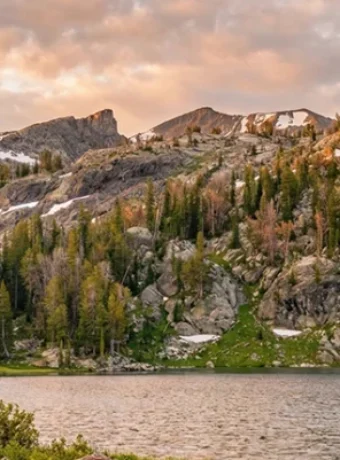
Alaska Basin is a high-alpine wonderland dotted with lakes and wildflowers. It is famous for its “Sound of Music” scenery. Because it lies within the Smith Wilderness and not the national park, you do not need a backcountry permit to camp here. This makes it a popular stop for backpackers on the Teton Crest Trail. The basin features polished granite, shimmering tarns, and stunning views of Buck Mountain.
Camping and Regulations
Camping in the Jedediah Smith Wilderness offers a freedom you won’t find in the adjacent national parks. There are no designated campsites and no reservation systems for most of the area. You can set up your tent where you please, provided you follow Leave No Trace principles. This means camping at least 200 feet from lakes and 100 feet from streams to protect the fragile riparian zones.
The Forest Service manages this land as part of the Caribou-Targhee National Forest. While you don’t need a permit to camp, regulations are strictly enforced. Bear canisters are highly recommended and sometimes mandatory depending on current orders. Campfires are generally allowed below the timberline, but restrictions are common during dry summers. In high-use areas like Alaska Basin, fires are prohibited to preserve the scarce wood.
Comparing this to Grand Teton National Park or Yellowstone National Park, the Jedediah Smith Wilderness feels much more relaxed. You don’t have to stress about securing a permit six months in advance. However, with that freedom comes responsibility. You must be self-reliant. There are no rangers patrolling every mile, and help is far away. You are responsible for your own safety and for keeping the Jedediah Smith pristine for the next visitor.
Access and Logistics
Most visitors access the Jedediah Smith Wilderness from the Idaho side of the Teton Range. The towns of Driggs and Victor in Teton Valley serve as the primary gateways. From here, gravel roads lead into the canyons where the trailheads are located. This approach is distinct from the busy entrances of Grand Teton National Park or the tourist hubs near Jackson Hole Mountain Resort.
Key access points include Teton Canyon, Darby Canyon, and Fox Creek. Teton Canyon is the most popular, offering access to Table Mountain and Alaska Basin. The road is accessible to most vehicles, though washboards can be rough. Unlike the paid entry at Grand Teton National, parking at these trailheads is generally free, though some specific developed sites may have small fees.
If you are coming from Jackson Hole, you will need to drive over Teton Pass to reach the western trailheads. It is a scenic drive that drops you into Idaho before you head back up into the Wyoming wilderness. The Grand Targhee Resort is another landmark nearby; in winter, it is a ski destination, but in summer, it serves as a jumping-off point for hikers heading into the Smith Wilderness via the Bannock Trail
Fly Fishing the High Country
For anglers, the Jedediah Smith Wilderness offers a different kind of trophy. You won’t find the massive rivers of the valley floor here. Instead, you will find crystal-clear streams and alpine lakes teeming with native cutthroat trout. Teton Creek and the streams in Alaska Basin are prime spots for dry fly fishing. The fish are often hungry and willing to rise for a well-placed hopper or caddis pattern.
Fishing here is about the experience as much as the catch. You are casting in the shadow of the Grand Teton, often with no one else around. The brook trout in some of the higher lakes can be plentiful, making for a fun day of catching. Remember that you need a Wyoming fishing license, even though you might access the area from Idaho. Regulations catch and release are encouraged to maintain healthy populations in these slow-growing alpine environments. The solitude you find fishing in the Smith Wilderness rivals even the remote corners of Yellowstone National Park.
t
Frequently Asked Questions
Do I need a permit to hike in Jedediah Smith Wilderness?
No, day hiking and overnight camping in the Jedediah Smith Wilderness do not require a permit. However, if your hike crosses into Grand Teton National Park for overnight camping, you will need a park permit.
Are dogs allowed in Jedediah Smith Wilderness?
Yes, dogs are allowed in the wilderness area, but they should be under control at all times due to wildlife. Note that dogs are strictly prohibited on trails within Grand Teton National Park.
Is bear spray necessary in the wilderness?
Absolutely. The wilderness is home to a dense population of grizzly and black bears. Carrying bear spray and knowing how to use it is essential for safety.
Can I ride a bicycle in the wilderness?
No, bicycles and all other mechanized vehicles are banned in the Jedediah Smith Wilderness to preserve its primitive character.
When is the best time to visit?
The best time to visit is from mid-July to September. Heavy snow often keeps high-elevation trails covered until July, making travel difficult earlier in the season.
The Jedediah Smith Wilderness stands as a testament to the value of untamed nature. It offers a counterpoint to the developed and managed experience of the national parks, giving you a chance to engage with the wild on its own terms. Whether you are climbing Table Mountain for that perfect view, exploring the limestone caves of Darby Canyon, or casting a fly into a lonely alpine lake, this place leaves a mark on you. It is the Rocky Mountains as they were meant to be: wild, free, and just a little bit dangerous. So pack your bear spray, lace up your boots, and go see what Jedediah Smith saw all those years ago.
Greater Yellowstone Destinations to Explore
Down in the south and southwest corners offers a plethora of destinations, take the Teton Wilderness.
Heading up the East side is the Absaroka-Beartooth Wilderness with destinations like Glacier Lake, Mystic Lake.