Steelhead Fly Fishing Santiam River and North Fork a Couple Year Adventure
I moved here in late October 1991. My truck was full of fly rods and I had a dog that hates water. I had a delusional belief that steelhead were just waiting for me on the river banks.
Two years have passed since then. I am slightly more humble and significantly more broke. I am convinced steelhead were invented by sadists who also designed DMV lines.
Steelhead Fly Fishing Santiam River and North Fork of Santiam River is a journey into madness. It involves hours of swinging flies for fish that do not care about your existence. You will learn the dirty secrets locals try to hide from outsiders. I was lucky, met local legend Bill S. and his red wooden drift boat, (that boat has been spotted on the Yellowstone, and rolling around Livingston, Montana on a trailer some time 2024). And the other locals full of BS and some worth listening to hung out at McNeeses Fly Shop in Salem Oregon. With other spey fly ties and soon to be legend John Shewey.
You will learn exactly where to go when you want to test your patience against nature. This pursuit is not merely about catching fish. It is about understanding the culture of the river. My home waters consistently of the Alsea, Clackamas, and Salmon Huckleberry Wilderness. With Side Trips of Surfing Fly Fishing in Lincoln City, and trips east to the Deschutes and Metolius Rivers. I have been back on several long excursions over the decades, and have try to create a mix of past and present.
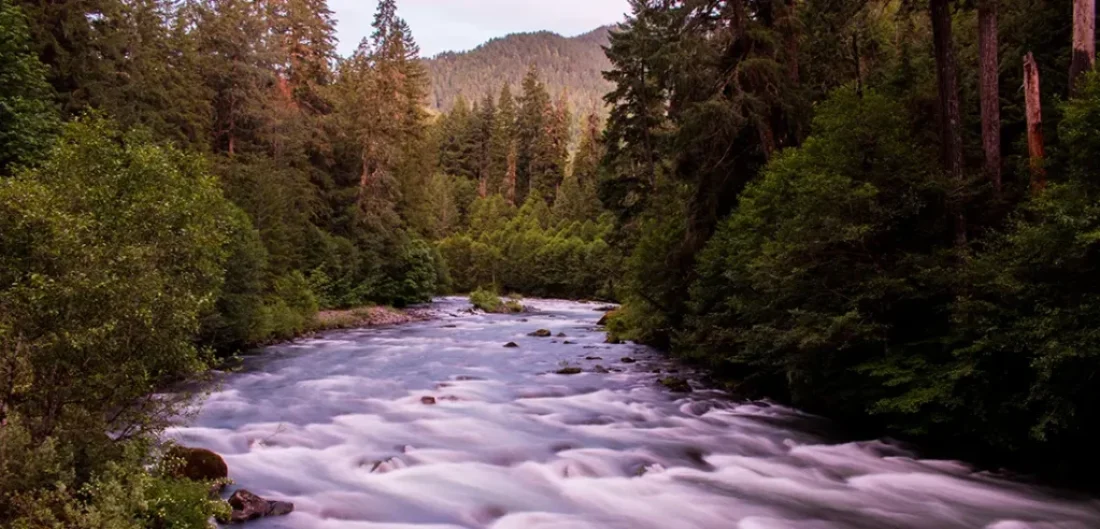
We need to talk about the two different rivers first. The North Fork is the pretty sister who actually puts out sometimes. It has that classic boulder-strewn beauty found in Western Oregon.
Table of Contents

Santiam & North Fork Santiam: The Dirty Laundry Edition
“Where the fish are liars and the ODFW is in on it.”
Alright, you degenerate chrome chasers, pull up a stump and pour something brown. This is the section the guide services don’t want you to screenshot, the one the Santiam regulars will deny exists, and the one that’ll make the guy in the Facebook group who “totally grew up fishing here” call you a poaching mouth-breather. Good. Let him cry into his $9 latte.
Everything below is 100 % true, 0 % legal advice, and 47 % likely to get you banned from at least three private Facebook groups. Let’s spill the beans.
North Santiam & Santiam River The North Fork is the pretty sister who actually puts out. The mainstem Santiam below the forks is the hot mess cousin who shows up drunk and starts fights. The North Fork has that classic boulder-strewn, freestone beauty with runs that scream “swing me.” The mainstem is wider, slower in places, and full of gear chuckers who think a 2-oz sinker is “tactical.” Both hold winter and summer steelhead, plus resident rainbows and cutthroat if you’re into smaller drama.
A Quick Roast of My Home Waters
The main stem Santiam below the forks is different. It is the hot mess cousin who shows up drunk and starts fights. It is wider and slower in many places.
The main stem is full of gear chuckers who think a 2-oz sinker is tactical. Both rivers hold Willametteâs winter steelhead and summer steelhead. They also have resident rainbow trout if you like smaller drama.
The North Santiam River is the only river in Oregon that pretends it is wild. It gets photographed constantly for magazines. It looks like a catalog ad until you see the reality of the pressure.
Every holding lie is the size of a bathtub. A 14-pound chrome missile guards it. That fish has already seen your fly on TikTok.
The Mainstem Santiam is where dreams go to get stomped on. You might see bait-dunkers standing shoulder-to-shoulder. It feels like a Black Friday sale on depression.
If you hook a fish here, it is likely a hatchery rainbow or brat. It somehow survived 47 spinners and a guy with a pitchfork. But we still love catching these fish.
The South Santiam River is another option nearby, but it has a different vibe. The South Santiam often gets overlooked. However, the North Fork draws the most attention from fly anglers.
The Secrets No One Wants You To Know
I am going to share the dirty laundry now. Guide services won’t want you to screenshot this part. Santiam regulars will deny this exists.
This information will make the guy in the Facebook group mad. He will claim he “totally grew up fishing here” and call you names. Let him cry into his expensive latte.
1. The “Closed” Water Trick
You might see a big yellow gate on the North Fork above Mehama. It says the road is closed for spawning season. That gate is held shut by baling twine.
Locals call it “The Suggestion Gate.” The secret is that the closure is only for vehicles. You can legally walk in.
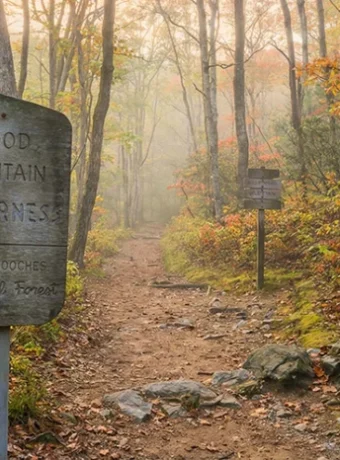
The road behind it is USFS 2253. It leads to miles of pristine water within the Willamette National Forest. It looks like a fly fishing ad from the late 90s.
Bring a bike if you are lazy. Stash it in the alders past the gate. You don’t want the green truck guy to see it.
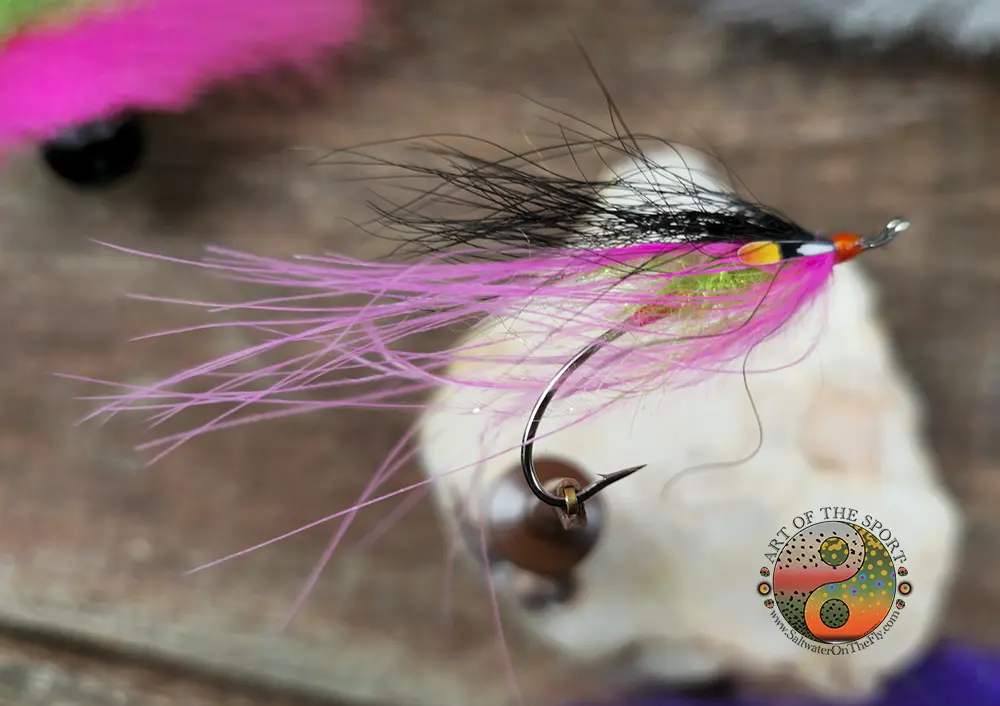
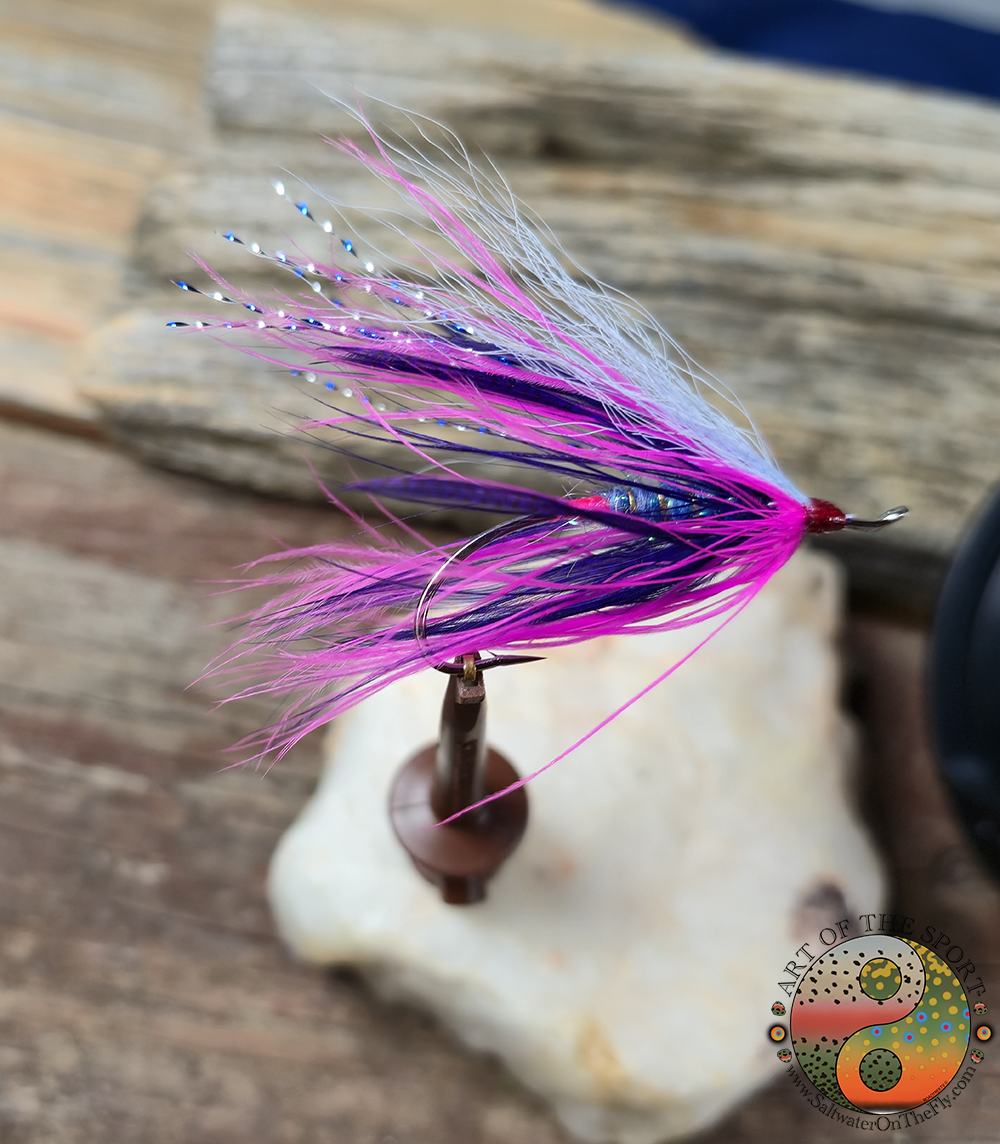
There is a giant boulder garden at mile 1.7. Fish the left bank slot on the downstream side. A black and blue Pick-yer-Pocket fly works well here.

3. Walking and Wading the North Fork
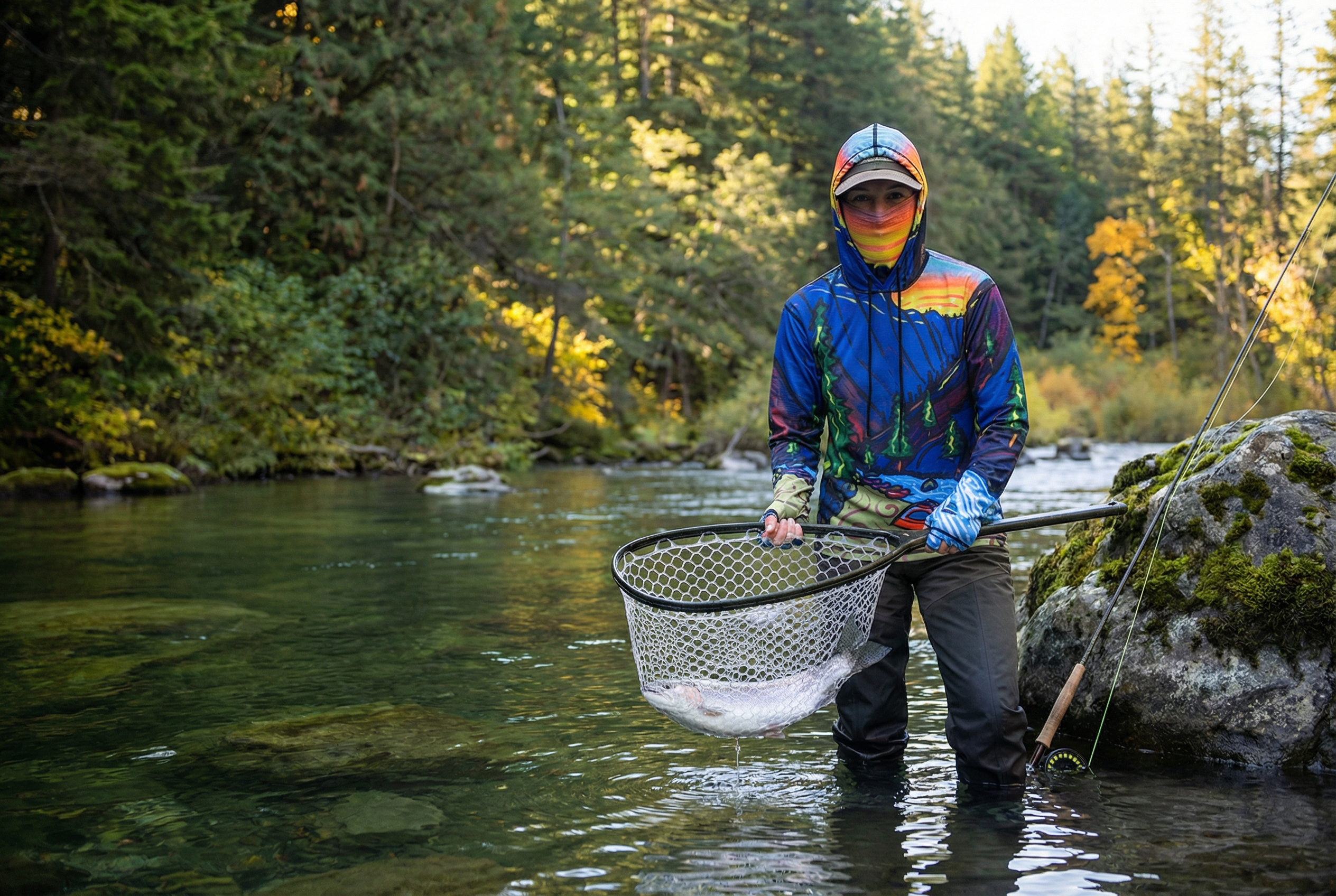
By far a favorite of the North Fork of the Santiam and extremely fun. Taking my time stalking Chrome.
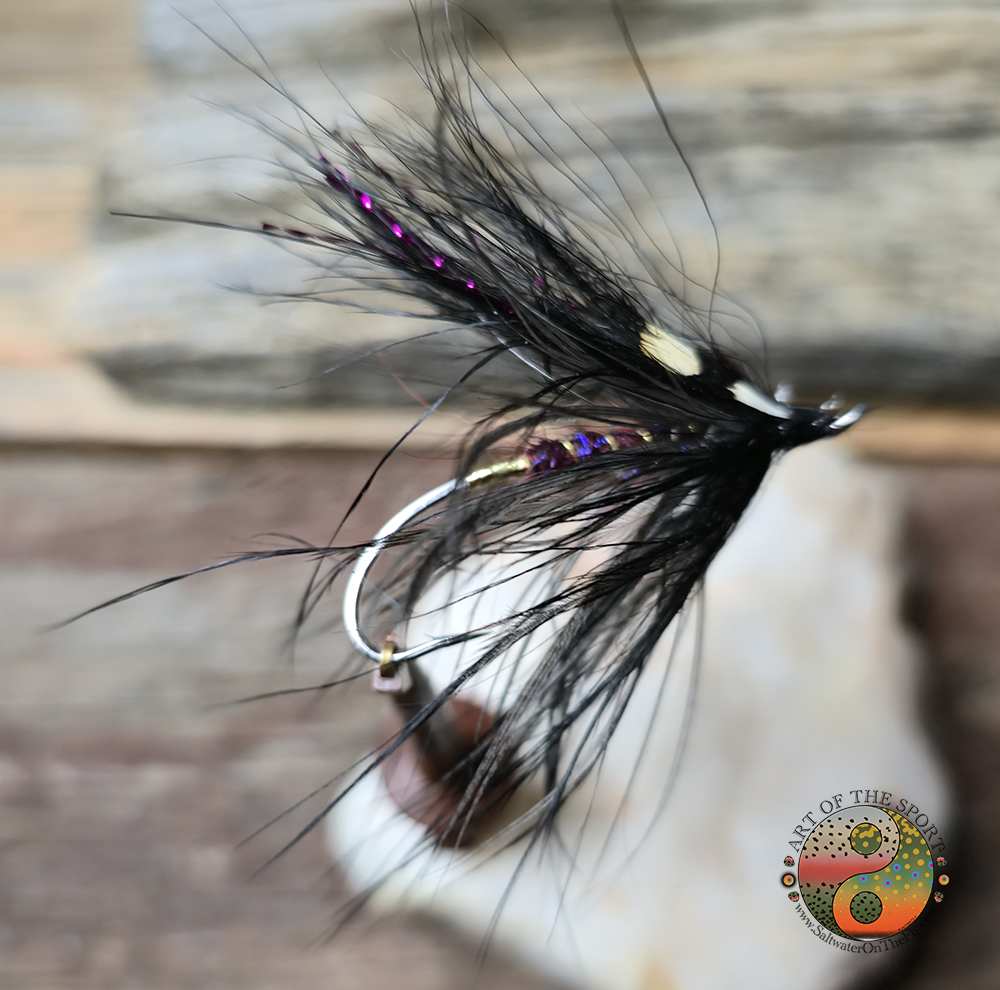
A Favorite Pattern, Step-by-Step: Tying the “Your Mom’s Disappointed” Intruder
(The only winter steelhead fly ugly enough to match your life choices)
This is the exact fly that has bailed my pathetic ass out of more skunkings on the North Fork Santiam than I care to admit. It’s big, it’s loud, it’s obnoxious, and it looks like a rejected 1980s hair-metal wig that lost a fight with a bottle of Manic Panic. Steelhead love it because steelhead have terrible taste.
Total length when done: 3.5–4.5 inches of pure emotional damage.
Materials (the shopping list of shame)
- Rear hook: Gamakatsu Octopus #2 or Owner SSW #1/0 (something strong enough to survive your incompetence)
- Front shank: 40 mm or 55 mm Fish-Skull Articulated Shank (the longer one if you’re feeling especially inadequate today)
- Connection: 30–40 lb Fireline or braided Dacron (because monofilament is for people who still have hope)
- Thread: Black 6/0 Semperfli Classic and Semperfli 3/0 Classic black for the beefy parts
- Eyes: Large or X-Large lead dumbbells, painted hot orange or chartreuse (the uglier the better)
- Tail: Two long black ostrich herl plumes + 6–8 strands of holographic Lateral Scale in electric blue
- Body: Fl. Coal Fire Monster Bush Fur Dub brushed out like you’re trying to give it anxiety
- Under-collar: Electric blue schlappen or Lady Amherst tail (one per each side)
- Over-collar: Black schlappen, palmered like you’re angry at it
- Front hackle: Extra-long black marabou blood quill (the cheap stuff works better)
- Legs: 4–6 hot-pink barred crazy legs or grizzly micro legs (yes, hot pink; fight me)
- Head: Fl. Coal Fire Monster Bush Fur Dub or Laser Dub veil, picked out until it looks like a hangover
Tools
- Vise (obviously)
- Bobbin that doesn’t suck
- Bodkin (for poking yourself when you screw up)
- Semperfli No Tack UV resin (optional, but we’re not savages)
Now, the step-by-step. Follow along or don’t. I’m not your dad.
- Rear hook setup Jam the octopus hook onto the back of the shank with the hook point riding UP (yes, upside-down; the fish will still find it, genius). Secure it with 15–20 tight wraps of 30-lb Fireline. Coat that mess in Zap-a-Gap so it never moves. Ever. Burn the tag end so it looks like you know what you’re doing.
- Start the rear body Lay down a thread base on the rear half of the shank. Tie in two long black ostrich herls by the tips, curving outward like devil horns. Add 6–8 strands of electric-blue Lateral Scale on each side. Palmer the ostrich forward 3–4 wraps so it flares like your mom’s disappointment.
- Dub the rear body Dub a sloppy, fat noodle of black Ice Dub. Brush it out with a toothbrush you stole from a motel. It should look like a goth caterpillar that gave up on life.
- Tie in the dumbbell eyes Flip the whole thing upside-down in the vise (yes, the entire shank). Tie the lead eyes on TOP of the shank, which is now the bottom because physics hates us. Figure-8 wrap them until your fingers bleed. This is what makes the fly swim hook-point up and saves you from 47% of snags. You’re welcome.
- Front body & hackle Flip it right-side up again. Tie in a black schlappen feather by the tip, then an electric-blue schlappen right behind it. Palmer them forward together, stroking the fibers back each wrap so it doesn’t trap. One or two wraps each is plenty unless you want it to look like a Vegas showgirl.
- Legs of chaos Tie in 2–3 hot-pink crazy legs on each side, splayed out like jazz hands. Steelhead see hot pink in dirty water. Science or trauma, take your pick.
Monster Bush Fur Dubbing
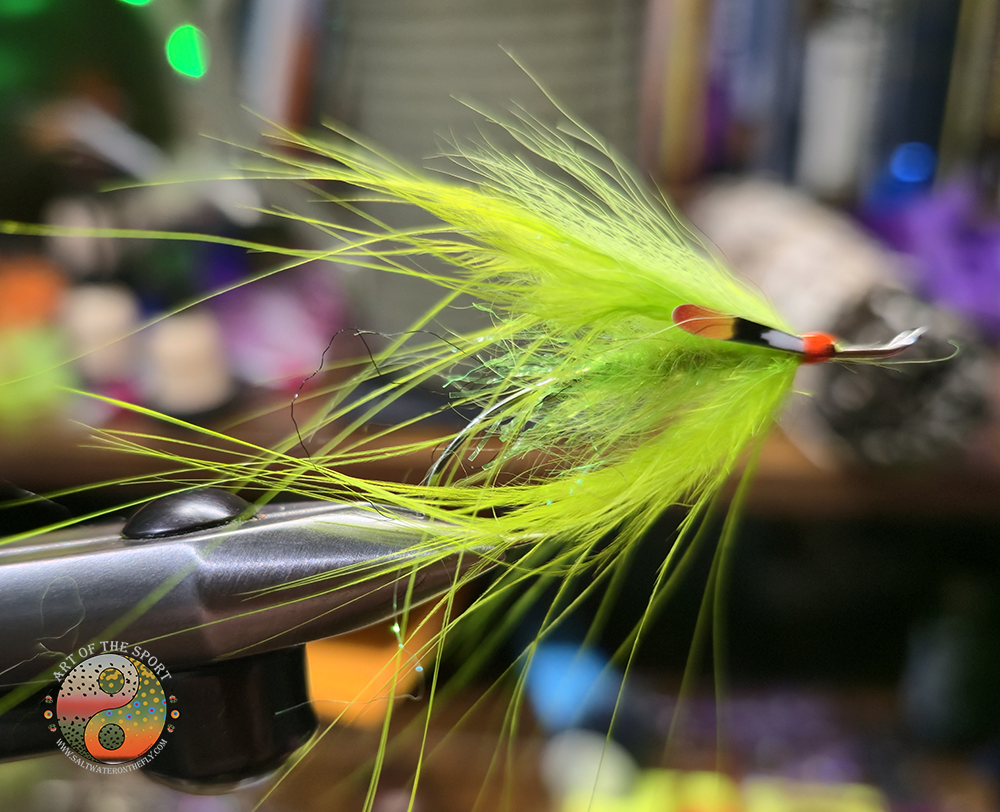
She's a Screamer
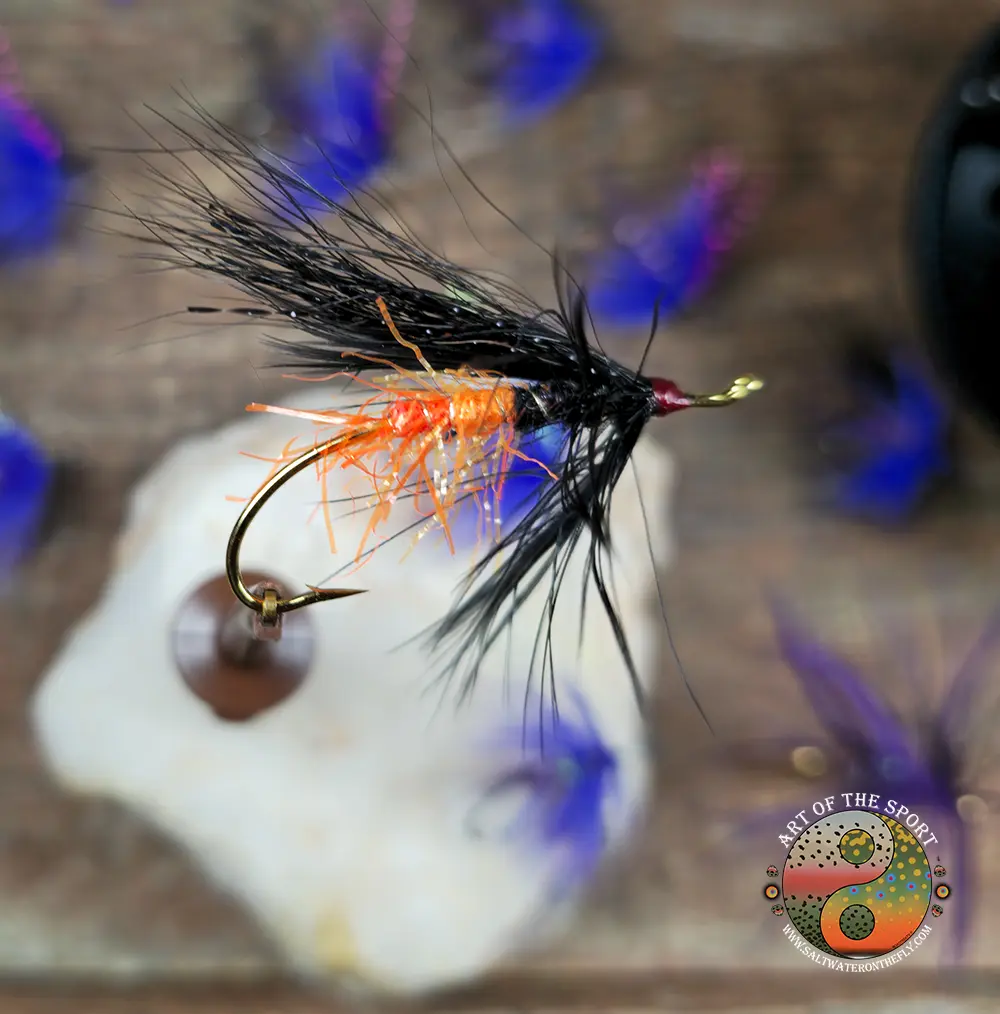
Electric Coal Car
7. Front marabou collar Tie in a full blood marabou feather by the tip. Give it two loose wraps and let it collapse around the eyes. This is the “movement” that makes winter fish try to murder it.
8. Final dubbing head Spin a rope of black Laser Dub, wrap it tight right up to the eye of the shank, then pick the ever-living hell out of it. You want a massive, shaggy head that pushes water like a linebacker. Coat it lightly with Loon Hard Head or UV resin if you’re extra and want it to last more than one fish.
9. Whip finish and cry Ten half-hitches or a whip finish you actually trust. Hit the thread wraps with Zap-a-Gap. Stare at your creation. Realize it’s hideous. That’s how you know it’s perfect.
Rigging & fly fishing it like you mean it
- Tip: T-11 to T-17 depending on depth and how much your shoulders hate you
- Leader: 3–4 ft of 15-lb Maxima Ultragreen (because fluorocarbon is for people who don’t lose flies)
- Swing it stupid slow in the soft inside seams on the North Fork or the mainstem Santiam when the water looks like weak coffee.
- If you’re not snagging bottom every 6–8 casts, you’re fishing it too high in the water column. Fix your life.
Congratulations. You just tied the ugliest, most effective winter steelhead fly in the Willamette Valley. Your mom is still disappointed, but the fish won’t be.
Now go lose it in a tree and curse my name. Tradition.
4. The Stayton-Jordan Covered Bridge Hole That Only Drunk Kayakers Know
There’s a covered bridge on the mainstem that every kayaker puts in at. They all float through the same slot screaming “WOOOOO!” while you’re trying to fish it.
Secret: the fish hold directly under the bridge in the shadow line, 18 inches from the concrete pillar. You can’t cast to it from the bank because of blackberries and existential despair.
Solution: bring a 9’ 6wt, 12-lb tippet, and a size 10 Soft-Hackle Pheasant Tail. Wade to mid-river upstream, bow-and-arrow cast the fly into the shadow, let it dead-drift 6 inches under the surface. Every single kayak will float directly over your line. Every single fish will eat anyway because steelhead hate you personally.
5. The Secret Summer-Run Cut-Off Channel
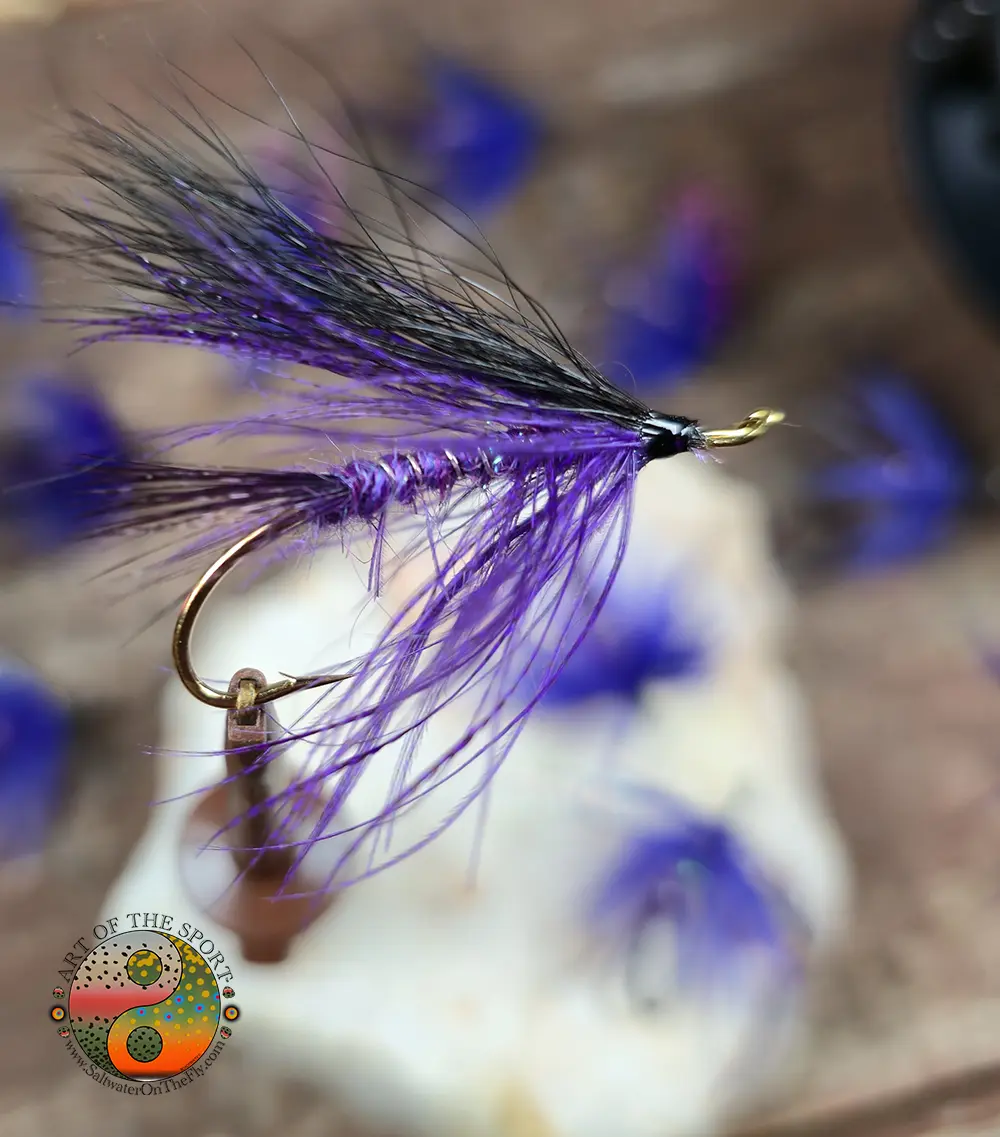
In July, when the North Fork is 350 cfs and clearer than vodka, find the side channel that splits off at the big log jam 0.3 miles upstream of the Mehama bridge. It’s 8 feet wide, 18 inches deep, and holds 40+ summer fish that never see another angler. Gear: 11’ 3wt switch, 210-grain Scandi, #8 Purple Haze soft hackle. Grease the leader to 6 inches. Skate it down the chute like you’re auditioning for Riverdance. The fish will porpoise behind it like trained dolphins until one finally commits and tries to murder your reel.
The Biology of the Fight
We should pause to look at the science. Steelhead anglers love to argue about hatchery versus wild steelhead. It is a constant debate on the river banks.
One study suggested hatchery fish hurt wild populations. A 2006 study claimed production of wild winter steelhead decreased significantly. That scares many conservationists.
But science continues shifting. Another paper published in 2018 had a different take. It said hatchery summer steelhead didn’t negatively affect winter recruitment.
It is confusing for anglers. We just want to catch fish without ruining the ecosystem. Just handle every wild fish with extreme care.
This river system supports more than just steelhead. You can find Spring Chinook salmon making their way upriver. Coho salmon also appear in the system later in the year.
If you venture into the tributaries, you might find cutthroat trout. In the higher elevations, brook trout are present. Always identify your catch before handling it.
Steelhead Fly Fishing Santiam River and North Fork of Santiam River Tactics
Let’s talk about the “No Fishing From Dam” signs. You see them on the lower North Fork. They are bolted on low-head dams.
Reality check: fish hold in the eddies below these dams. Willamette as winter fish stack in there like wood. You just have to be smart.
Stand downstream on the gravel bar. Roll-cast upstream into the eddy. Let your fly sink into the death zone.
When the game warden rolls up, you might be fighting a fish. They usually wait until you land it to talk to you. Just play dumb and be polite.
The Green’s Bridge Scum Line
Everyone knows the summer steelhead scum line near Greens Bridge. Most people fish the wrong part. The fish hold in a stretch that smells like cow manure.
You need to find the spot around mile marker 4 on the tracks. It is the sketchiest bank you have ever seen. Bring a rope if you value your ankles.
Fish a Purple Perdigon Muddler at night. August is prime time for this insanity. The bats will escort you down the trail.
The fish come up aggressively here. You will hook the biggest summer fish of your life. You will probably lose it in a log jam immediately.
| Run Type | Peak Timing | Top Fly Color |
|---|---|---|
| Winter Steelhead | Jan – March | Pink/Orange |
| Summer Steelhead | June – August | Purple/Black |
| “Town Run” Fish | April – May | Blue |
Handling the Crowds
There is a covered bridge near Stayton. Kayakers launch there constantly. They scream and yell as they float by.
The fish hold directly under the bridge concrete. They sit in the shadow line. You can’t reach them easily from the bank.
Use a bow-and-arrow cast to get in there. A soft-hackle fly works best. The fish are used to the noise.
It feels weird fishing while kayakers float over your line. But steelhead hate you personally anyway. They might eat just to spite you.
You also need the right equipment for this. It gets expensive quickly. This sport ruins bank accounts.
Managing your budget is tough when rods cost so much. You might need to read about fly fishing and financial planning to survive. It sounds like a joke, but it is real.
If you want to avoid people, check out a local county park during the week. Good opportunities exist if you wake up early. Most anglers are lazy.
Understanding River Flows and Dams
The North Santiam is heavily influenced by dams. Big Cliff Dam and Detroit Dam regulate the water. This affects both water temperature and clarity.
Big Cliff acts as a re-regulating dam for Detroit. It smooths out the flows coming from the larger reservoir. This creates stable flows for the lower river.
Anglers must watch the gauges closely. The National Weather Service provides accurate data. If river flows spike, the fishing gets tough.
When river water drops, fish get spooky. High levels can blow out the river entirely. Always check the fishing report before driving.
The water coming from Detroit Lake is generally cold. This helps summer steelhead survive the heat. It also keeps hatchery rainbow trout active.
Sometimes the weather service predicts rain that never comes. The river stays low and clear. In these conditions, use smaller flies.
The flows north of the dams are natural. The tributaries feed into the reservoir. These upper sections behave differently than the tailwater.
Habitat and Conservation
It is not all about chasing fish. Good work is happening to help them. We want these runs to last.
The North Santiam Watershed Council did great work near Mehama. They restored 30 acres of riparian area. This gives fish a place to hide.
Western Rivers Conservancy is also huge here. They helped conserve miles of river frontage downstream of Stayton. This protects the side channels fish need.
These projects matter. Without habitat, we have no game. Support these groups if you can.
Steelhead are a sensitive species in this region. Wild steelhead numbers fluctuate yearly. We must protect the native Santiam stocks.
Knowing the Rules
The regulations here change often. You cannot just guess. ODFW reminds anglers often about regulations to protect threatened winter steelhead.
Usually, only artificial flies and lures are allowed in early spring. Bait is a no-go during this window. It saves the wild fish from deep hooking.
Always check the ODFW Weekly Fishing Report before you drive. Things change based on water levels. You don’t want a ticket.
If you catch trout or steelhead with an adipose fin, release it. That is a wild fish. Only keep fin-clipped hatchery fish.
Planning Your Trip
If you visit, you need a place to sleep. The lower river has options. There are plenty of boat launches to check out.
You can camp at state parks. is a popular spot. It puts you right on the water.
For a wilder experience, go higher up. The area above Detroit Lake is stunning. You can explore Opal Creek wilderness.
This area has ancient forests. It feels like a different planet. Just remember you might need permits to hike or camp there.
Harriet Lake is another option nearby. It is a 23-acre reservoir in the Mount Hood National Forest. It is good if the river blows out.
The Willamette Valley offers many amenities. You are never far from food or gas. Towns like Stayton and Mill City are close.
For scenery, look towards Mount Jefferson. The views from the river are incredible. The Jefferson Wilderness provides a stunning backdrop.
The Poacher’s Moon
Locals whisper about the “Witching Hour.” It happens on a full moon in February. You need dropping river levels.
The air temperature must be freezing. Native winter bucks go on the chew after midnight. This is the secret game.
Go to the tailout of Packsaddle Park. You need a headlamp with a red mode. Do not use white light.
You will hook exactly one fish per night. It will be wild and mean. You release it and wonder why you are awake.
What Gear to Bring
Do not show up under-gunned. These fish are strong. You need reliable equipment.
For a detailed list, check this guide on fly fishing gear. Generally, a 7-weight switch rod is perfect here. It handles the wind and the fish.
Rich Youngers runs a shop called Creekside Fly Fishing. He is a local legend. He can set you up with the right flies.
A fly rod is your primary tool. However, some anglers use a spey rod for distance. This helps on the wide lower river.
If you have a drift boat, you can cover more water. This opens up water inaccessible to bank anglers. You will find plenty fish in the middle runs.
Summer Run Tactics
Summer fishing is a different beast. The water gets low and clear. The North Fork flows drop significantly.
Find the side channels in July. There is one upstream of the Mehama bridge. It is very narrow but holds fish.
Use a light switch rod here. Skate a dry fly across the surface. The fish will chase it like cats.
Always check water data first. The NW River Forecast Center gives you flows. If it is too hot, let the fish rest.
Looking for other spots? This article lists the best places to go fly fishing across the country. But honestly, Oregon holds its own.
Summer offers a good bit of dry fly action. Trout fishing is also excellent during these months. Use caddis patterns in the evening.
Upper River and Trout Opportunities
The upper river sections near Marion Forks are great for trout. You can find hatchery rainbow trout stocked here. The North Santiam above the lake is beautiful.
This area is part of the Willamette National Forest. The water is crystal clear and cold. You can sight fish for trout in the pools.
Fishing north of Detroit involves smaller water tactics. A 4-weight rod is plenty here. It is a nice break from heavy steelhead gear.
You might also find brook trout in the small creeks. They are aggressive and fun to catch. Good numbers of fish reside in these pockets.
If the fishing continues to be slow down low, go high. The upper sections are often less crowded. You can enjoy solitude and river fish.
FAQs
When is the best time for Steelhead Fly Fishing Santiam River?
Winter steelhead peak from January to March. Summer steelhead are best from June to August. Check the fishing report regularly.
Is the river good for beginners?
Yes, the river good for learning if you hire a guide. Wading can be tough, so be careful. Good fishing exists for all skill levels.
Can I keep the fish I catch?
You can only keep hatchery steelhead or trout with a clipped adipose fin. All wild steelhead must be released unharmed. Check the ODFW rules.
Where can I find a fishing report?
Local fly shops usually post a report good for the week. Online forums also share steelhead catches. The fishing north groups on Facebook are active.
What about the Coho River run?
The Coho salmon run happens in the fall. They enter the Willamette River and move up the Santiam. They are aggressive and fun to catch.
Is there a South Santiam River fishery?
Yes, the South Santiam also has steelhead. It flows into the main stem near Jefferson. It offers similar opportunities to the North Fork.
Do I need a drift boat?
A drift boat helps, but it is not required. There is plenty of bank access. Steelhead catch rates are decent for bank anglers too.
Are there brook trout in the river?
You will find brook trout mostly in the upper tributaries. The main river is dominated by rainbows and steelhead. Fork trout fishing is fun in the summer.
How do flows north of the dam affect fishing?
The flows north or upstream of the reservoir are natural. Rain and snowmelt drive these levels. They drop quickly in the summer.
Is catching steelhead hard?
Catching steelhead is known as the fish of a thousand casts. It takes patience and persistence. But the tug is worth the drug.
Conclusion of Steelhead Fly Fishing North Fork and Santiam River
The experts usually lie about where they fish. If they say they don’t fish below Stayton, they are fibbing. They just hide their trucks well.
The guy with the bobber catches more than you. He uses cured prawns in the deep slots. You have to accept this reality.
Steelhead Fly Fishing Santiam River and North Fork of Santiam River will break your heart. But you will keep coming back. It is an addiction.
The river knows your sins. If you see a white Tacoma with a sad dog, wave hello. That is just me looking for a pullout.
Tight lines and loose morals. Guard these secrets with your life. I’ll see you on the water.
Final Santiam Truth Bombs
- Every single “expert” who claims they never fish below Stayton is lying. They’re just better at hiding their truck.
- The guy bank-fishing with a spinning rod and a bobber the size of a softball? He outfishes 90 % of the Spey crowd because he’s drifting cured prawns through lies you can’t reach with a 13’6” rod and a $200 line. Cope.
- If you see a white Tacoma with a crooked fly rod sticker and a dog that looks permanently disappointed, that’s me. Buy me coffee and I’ll tell you which run is lying to everyone right now.
- The river knows your sins. Swing accordingly.
Now take these secrets, guard them with your life, and never, EVER admit in public where you got them. I’ll be the one upstream, flipping you off with a fresh nickel-bright hen on, laughing while you’re still trying to find the “closed” gate that isn’t.
Tight lines and loose morals, you magnificent bastards.