Washington’s Triangle of Fly Casting: A Detailed Guide to Fly Fishing the Spokane, Yakama, and Grand Ronde Rivers (Plus a Bonus Day on Rocky Ford Spring Creek)
Fly fishing in Washington State is its own brand of wonderful chaos. It is a puzzle that keeps you coming back for more, even on the days you leave empty-handed. This is not just about the fish; it is about standing in a gorgeous river, surrounded by landscapes that quiet your mind.
If you are ready to explore this, you will love our guide to Washington’s Fly Fishing Triangle Spokane River Yakima River Grand Ronde River Best Times Locations and fly patterns to use. This is more than a simple list of spots. You are getting the real story on three of the state’s most iconic rivers: the Spokane, the Yakima, and the Grande Ronde River Washington.
We are even throwing in a bonus day on Rocky Ford Spring Creek because some challenges are too good to pass up. Here is our detailed roadmap to the Washington’s Fly Fishing Triangle Spokane River Yakima River Grand Ronde River Best Times Locations and fly patterns to use. This Washington river trio is perfect for any angler’s bucket list.
| River | Primary Target Species | Prime Fishing Season | Recommended Fly Rod |
|---|---|---|---|
| Spokane River | Rainbow Trout (native Redband) | July – September | 9-foot, 5 or 6-weight |
| Yakima River | Rainbow & Cutthroat Trout | June – October | 9-foot, 5 or 6-weight |
| Grande Ronde River | Summer Steelhead, Rainbow Trout | October – March (Steelhead) | 7 or 8-weight Spey Rod |
| Rocky Ford Creek | Large Rainbow Trout | Year-Round (Spring & Fall best) | 9-foot, 4 or 5-weight |
Table of Contents
Grande Ronde River
The Spokane River: Urban Angling with a Wild Side
The Spokane River feels like that friend who is always up for an adventure, even if the plans are a little messy. It stretches 111 miles long, starting in Idaho and cutting right through the city of Spokane before continuing its journey. It is a tailwater fishery, which means dams control its river flows, but its personality changes from one mile to the next.
You can find yourself casting with the city skyline in view, then find a quiet, wild stretch an hour later. The river offers a great mix of water for trout fishing. You will find fast riffles, deep pools hiding big trout, and gentle runs that are perfect for honing your drift.
The native Redband trout, a subspecies of rainbow trout adapted to the arid conditions of the Columbia River basin, are the true prize here. Their vibrant colors and spirited fight make them a favorite among local fly fishermen. These fish are resilient, thriving in conditions that would challenge other trout streams.
I will never forget my buddy Dave’s first trip to the Spokane. He was new to fly fishing but had the confidence of a seasoned pro. He spent weeks preparing, tying flies with his new fly rod, and telling everyone about the monster trout he was going to catch.
Within an hour of being on the water, his rod bent double. He was yelling with excitement, convinced he had hooked a giant rainbow. After a ten-minute fight, he finally landed his prize: a very old, soggy hiking boot. The sight of it dangling from his line was priceless, a perfect lesson in humility that the river loves to teach.
Best Times to Fish the Spokane
The Spokane can be a bit temperamental, so timing is everything. The fishing season officially opens on the Saturday before Memorial Day. But, early summer can be tough because snowmelt often makes the river high and fast, making it difficult to fish effectively.
Your best bet is from July through September. During these months, the water levels stabilize, and the trout become much more active and willing to eat. You should look for flows between 1,000 and 2,000 cubic feet per second (CFS).
Anything higher is tough to wade, while lower flows can make the fish spooky. Always check the current river conditions on the USGS water data site before you head out. Or just call one of the local fly shops for the latest scoop on conditions and what fly patterns are working.
Spokane River Fly Patterns
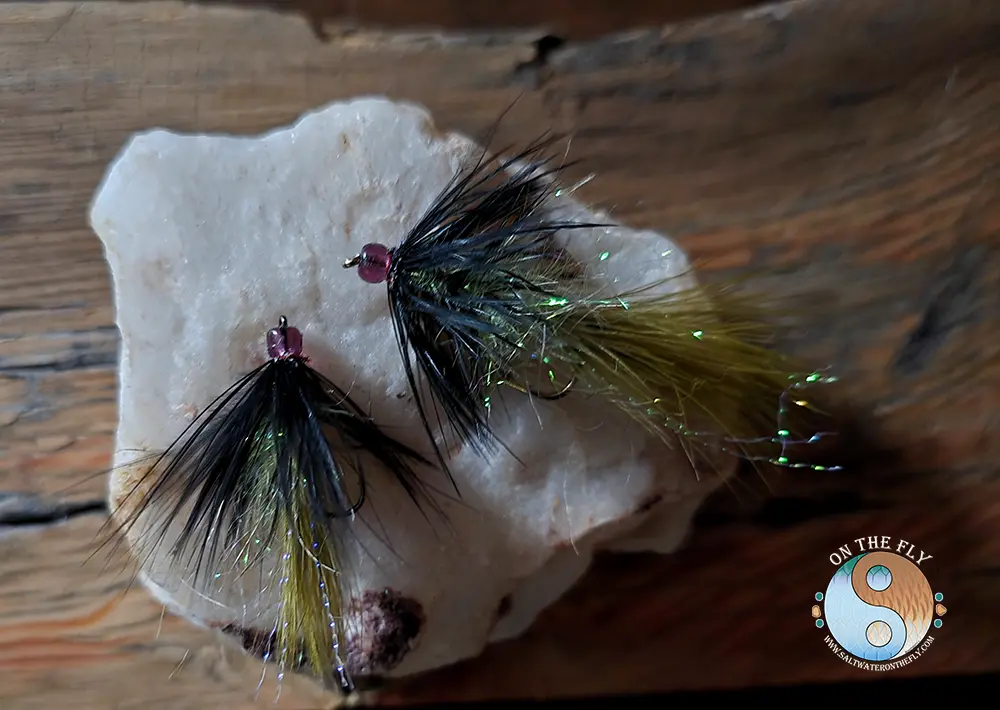
The rainbow and native Redband trout in the Spokane are not overly picky, but they do have their favorite foods. Having the right flies in your box can make a huge difference. Here are a few must-haves for your trip.
- Pat’s Rubber Legs: This stonefly nymph imitation is a fantastic choice for this Washington river. Fish it in sizes 8-10, bouncing it along the bottom in deeper runs and pockets. Trout have a hard time resisting this meal.
- Elk Hair Caddis: A classic dry fly that works wonders during evening hatches. Sizes 12-16 are usually best. You can also fish it with a soft hackle dropper for a deadly combination.
- Copper John: This weighted nymph is excellent for getting down deep quickly. The flash and weight make it a great point fly in a two-nymph rig. Fish it in copper, red, or chartreuse in sizes 12-16.
- Prince Nymph: A versatile and effective pattern that can imitate a variety of aquatic insects. Its peacock herl body and white wings are a combination trout find appealing. A beadhead version helps get it into the feeding zone.
- Sculpin Streamers: If you are hunting for bigger, more aggressive trout, a sculpin pattern is your ticket. Strip it through deep pools and hang on tight.
A great tactic for this river is a dry-dropper rig. You use a buoyant dry fly like a Chubby Chernobyl as an indicator. Then you tie a nymph, like a Pheasant Tail or Copper John, off the hook bend. This setup lets you cover two parts of the water column at once.
Top Fishing Spots on the Spokane River
Knowing where to go is half the battle. The Spokane offers plenty of public access points. Here are a couple of spots that consistently produce good fishing.
Sullivan Street Bridge
The area around the Sullivan Street Bridge in Spokane Valley is a great place to start. The river here is full of large boulders that create countless pockets and seams. These spots are perfect hiding places for trout waiting to ambush their next meal.
The current can be strong, so wade carefully. Early mornings and late evenings are often the most productive times. The lower light gives fish confidence and keeps your shadow off the water. Try drifting a Pat’s Rubber Legs through the pockets behind the rocks for your best chance at hooking into a lively rainbow.
Riverside State Park
Just downstream from the city, Riverside State Park offers a completely different vibe. Here, the river slows down and forms long, glassy runs that are ideal for classic fly fishing techniques. It is like a conveyor belt of food for trout, and they line up to feed.
This section is excellent in late summer, especially during mid-morning when the hatches start. Drifting a soft hackle or a simple Pheasant Tail nymph through these runs can be incredibly effective. Just be aware that this is a popular access point, so you might have some company, especially on weekends.
The Yakima River: Washington’s Famous Blue Ribbon Trout Stream
The Yakima River is the star of the show for many Washington anglers. This 214-mile river is a designated Blue Ribbon trout stream, which means it is managed for high-quality wild trout populations. It flows from the Cascade Mountains down to the Columbia River, offering some of the most beautiful scenery you can imagine.
The river is a tailwater fishery below three major dams. This creates consistent river flows and temperatures that trout love. You will find everything here, from fast, challenging runs to deep, mysterious pools and gentle glides that are perfect for dry fly fishing.
Its journey through diverse landscapes, from dense forests near the mountain ranges to arid, sun-baked canyons near Ellensburg, makes every trip a new experience. The health of the ecosystem supports an incredible bug life, which in turn grows healthy, fat trout. A day spent trout fishing on the Yakima is a day well spent.
My friend Sarah and I decided to float the Yakima canyon one year. She insisted on rowing, even though her experience was limited. An hour into our trip, we were spinning in lazy circles, much to the amusement of the trout below. Eventually, I took the oars, and we salvaged the day, enjoying a magical evening hatch with fish rising everywhere.
Best Times to Fish the Yakima
The Yakima fishes well for a long season, but it truly shines from late June through October. The spring runoff subsides, and the river settles into prime fishing shape. Late summer is particularly special because of the fantastic caddis and mayfly hatches that bring nearly every fish in the river to the surface.
The upper sections, from Easton down to Thorp, are great for wade fishing in July. As the season progresses, the lower canyon section near Ellensburg is best fished from a drift boat. Always be sure to check the latest Washington fishing regulations from the Washington Department of Fish and Wildlife, as they can change.
Fly Patterns for the Yakima River
The Yakima River is home to healthy populations of rainbow and westslope cutthroat trout. These fish can be selective, so a good fly selection is important. Here are some proven fly patterns.
- Chubby Chernobyl: This big, buoyant dry fly is a killer, especially in sizes 12-14. It imitates stoneflies and grasshoppers, and trout often hit it with incredible force.
- Pheasant Tail Nymph: A timeless classic for a reason. Fish this nymph in sizes 14-18, either under an indicator or as a dropper below a dry fly.
- Pat’s Rubberlegs: The summer stonefly hatch is a major event on the Yakima. Fishing a large stonefly nymph deep along the banks can produce some of the biggest fish of the year.
- X-Caddis: During the prolific caddis hatches, a simple X-Caddis pattern in size 14-18 is hard to beat. Its trailing shuck makes it appear as a vulnerable emerging insect.
- Sculpin Streamers: The big trout in the Yakima love to chase down a meal. A well-fished sculpin streamer can produce the fish of the day, especially for the larger cutthroat trout.
A hopper-dropper rig is incredibly effective here during late summer. Use a foam grasshopper pattern on top and drop a small nymph like a Pheasant Tail or a Copper John about 18 to 24 inches below it. This is a great way to search for fish when there is no visible hatch.
Top Fishing Spots on the Yakima River
With miles of fishable water, picking a spot on the Yakima can be tough. Access is generally good, especially in the upper canyon. Here are a couple of productive areas.
Easton to Thorp
This upper stretch of the river is a paradise for wade anglers. The water is faster here, with countless riffles, runs, and pockets to explore. The banks are relatively open, which allows for easier casting with multiple fly rods.
Early mornings in July are fantastic. The air is cool, and the fish are active and less wary. A Chubby Chernobyl floated along the seams can draw some explosive strikes. Just be mindful of your footing in the swift currents and watch for rattlesnakes on the banks during hot days.
Ellensburg Area
Near Ellensburg, the river’s character changes. It widens and slows, with gin-clear water that allows you to spot fish from a distance. This area is perfect for floating in a drift boat, although wade fishing is possible in certain spots.
The evening hatches here in late August and September are legendary. You will see fish sipping mayflies and caddis with delicate precision. A perfectly drifted Parachute Adams or Elk Hair Caddis is the key to success. But these fish are smart; a sloppy cast will send them scattering.
The Grande Ronde River: A Remote Hunt for Steelhead
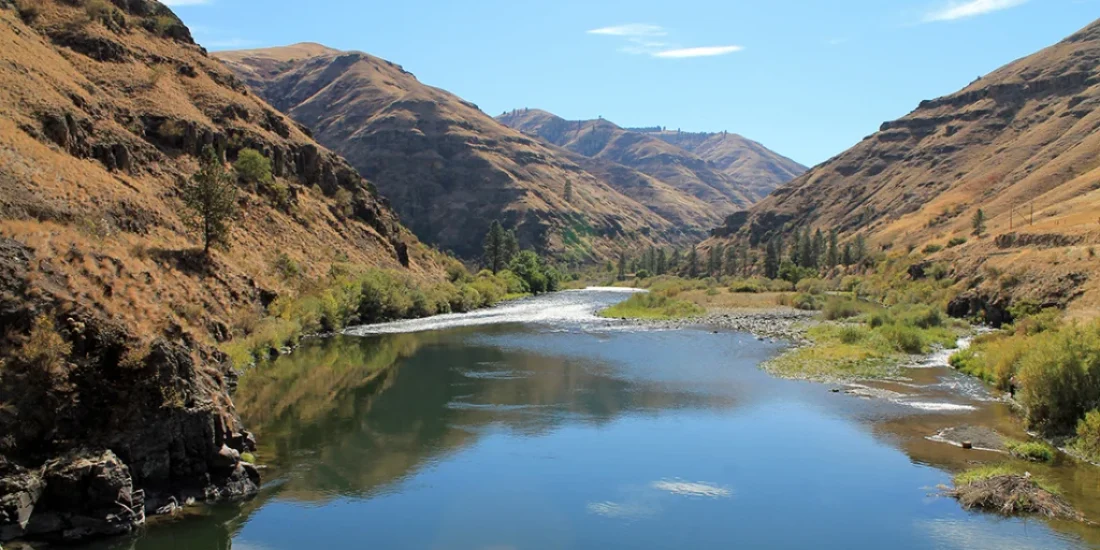
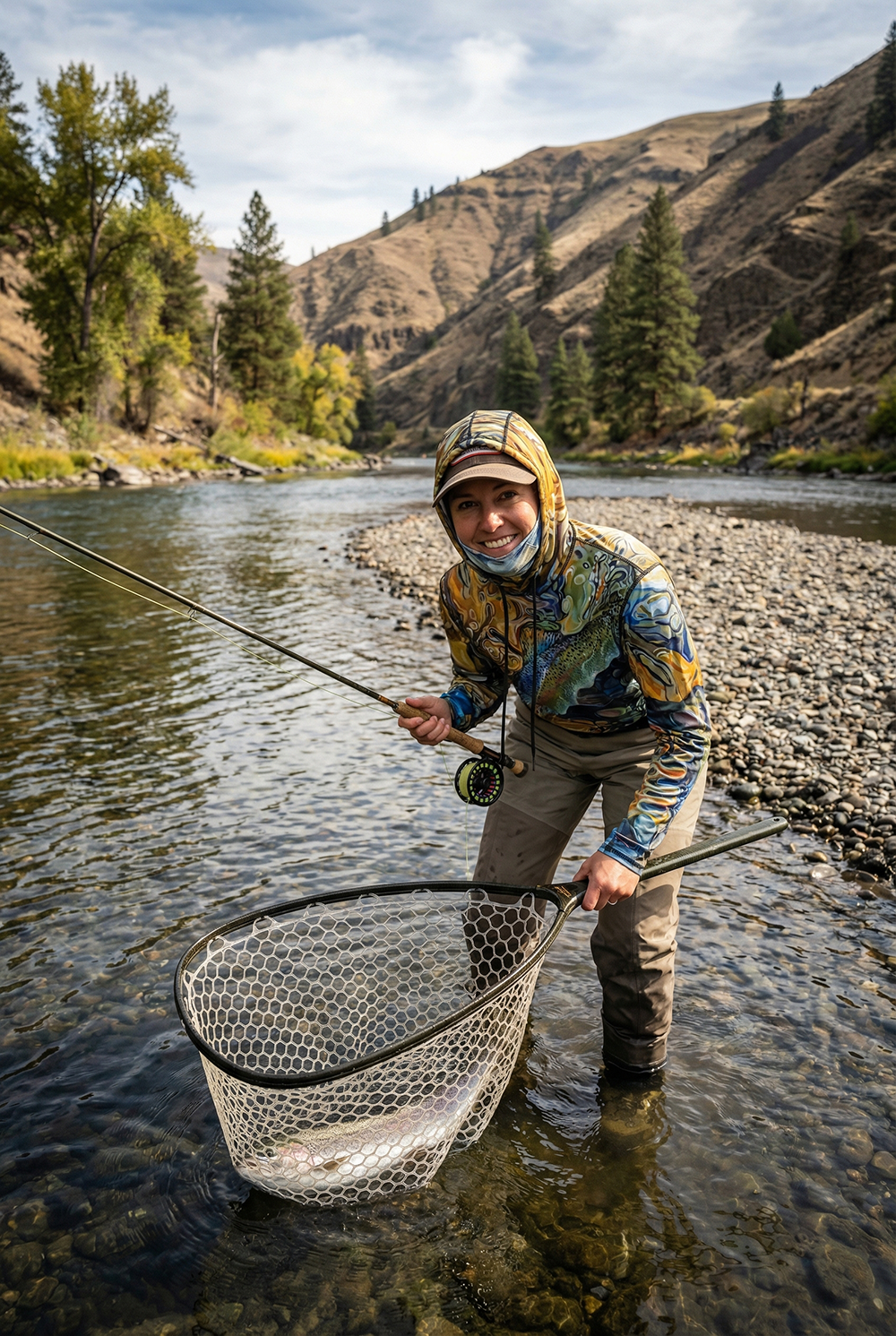
The Grande Ronde River is the rugged, wild heart of our triangle. It carves a path through the remote canyons of northeastern Oregon and southeastern Washington before joining the Snake River. This is steelhead country, a place that attracts anglers looking for the ultimate prize, the steelhead salmon.
The experience on the Ronde River is about more than just fishing. It is about solitude, breathtaking scenery in the Grande Ronde Valley, and the challenge of pursuing one of the world’s great game fish. The vibe is remote and a little bit raw, but the potential reward is huge.
The journey of the Grande Ronde begins high in the Blue Mountains of northeast Oregon, flowing through the pastoral Ronde Valley before entering its dramatic canyon. This area of southeast Washington is less traveled, offering a sense of true wilderness. For any serious fly fisherman, the Grande Ronde River Washington is a must-visit destination.
I spent a cold November day swinging flies for steelhead on the Grande Ronde. Hours went by with nothing but the sound of the river running. Then, my line went tight, and the water exploded. I was connected to a powerful steelhead that cartwheeled across the surface before throwing the hook. It was a heartbreaking moment, but that brief connection is what keeps me coming back.
Best Times to Fish the Grande Ronde
While trout can be caught here year-round, the Grande Ronde’s main event is the steelhead season. This runs from October through March. Summer steelhead begin entering the river after the spring runoff, offering another exciting window of opportunity for a great summer adventure.
The fall is the most popular time to visit. The water cools down, and fresh, aggressive steelhead push into the system in good numbers. Spring fishing can be great too, but it depends heavily on the timing of the snowmelt, which can blow the river out. The steelhead start showing up as early as September.
These steelhead runs are a part of the massive Columbia River and Snake River systems. The health of these larger rivers directly impacts the number of fish returning to the Grande Ronde. In addition to steelhead, anglers can encounter fall chinook salmon and even coho salmon in smaller numbers, especially during the fall.
Fly Patterns for the Grande Ronde
Steelhead are the main attraction, but you can also find nice rainbow and bull trout (be sure to check regulations as bull trout are often protected). Your fly box should reflect this mix. Here are some essentials for the Grande Ronde.
- Articulated Leeches: These big, flashy streamers are designed to trigger an aggressive response from steelhead. Swing them through long, deep runs. Colors like black, blue, and purple are great choices.
- Egg Patterns: When chinook salmon are spawning, steelhead will gorge on their eggs. A simple egg pattern in size 8-12, colored orange or pink, can be irresistible.
- Stonefly Nymphs: For targeting the river’s resident trout, a large stonefly nymph (sizes 8-10) is a dependable choice. Bounce it along the bottom for consistent action.
- Classic Spey Flies: Patterns like the Skykomish Sunrise or the Green Butt Skunk have a long history of success on this steelhead river. They are beautiful to tie and a joy to fish.
Top Fishing Spots on the Grande Ronde
Much of the Grande Ronde River is remote. But there are a few key access points that provide excellent fishing. Here are two well-known areas.
Troy, Oregon
The small town of Troy, Oregon, sits right on the river and serves as a major hub for anglers. The water here is classic steelhead territory, with deep runs and pools that hold fish. There is a boat launch and good access for wading anglers.
October and November are prime months to be here. The mornings can be cold but are often the best time to find an aggressive fish. Swing an articulated leech or a classic spey fly through the runs and be ready for that unforgettable grab.
Boggan’s Oasis
A little further downstream in Washington, you will find Boggan’s Oasis. This resort and restaurant is a famous stop for anglers fishing the Grande Ronde. The surrounding area offers fantastic access to runs and pools that hold both steelhead and trout.
This spot is known for its social atmosphere, so do not expect to be alone on a fall weekend. The fishing pressure can make the fish a bit wary, so precision and good presentation are critical. But the sheer number of fish in this stretch makes it a must-visit location.
Beyond the Triangle: Other Washington Fly Fishing Gems
While the triangle offers a fantastic cross-section of what the state has to offer, the freshwater options in the Pacific Northwest are vast. Many other rivers offer incredible opportunities for the dedicated fly fisherman. A quick look at a map reveals countless blue lines worth exploring.
The mighty Skagit River is legendary, known for its powerful winter steelhead runs and robust populations of all five Pacific salmon species. Further south, the Cowlitz River, flowing in the shadow of Mount Adams, provides another great steelhead and salmon fishery. These rivers are larger and demand different tactics and often heavier fly rods.
Over on the Olympic Peninsula, you find a collection of iconic rivers flowing from the Olympic Mountains to the Pacific Ocean. The Hoh River, fed by the Hoh Glacier, has a milky, glacial tint and is famous for its large wild winter steelhead. Access is often through lands managed by the Hoh Indian Tribe or within Olympic National Park, so checking local rules is vital. Other famed Olympic Peninsula rivers like the Bogachiel River and the Calawah River offer similar experiences, with chances at steelhead, coho salmon, and chinook salmon.
Bonus Round: A Day on Rocky Ford Spring Creek
While not part of the main triangle, no guide to this region would be complete without mentioning Rocky Ford Spring Creek. Located near Ephrata, this small, spring-fed creek is a technical fly fishing paradise. It is packed with enormous, highly educated rainbow trout.
Fishing here is a true test of skill and patience. The fish you’re targeting have seen every fly imaginable and will refuse anything presented unnaturally. It’s a place where success is measured not just in fish landed, but in flawless drifts and fooling a wise old trout, even if just for a moment.
I once spent an entire day at Rocky Ford trying to catch one specific trout. I threw every fly I had at it, from tiny midges to scuds. The fish would look at my fly, yawn, and casually swim away. I left without a fish but with a profound new level of respect for these incredibly smart trout.
Other Great Destinations
Best Times to Fish Rocky Ford
Thanks to its constant spring flow and temperature, Rocky Ford is open and fishable year-round. But, spring and fall are generally considered the best seasons. The weather is pleasant, and the hatches are most consistent.
Summer can be hot, and winter can be cold, but both can offer good fishing if you are willing to brave the elements. Weekends can be very crowded. Try to plan your trip for a weekday to have a bit more space to yourself.
Fly Patterns for Rocky Ford
The rainbow trout at Rocky Ford are famous for being large and incredibly selective. Success here often comes down to small flies and perfect presentation. You need a different set of tools here.
- Midge Patterns: Tiny midge larva and pupa patterns in sizes 18-22 are a staple. Fish them deep under a small, subtle indicator.
- Scud Patterns: The creek is full of freshwater shrimp, called scuds. An olive or orange scud imitation in sizes 12-16 can be very effective.
- Parachute Adams: During mayfly hatches, a small Parachute Adams (sizes 18-20) can work if your drift is perfectly drag-free.
- Damselfly Nymphs: In the late spring and early summer, the weed beds are full of damselfly nymphs. A slow, twitching retrieve can be deadly.
Stealth is non-negotiable at Rocky Ford. The water is crystal clear, and the fish are always on high alert. You will be fishing from the bank, as wading is not allowed. Long leaders, often 12 feet or more with 6x or 7x tippet, and delicate casts are required to avoid spooking these trophy fish.
Conclusion of Washingtons Fly Fishing Triangle
Fly fishing in Washington is about the adventure. It is about the soggy boot you reel in, the steelhead that breaks your heart, and the brilliant trout that outsmarts you. These moments are what create the stories you will tell for years to come.
The Spokane, Yakima, and Grande Ronde rivers each offer a distinct challenge and reward, forming a core experience for any angler in the region. From urban trout streams to the remote canyons of a famed steelhead river, this journey covers the best of Washington’s fly fishing scene. Exploring the Washington’s Fly Fishing Triangle Spokane River Yakima River Grand Ronde River Best Times Locations and fly patterns to use is an experience every fly fisherman should have.
So get your gear, talk to the local fly shops, and embrace the process. Whether you’re targeting October coho on a coastal stream or a picky rainbow trout in a spring creek, get lost in some of the most beautiful water the country has to offer. The next great memory is just a cast away.