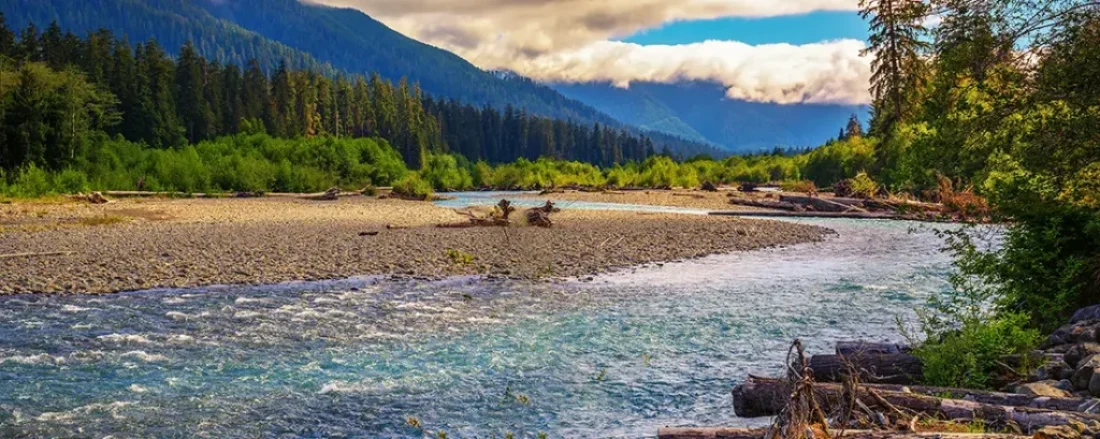
Hoh River Steelhead Saga: From Ancient Gladiators to Your Next Instagram Flex (Or Faceplant)
Ah, the Hoh River. That soggy, rainforest-choked beast slithering off the Olympic Peninsula like it’s late for a spa day with the Pacific. If you’re here, you’re probably googling “Steelhead Fly Fishing Hoh River Washington ” because your buddy posted a grip-and-grin with a chrome missile that looks Photoshopped. Spoiler: it’s not. Those fish are real, they’re pissed, and they’ve been humiliating fly anglers since before your grandpa figured out sideburns were a mistake. Buckle up, buttercup—this is 2,300+ words of SEO juice, sarcastic side-eye, and enough steelhead nerdery to make your guide roll his eyes harder than when you asked if you could “just drift a bobber.”
We’re diving into the history of Hoh steelhead runs, how to fly fish these aquatic unicorns, the best times to not waste your vacation days, and a fly evolution timeline that’ll take us from woolly mammoths to Instagram influencers tying size 2/0 TikTok specials. I’ll even teach you to tie a few classics and modern abominations so you can pretend you’re Lefty Kreh instead of Lefty McSnap-Off. Let’s wade in before the search bots get bored.
Table of Contents
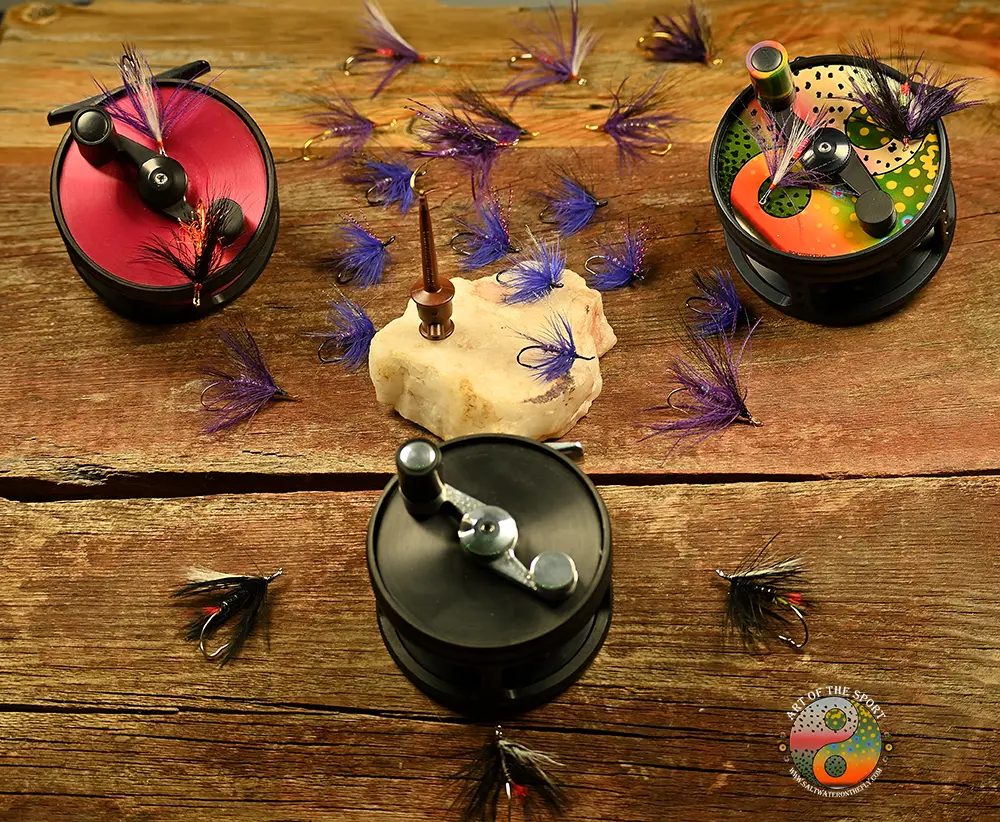
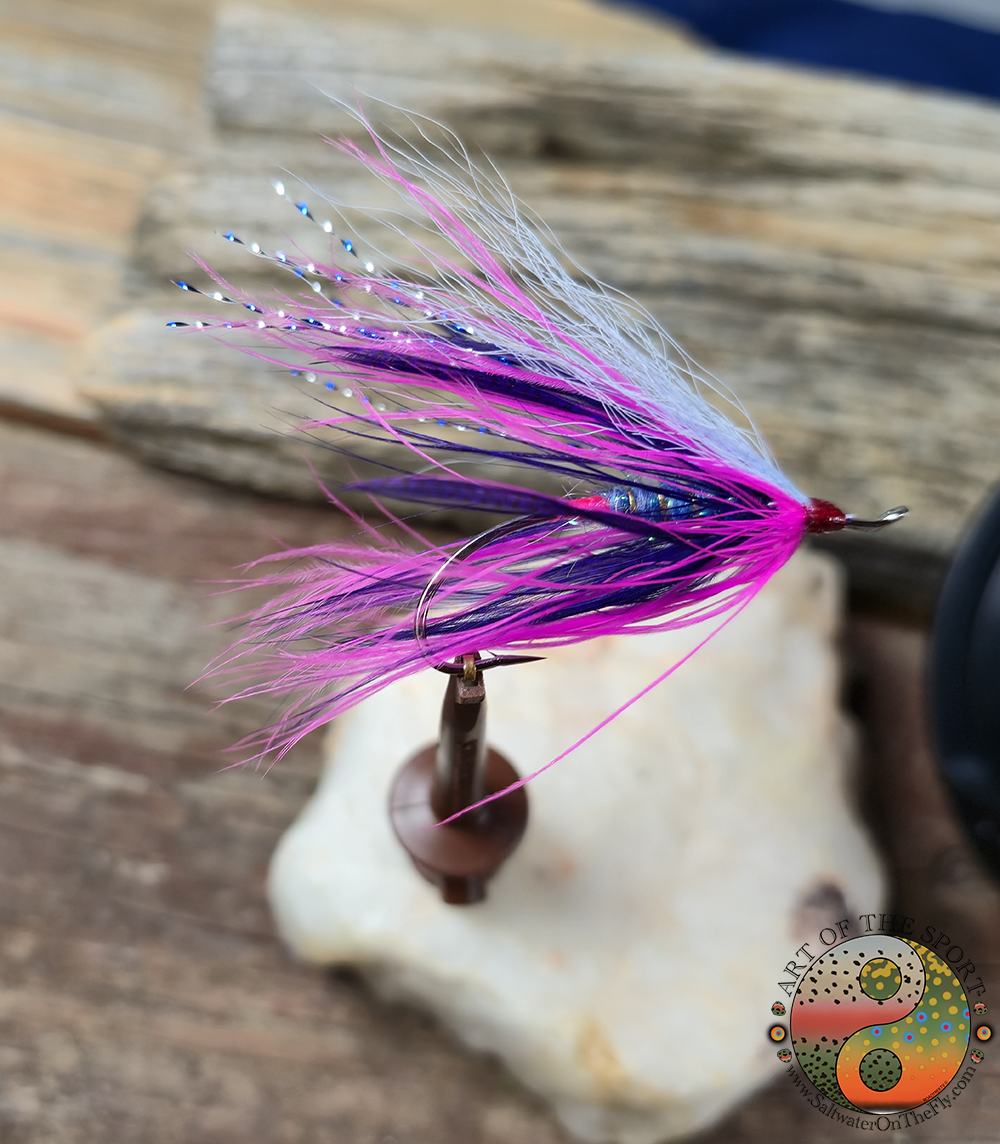
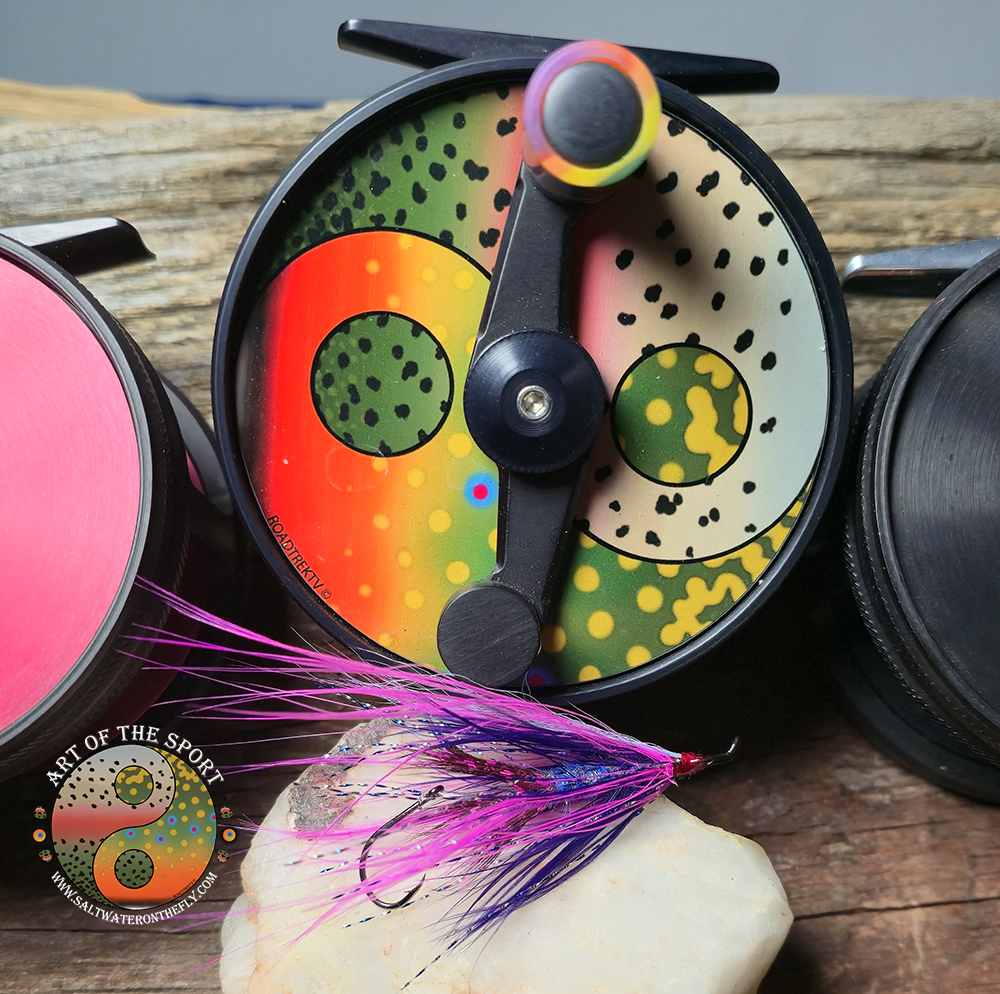
Purple Peril Among Spey Reels and other Steelhead Pattern, like skunks, streetwalkers, and signal lights.
Part 1: The Hoh River Steelhead – A Brief History of Getting Your Ass Handed to You by a Fish
Picture this: it’s 10,000 BC, glaciers are retreating faster than your hairline, and the Hoh River is basically a firehose of ice water carving through old-growth cedar that smells like a wet Christmas tree. Enter Oncorhynchus mykiss—the steelhead—nature’s middle finger to anyone who thinks fish are “peaceful.” These anadromous rainbows leave the river as smolts, bulk up in the Pacific like they’re on a CrossFit cruise, then rocket back upstream with the aerodynamic profile of a torpedo and the attitude of a honey badger.
Before we talk about your future battles, let’s look at the past. The Hoh River and its steelhead have a story that’s as deep and winding as the river itself. Understanding it makes you appreciate that pull on your line just a little bit more.
Imagine the Hoh thousands of years ago, a raw torrent of glacial melt carving its path through an ancient forest within the future Olympic National Park. This is where Oncorchus mykiss, the steelhead, perfected its craft. They are nature’s ultimate survivors, leaving the river as tiny smolts and returning from the Pacific Ocean as silver giants. Just think of the fun of Steelhead Fly Fishing Hoh River would have been then.
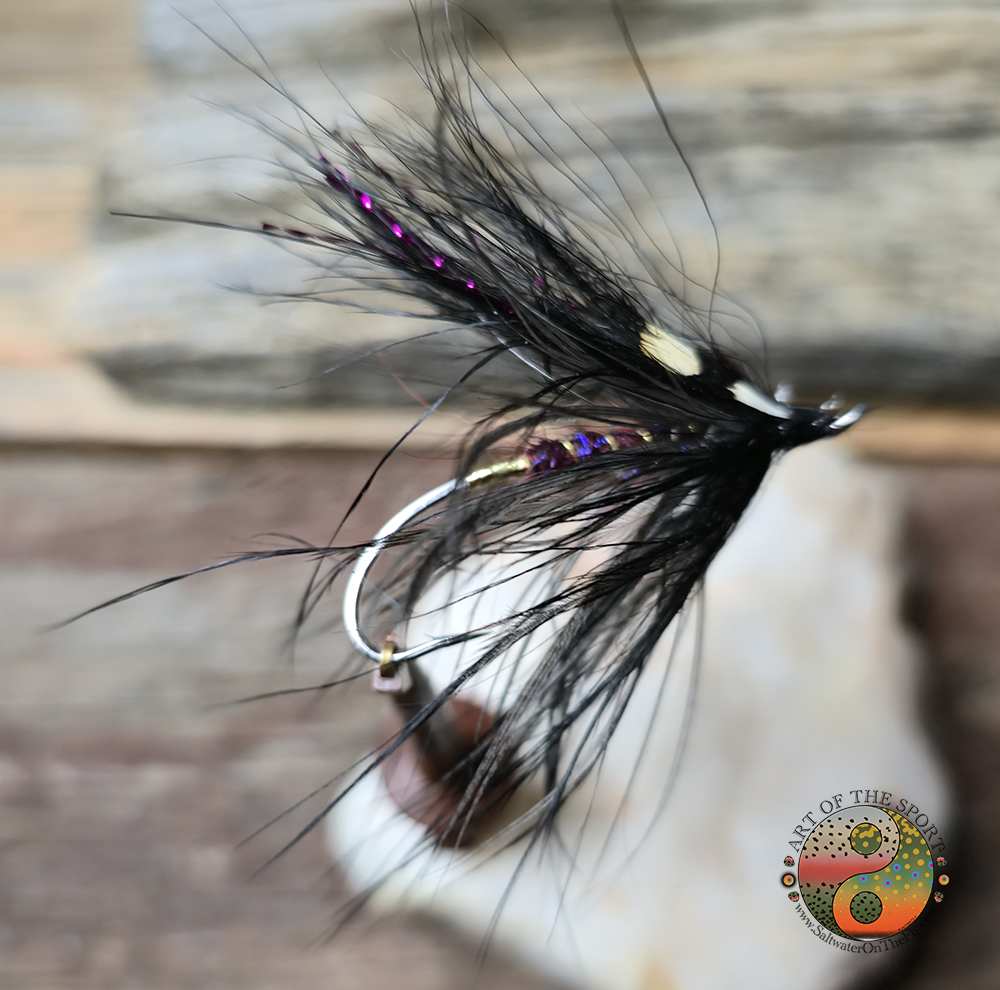
Gary Cooper Spey often triggers strikes where others miss.
First Anglers: The Hoh Tribe
Long before waders and a fancy fishing rod, the Hoh Indian Tribe knew these fish intimately. For them, steelhead were not a sport; they were a cornerstone of life. They used skillfully crafted weirs, spears, and nets to harvest the massive runs that choked the river each year.
Stories tell of runs so thick you could supposedly walk across the river on the backs of fish. While that might be an exaggeration, archaeological sites show massive amounts of fish bones. This was a sustainable fishery born from deep respect for the resource, centered on the Hoh Indian Reservation near the river mouth.
1850s–1900s: White People Discover Fire (and Overfishing)
Fast-forward to fur traders, loggers, and prospectors who saw the Hoh and thought, “Free protein!” Early commercial nets were basically medieval torture devices for fish. By the 1890s, canneries were cranking out tins faster than your aunt posts Minion memes. Steelhead? Collateral damage. Runs crashed harder than the 1929 stock market.
Enter the hatcheries. Washington State started dumping hatchery smolts into the Hoh like it was a Black Friday sale. Early programs used whatever fish showed up—think wild brood stock mixed with whatever escaped the net. Result? A genetic soup that tasted like “meh” but kept rods bent.
Mid-20th Century: The Golden Age of “Holy Crap, Did You See That?!”
Post-WWII, the Hoh became ground zero for steelhead junkies. Guides like Enos Bradner (yes, the guy who wrote the book) and local legends rowed wooden drift boats through fog so thick you needed sonar to find your coffee. Winter runs peaked at 10,000–15,000 fish. Summer runs? Another 5,000+. Anglers used 9-foot bamboo rods, silk lines, and flies tied on hooks forged by blacksmiths who probably thought “nymphing” was a sex thing.
Hatcheries: A Complicated Fix
To fix the problem, state agencies turned to hatcheries. They began raising steelhead in concrete ponds and releasing them into the river by the truckload. On the surface, it worked, as the number of hatchery steelhead available to catch went up, and a fishing industry was born.
But this created a new set of problems. Hatchery fish competed with the remaining wild fish for food and space. Their genetics, often sourced from other river systems, diluted the specific genetic signature of Hoh River native steelhead, which had been perfected over millennia.
1980s–2000s: The Dark Ages (Thanks, Logging and Dams)
Clearcuts turned the Hoh watershed into a mud smoothie. Sediment smothered redds. Elwha Dam (downstream) blocked access. Wild runs tanked to under 2,000 winter fish by the ‘90s. ESA listings ensued. Hatchery fish—clipped adipose fins and all—became 80% of the catch. Purists wept into their jackets.
Where We Stand Today
Today, the story is one of cautious optimism and constant work. According to the Washington Department of Fish and Wildlife, wild winter steelhead runs are a fraction of their historic size, but they are stabilizing. Smarter hatchery practices and improved logging regulations within the national forest have helped.
New threats like climate change present constant challenges, with warmer water and erratic river flows. Every wild species steelhead you encounter in the Hoh is a genetic miracle and a survivor of a tough history. That’s reason hooking one feels so special and why letting it go feels so right. Steelhead Fly Fishing Hoh River is a magical experience.
Today: The Rollercoaster (2025 Edition)
As of November 2025, wild winter steelhead hover around 3,500–5,000 returnees (WDFW estimates). Summer runs? 1,500–2,500. Hatchery programs are smarter—broodstock sourced locally, fewer fin clips, more “wild-ish” vibes. Logging’s regulated (sorta). Sediment’s down. But climate change is the new villain—warmer winters mean earlier melts, higher flows, and steelhead that ghost you like a Tinder date.
When to Chase Chrome on the Hoh (And When to Stay Home)
Hoh steelhead run on their own schedule, not yours. Showing up at the wrong time of the river year is the fastest way to have a very long, very cold, and very fishless casting practice session. Here’s a breakdown of the seasons so you don’t waste your precious vacation days.
Part 2: When to Chase Chrome – Don’t Be That Guy Who Fishes June
Steelhead don’t care about your calendar. But if you show up at the wrong time, you’ll be swinging flies through empty runs while locals snicker behind their Yeti tumblers.
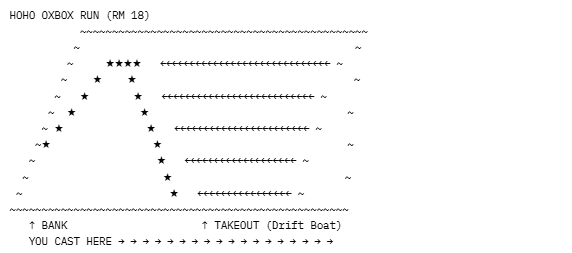
Legend for Swinging flies on the Hoh at Ox Bow Run:
★ = Steelhead lie | ← = Swing path | ~ = Water | Bank = Don’t wade past here
Winter Run Steelhead (December – April)
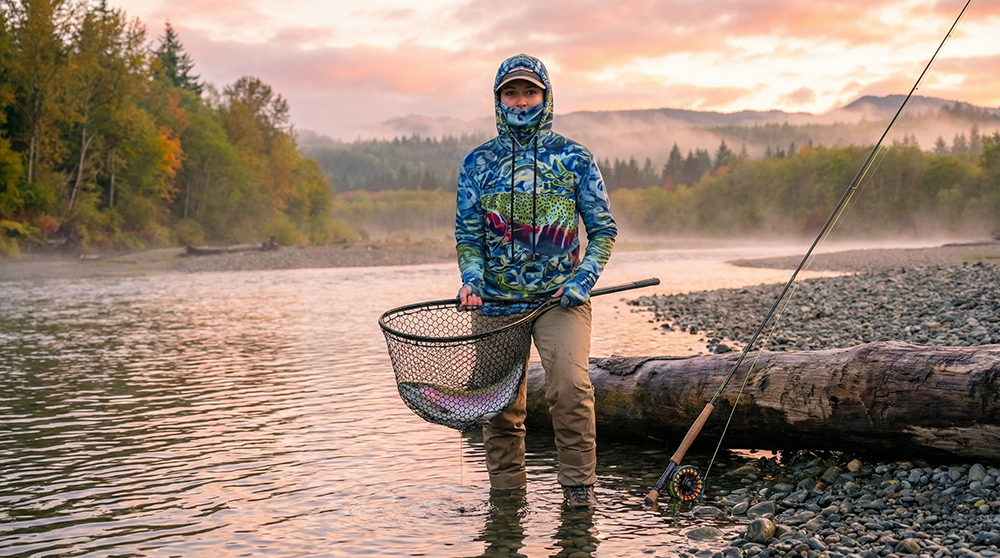
This is the main event. Winter steelhead are typically bigger, stronger, and more aggressive than their summer counterparts. They enter the river fresh from the ocean, full of power and ready to fight.
The peak season is generally February through March, when the largest number of fish are in the river system. Expect cold weather, high water flow, and that signature Olympic Peninsula rain. These conditions are exactly what brings the fish in, as a rising river after a storm is often the signal for a fresh push of chrome
DIAGRAM: Winter Swing Path – “The 45-Degree Death Arc”
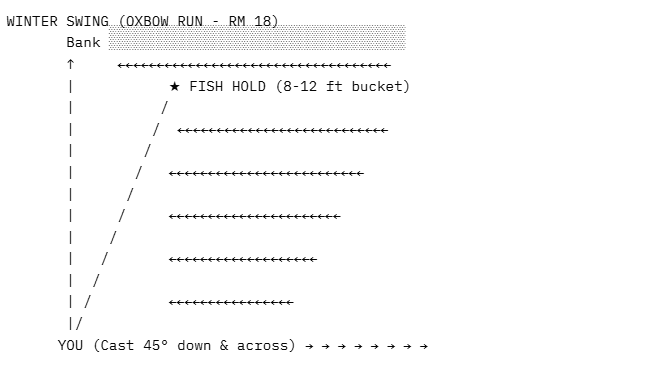
How to Read:
- ★ = Fish lie in the soft inside seam.
- Arrows = Fly swing path (slow, deep, ticking bottom).
- Step down 1-2 ft per cast.
- Tip: If fly isn’t hanging up occasionally, you’re too shallow.
Winter-Run Steelhead (December–April)
- Peak: February–March. Water temps 38–44°F. Fish are horny, fresh, and mean.
- Why: Rain = high flows = fish push in. Think Valentine’s Day gifts, but the gift is a 15-pound bar of silver that screams off your reel.
- Pro tip: Presidents’ Day weekend is prime. Just don’t tell anyone.
Summer Run Steelhead (July – November)
Summer run fishing on the Hoh is a different game entirely. The fish arrive during the warmer months and hold in the river for a long time before spawning. The river is usually low and clear, making these fish spooky and much harder to fool.
The best time to target them is in the fall, from September through October, when the salmon season for Coho salmon is also underway. Cooler nights start to bring the water temperatures down, and the fish become more active. This is often a visual game, using skating dry flies or smaller, more subtle wet flies.
DIAGRAM: Summer Skating Run – “Grease Line Wake-Up Call”

Summer-Run Steelhead (July–November)
- Peak: September–October. Low, clear water. Fish are moody teenagers—here today, sulking behind a log tomorrow.
- Why: Cooler nights drop water temps. Early summers are for natives who want solitude and masochism.
Worst Times (Just in Case You Were Wondering)
- May–June: Smolt outmigration. Everything’s closed. You’ll catch a suntan and a lecture from a game warden.
- August: Water’s warmer than your ex’s heart. Fish are deep, nocturnal, and laughing at your intruder patterns.
Weather hack: Check NOAA river gauges. Hoh @ Hwy 101 wants 1,500–4,000 CFS for winter swinging. Below 800 CFS? Bring your greaseliner and a therapist.

Navigating the Hoh: Access Points & River Sections
The Hoh River stretches over 50 miles from its headwaters high in the Olympic Mountains to the Pacific Ocean. Knowing where and how to access its different sections is fundamental to planning a successful trip. The river can be broken down into three main parts: the upper, middle, and lower.

Hoh River Legend: 🔵 = Glacier Headwaters | 🟢 = Mouth | 🔴 = PRIME STEELHEAD ZONE (Oxbow)
The Upper Hoh River
The upper river, largely located within the boundaries of Olympic National Park, is the most pristine and visually stunning section. This area is accessed via the Upper Hoh Road, which terminates at the Hoh Rain Forest visitor center and the Hoh Campground. This is primarily wade-fishing water, known for its incredible scenery and challenging, boulder-strewn runs.
The national park fishing regulations are often different from state regulations, so always check the current rules before fishing above the park boundary. Access points include the Hoh Campground itself and various pull-offs along the road. The water here is often clearer than downstream, as it is closer to the influence of glacier creeks originating from Mount Olympus.
UPPER DRIFT (RM 30 → 22) – “The Trophy Float” Ramp @ USFS Rd 29 → Takeout @ Cottonwood [░░░░░░░░░] 8 miles | 5-7 hrs | Class II Hot Spots: Glacier Riffle, Log Jam City
The Middle River
This is drift boat country. From the national park boundary down to the Hoh Oxbow Campground area, the river braids and widens. This section is characterized by long, classic swing runs, deep pools, and numerous log jams that provide excellent fish holding structure.
Launching a drift boat or raft is the most effective way to cover the vast amount of water in the middle Hoh. Key access points include the Hoh Oxbow campground boat launch and several unimproved launches known to local anglers and guides. Without a boat, access is limited to a few spots like the Oxbow, making it difficult for the wading angler to find solitude.
OXBOX CLASSIC (RM 20 → 10) – “The Meat Run” Put-in @ Oxbow Campground → Takeout @ Hoh VC [█████████] 10 miles | 6-8 hrs | Class I-II ★★★★★ Fish Density | Swing every tailout
The Lower River & Reservation
The lower river flows from the vicinity of Highway 101 down to the ocean at Oil City. This section is broad and powerful, often colored by glacial silt for much of the year. The lower miles of the river run through the Hoh Indian Reservation.
Access here requires permission and a tribal permit, and it is best to go with one of the many excellent guided trips offered by tribal members who know the water intimately. This section is where fish first enter the system from the Pacific Ocean, and hooking a fresh winter steelhead here is an unforgettable experience. The Oil City Road provides some limited bank access near the river mouth.
LOWER DRIFT (RM 10 → 0) – “The Hatchery Gauntlet” Launch @ South Fork → Pullout @ Oil City [░░░░░░░░░] 10 miles | 4-6 hrs | Tidal Bonus: Coho in October
Understanding the Hoh River Ecosystem
To truly appreciate fishing the Hoh, one must understand the environment that shapes it. This is a dynamic, living watershed born from ice and stone in one of the world’s great temperate rainforests. The river’s character is a direct result of its origins in the Olympic Mountains.
The Hoh is a classic glacial river, with its main stem fed by glaciers like the Tom Glacier and Humes Glacier on the slopes of Mount Olympus. This glacial influence gives the river its characteristic turquoise-gray color during warmer months as “glacial flour” is suspended in the water. This silt can impact visibility, forcing anglers to adjust their fly choice and presentation.
Key tributaries, including the South Fork Hoh River, the North Fork, and the Middle Fork, contribute significant water volume and provide critical spawning and rearing habitat. The South Fork Hoh, in particular, is a major tributary that joins the main stem in the middle section. These forks often run clearer than the main river, providing a refuge for fish during high water events.
The surrounding Hoh Rain Forest contributes massive amounts of wood to the river. These large log jams are not obstacles but essential habitat features. They create deep scour pools, provide cover from predators, and slow the current, giving steelhead safe places to rest on their long journey upriver.
Essential Gear for Hoh River Steelhead
This isn’t your local trout stream. The Hoh is a big, powerful river, and the fish are even bigger and more powerful. Bringing the wrong gear is like showing up to a heavyweight fight with gloves made of paper. You’re going to get wrecked.
The Rod, Reel, and Line Trinity
Your equipment is your lifeline. A balanced setup makes casting easier and gives you a fighting chance when you finally hook into a freight train. Here is what a fishing expert would recommend.
| Gear Component | Winter Run Setup | Summer Run Setup |
|---|---|---|
| Rod | 7-8 weight, 12’6″ – 13’6″ spey rod | 6-7 weight, 11′ – 13′ switch or spey rod |
| Reel | Large arbor with a strong, sealed drag | Large arbor with a solid drag |
| Backing | At least 200 yards of 30lb dacron. | At least 150 yards of 30lb dacron. |
| Line System | Skagit head (550-650 grains) | Scandi head (450-550 grains) or floating line |
| Sink Tip | T-11 or T-14 in various lengths. | Intermediate tips or long tapered leaders. |
A two-handed spey rod is the tool for the job. They let you cast long distances with minimal effort, which is vital for covering the wide runs of the Hoh. For winter, a 7 or 8 weight rod between 12 and 14 feet is perfect.
Your reel needs to do two things well: balance your rod and have a drag that’s smooth and strong. A big steelhead can easily peel off 100 yards of backing in its first run. A cheap reel with a jerky drag will lead to a snapped tippet and a broken heart.
Lines are the most technical part. For winter, you’ll use a Skagit style head designed to cast heavy sink tips and big, weighted flies. For summer, a lighter Scandi head or even a traditional floating line is better for presenting smaller flies and skating dry flies on the surface.
Leaders and Tippets
Keep your leader system simple and strong. For winter swinging with sink tips, a short, 3 to 5-foot leader of 12 or 15-pound Fluorocarbon is all you need. It’s tough, abrasion-resistant, and has a bit of stretch to absorb shock.
In the summer, with floating lines, you’ll need a longer tapered leader, around 9 to 12 feet, tapering down to 10-pound test. This helps your fly turn over properly and land softly on the clear water.
Wading Safety: Don’t Become a Statistic
Let me be clear: the Hoh River is dangerously powerful. Its bottom is made of bowling ball-sized rocks that are covered in slippery algae. Wading here is serious business and demands your full attention and respect.
A good pair of studded wading boots is not optional; it’s mandatory. You also need a sturdy wading staff and must know how to use it. Always wear a tightly cinched wading belt to slow the rush of cold water into your waders if you fall, giving you precious seconds to recover.
Never wade deeper than you’re comfortable with and always plan your path before you step into the water. The main channel of the river is a death trap for waders. Stick to the shallower side channels and gravel bars where the current is manageable.
The Evolution of Hoh River Steelhead Flies
Steelhead flies have changed dramatically over the decades. They have evolved from giant, gaudy creations to sleek, modern patterns designed for specific actions. Knowing the history helps you understand why we fish the steelhead flies we do today.
The Old School Classics (Pre-1950s)
Early steelhead flies were big, bright, and simple. Patterns like the Polar Shrimp and Skykomish Sunrise were tied on massive hooks. They relied on vibrant colors like orange, red, and white to grab the attention of aggressive winter fish.
These flies were all about being seen in the often murky water of a winter river. There wasn’t much subtlety involved. But they worked then, and they can still work now on an aggressive fish.
The Fluorescent Age (1960s–1980s)
As fly tying materials evolved, so did the flies. The introduction of fluorescent chenilles and yarns led to a new generation of patterns. The Green Butt Skunk is the most famous example from this era.
It combines a dark, somber body with a shockingly bright chartreuse butt. This high-contrast design proved incredibly effective. It became a staple in every steelheader’s box on the West Coast.
The Intruder Takes Over (1990s–2000s)
The biggest revolution in modern steelhead flies came with the invention of the Intruder. Developed by guides on the nearby Skagit River, this style of fly changed everything. Intruders are tied on a shank instead of a hook, with a small stinger hook that trails behind.
This design gives the fly incredible movement in the water. Ostrich herl, marabou, and rabbit fur pulse and swim in a way that seems to drive steelhead crazy. They are also much safer for the fish, as the small hook is easier to remove and does less damage than a giant long-shanked hook.
Today’s Go-To Patterns
Today’s flies are a blend of all these eras. We have large, articulated Intruders for high, dirty water, often in combinations of black/blue or pink/orange. We also have small, sparsely tied patterns like the Steelhead Muddler or a simple Hoh Bo Spey for low, clear summer conditions.
Tube flies have also become very popular, letting you change hook sizes easily and being very durable. Small, translucent “micro tubes” can be deadly when the fish are being picky. On the other end of the spectrum, skating large foam dry flies for summer runs is perhaps the most exciting way to catch a steelhead, making it a target species for many fly fishers.
Putting It All Together: How to Actually Fish the Hoh
You have the history, the timing, and the gear. Now for the most important part: how to connect with one of these magnificent fish. The technique is a dance between you, the current, and the fly, very different from twitching jigs or float fishing.
The Art of the Winter Swing
Swinging a fly for winter steelhead is a methodical process. You’re trying to present the fly broadside to the fish as it swings across the current. The goal is to cover the likely fish holding water as efficiently as possible.
Position yourself upstream of where a fish might hold. Cast out at about a 45-degree angle downstream. As soon as the fly lands, make a mend, which is an upstream flip of your line that allows the fly to sink before the current pulls it tight.
Now, let the current do the work. The line will tighten, and your fly will swing across the river. Follow the line with your rod tip, keeping it low to the water. The bite is often a sudden, jarring pull you can’t miss; just hold on and let the fish turn and hook itself against the line’s tension.
Skating for Summer Steelhead
Fishing for summer runs is a completely different approach. You’ll use a floating line and a fly designed to wake across the surface. This technique is all about provoking an aggressive surface strike from the upper reaches of a pool.
Cast nearly straight across the current, or even slightly upstream. Throw a big mend to give the fly some slack. As the fly begins to swing, hold your rod tip high to keep as much line off the water as possible, which helps the fly skate and create a “V” wake.
The take is the most explosive thing you’ll see in freshwater. A giant head and shoulders will erupt from the water to engulf your fly. It’s your job to stay calm, wait for the line to tighten, and then come tight on the fish.
River Etiquette: How Not to Be That Angler
The Hoh River is a shared resource that sees a lot of pressure. Knowing and practicing good river etiquette is crucial. It keeps the experience positive for everyone and protects the fish.
The golden rule is never to fish below someone who is already in a run. This is called “low holing” and is the biggest foul in steelhead fishing. Give them plenty of space; the standard is to start at least 100 yards above another angler.
Handle every fish with care, especially wild fish, which must be released. Keep the fish in the water as much as possible. Use a soft rubber net and get your picture quickly without squeezing or holding the fish by its gills. Let it revive fully in the current before you let it go.
Finally, pack out everything you pack in. Leaving trash on the riverbank is unacceptable. We are all stewards of this incredible place, from the Hoh Oxbow to the upper Hoh road. Leave it better than you found it so the next generation can experience the magic of the Olympic Peninsula Hoh river.
Conclusion of Steelhead Fly Fishing Hoh River
There you have it. The Hoh River is more than just a place for river fishing; it is a cathedral of nature that holds one of the world’s most incredible creatures. Wading through the temperate rain of the Olympic National Park in search of these fish is a profound experience.
The challenge of Steelhead Fly Fishing on the Hoh River Washington is immense, but the rewards are immeasurable. It will test your skills, your patience, and your will against a backdrop of raw, untamed beauty. The moment a wild Hoh River steelhead rips line from your reel, you’ll understand why it’s all worth it. Now go make some memories.