Biscuit Basin – Yellowstone National Park
Hike to Mystic Falls, the Continental Divide Trail, and the explosion that changed everything
Biscuit Basin sits inside Yellowstone’s Upper Geyser Basin, roughly two miles northwest of Old Faithful. It is one of the most concentrated collections of hydrothermal features in the park — boiling hot springs, unpredictable geysers, and bacteria-stained thermal channels that drain into the Firehole River. I walked this boardwalk weeks before a hydrothermal explosion shut it down for the remainder of the 2024 season. What I saw that day was extraordinary. What I missed by weeks was unforgettable for entirely different reasons.
The basin gets its name from the sinter deposits that once surrounded Sapphire Pool — biscuit-shaped formations of silica that lined the edges like a geological pastry tray. The 1959 Hebgen Lake earthquake changed all of that. The violent shaking triggered massive eruptions at Sapphire Pool, obliterating every one of those sinter formations. They never grew back. Walk this loop today and you are seeing a landscape that has been reshaped multiple times by forces that have nothing to do with the seasons.
Table of Contents
Sapphire Pool
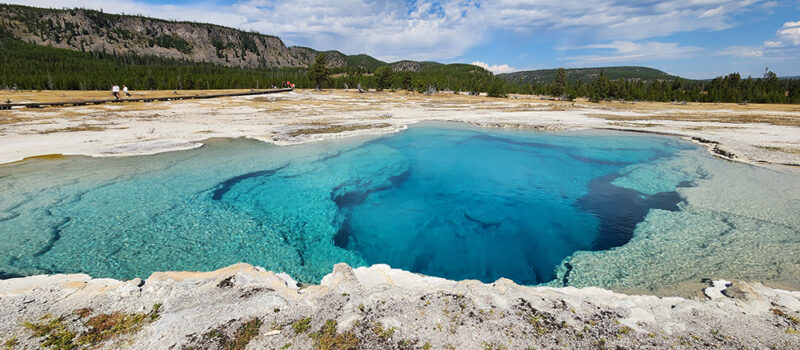
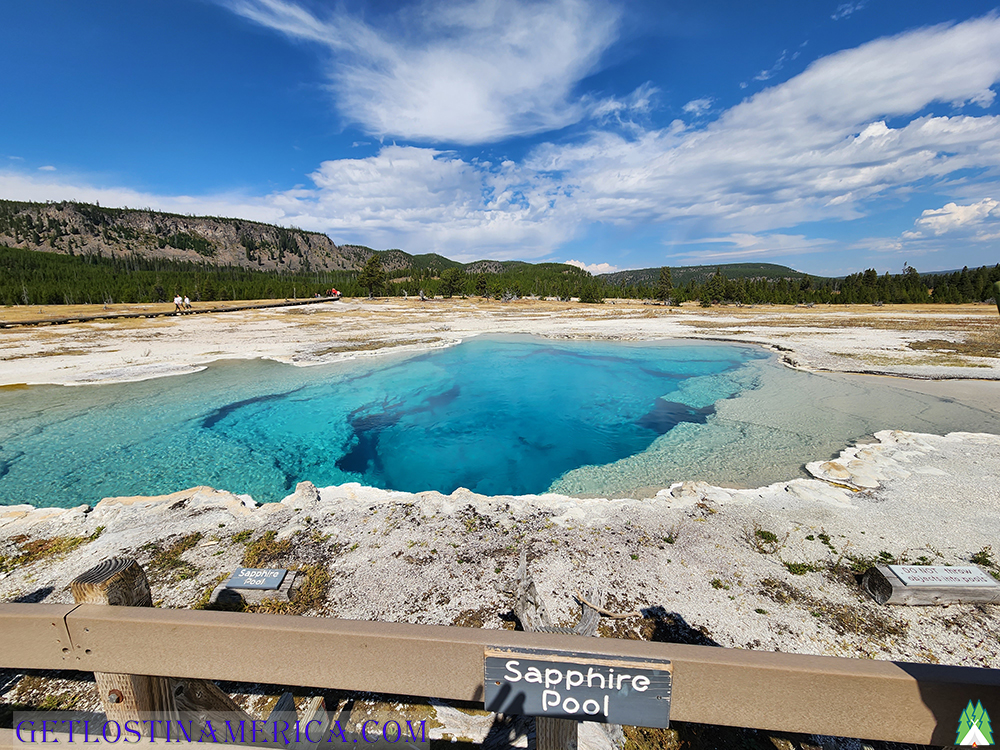
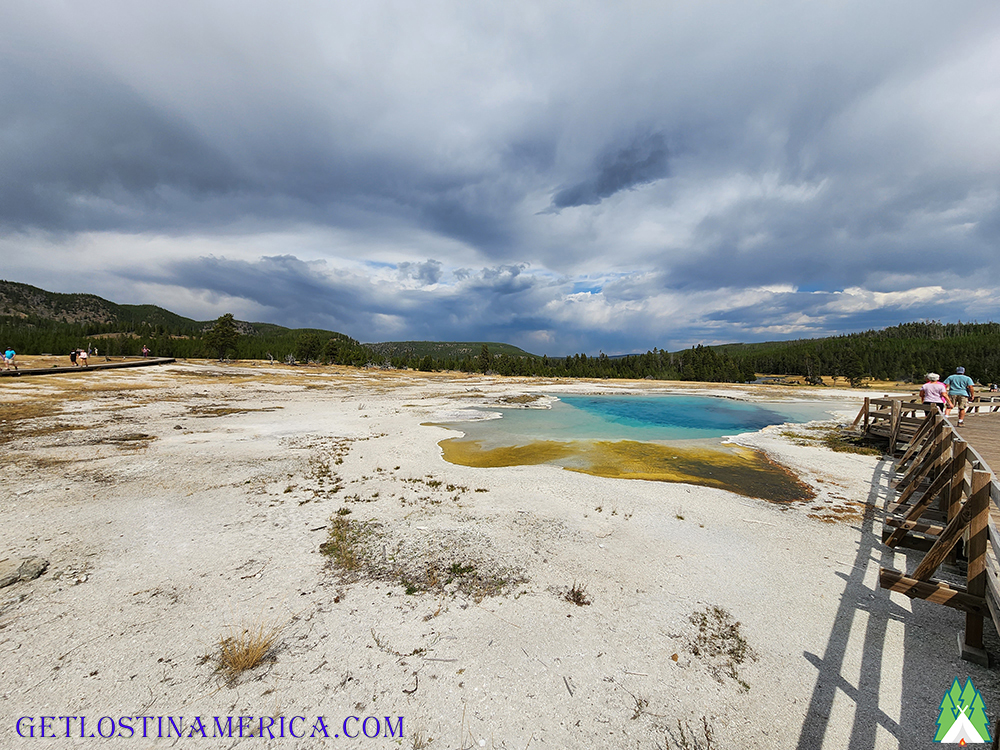
Sapphire Pool is the crown jewel of Biscuit Basin — or was, until July 23, 2024. Before the Hebgen earthquake it erupted only modestly. After the quake, it exploded into a major geyser, shooting columns of water 150 feet high every two hours and doubling in surface area as the hydrothermal system was rearranged from below. By the time most visitors discover it, Sapphire Pool has settled back into something closer to a hot spring — crystal blue water with occasional violent boils and a surface temperature averaging around 200 degrees Fahrenheit. The color alone is worth the stop: a deep, glacial blue that shifts depending on cloud cover and the angle of the sun.
The pool sat near the epicenter of the July 2024 explosion — more on that below — and the underwater plumbing system beneath it has almost certainly been altered. Visitors returning when the basin reopens will be seeing a version of Sapphire Pool that the park itself is still trying to understand.
Jewel Geyser
Jewel Geyser was originally called Soda Geyser by the Hayden Expedition. Early 1900s visitors renamed it for the jewel-like sinter formations that line its rim. The geyser fills slowly, overflows, then erupts — throwing water 15 to 30 feet at remarkably predictable five-to-ten-minute intervals. Average water temperature sits around 199 degrees. The underground plumbing does not appear to be directly connected to Sapphire Pool, though some researchers believe the two systems share a relationship.
Black Opal Pool, just a short walk along the boardwalk, is named for its ever-changing color. The pool shifts from deep blue to green depending on temperature fluctuations, and sinter deposits still ring its edges — one of the few features in the basin where that geology survived intact. The boardwalk typically opens late May and runs into early October, snowfall permitting.
Black Diamond Pool and the Ongoing Hydrothermal Hazard
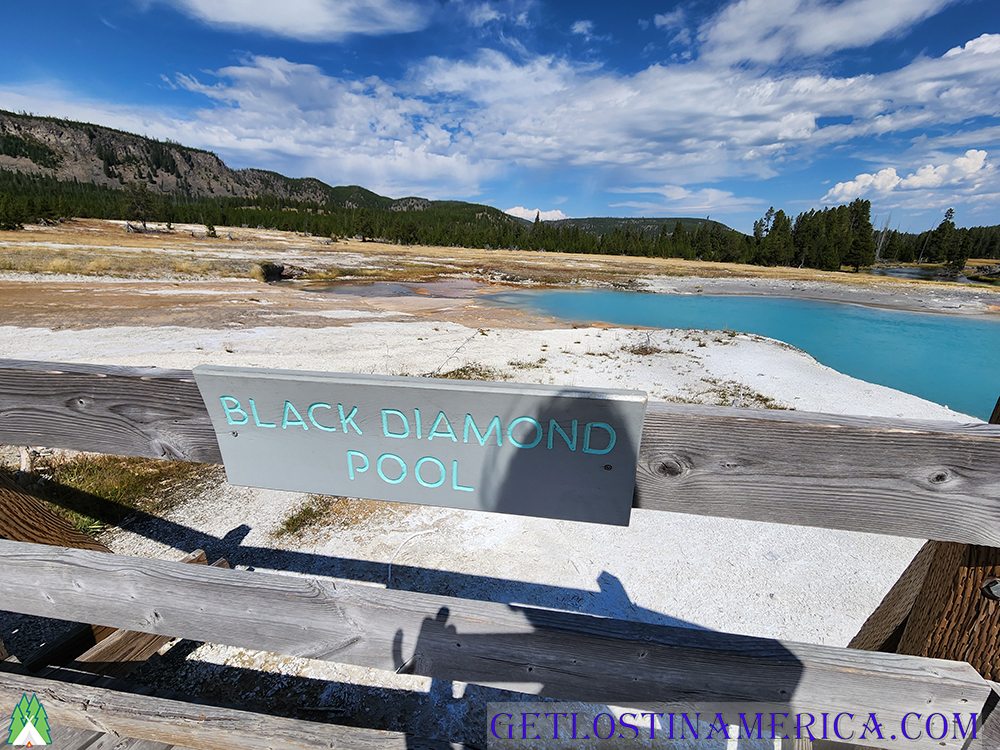
I was walking the Biscuit Basin boardwalk just weeks before the July 23, 2024 explosion. Black Diamond Pool looked like it always does — dark, steaming, slightly ominous. Nothing gave away what was building beneath it. That is the nature of hydrothermal systems. They are not always polite enough to warn you.
On April 28, 2026, Black Diamond Pool erupted again, blasting muddy water and steam directly into the USGS webcam mounted on the remnant of the destroyed boardwalk. The next day, April 29, a second and significantly larger eruption fired at 12:28 p.m. The USGS called it perhaps the largest eruption of the pool since the 2024 explosion. Two days, two eruptions, the biggest activity the site has seen in nearly two years. Biscuit Basin remains closed. The pool is still doing whatever it wants.
To understand why, you have to go back to where this started.
At 10:19 a.m. on July 23, 2024, Black Diamond Pool detonated without warning. The explosion launched boiling water, mud, and rock fragments 400 to 600 feet into the air. Grapefruit-sized rocks rained down across the basin. Blocks of debris closest to the source were three feet wide and weighed hundreds of pounds. The boardwalk was destroyed. Visitors on the walkway ran. No one was injured — partly because most of the largest debris was directed toward the Firehole River rather than the walking area.
The USGS and the Yellowstone Volcano Observatory determined the cause: silica precipitation had clogged the shallow hydrothermal plumbing beneath the pool. When those conduits sealed, pressure built with nowhere to go. Steam expanded in a confined space until it overcame the strength of the surrounding rock — and the pool blew. No monitoring instrument detected a precursor. No warning appeared on any sensor. The USGS confirmed the broader volcanic system remained at normal background levels and that the event was not a sign of impending volcanic eruption.
Biscuit Basin was closed for the remainder of the 2024 season and has not reopened. Black Diamond Pool continued erupting sporadically throughout 2025 — muddy bursts ranging from a few feet to 20 or 30 feet. The NPS installed a webcam in May 2025, which caught its first eruption on May 31. A full monitoring station followed in July 2025, adding seismic, acoustic, GPS, and weather sensors. The instruments have since recorded numerous eruptions, many of which threw water and mud 30 feet or more into the air. Scientists have found no predictable pattern and no reliable precursors — which is exactly what makes this place dangerous and exactly why the closure stands.
The April 2026 eruptions are a reminder that this is not a situation that has stabilized. The Grand Loop Road through the area remains open. The basin does not.
Always confirm current closure status at nps.gov/yell before visiting.
-
- Approaching Fire Hole River to cross bridge into Biscuit Basin Yellowstone National Park for a hike through the geyser basin and up to Mystic Falls
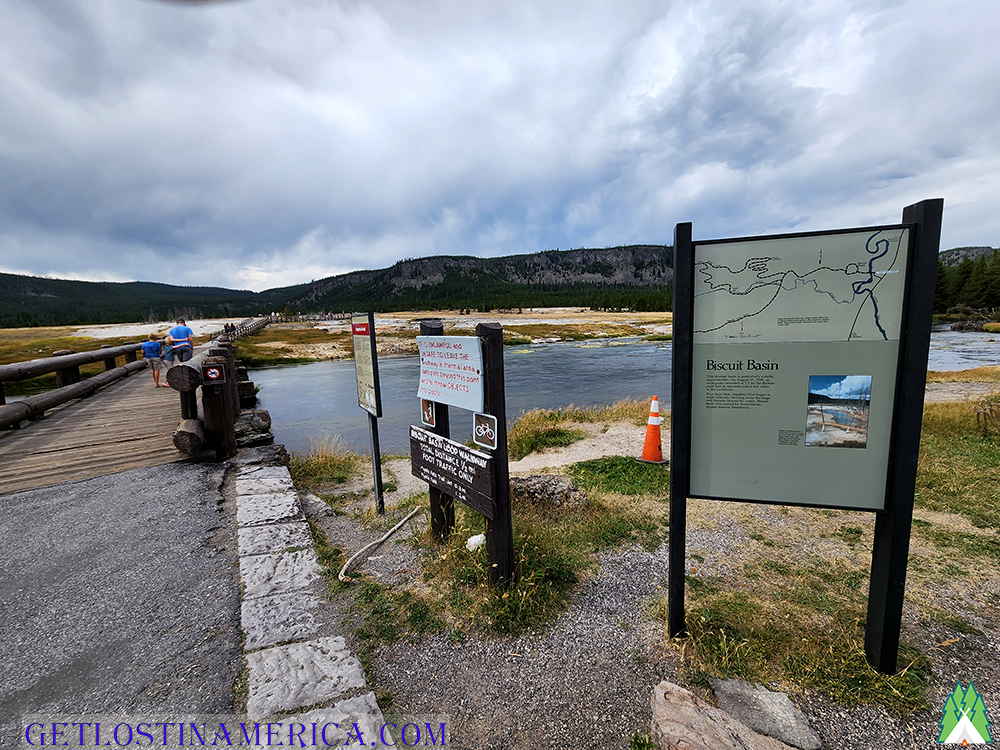
-
- Crossing the Bridge over the Fire Hole river to Biscuit Geyser Basin
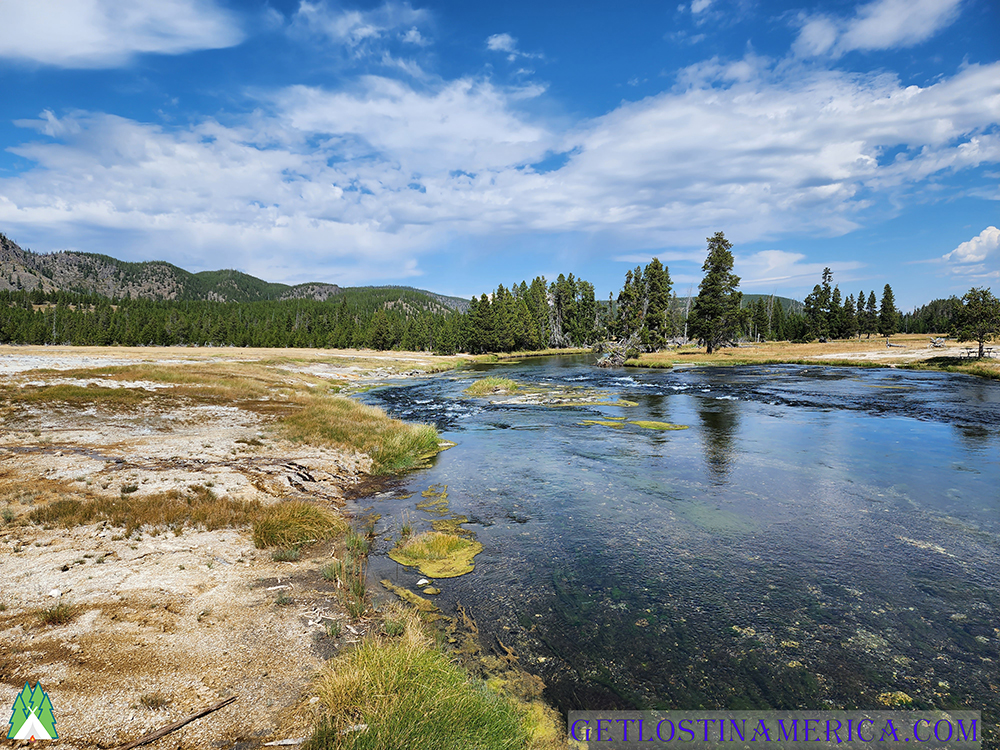
-
- Once across the bridge the board walk goes in a loop with an exit to Mystic Falls Trailhead.

-
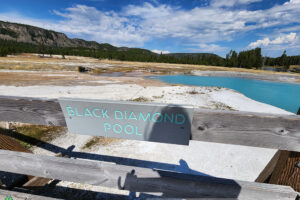
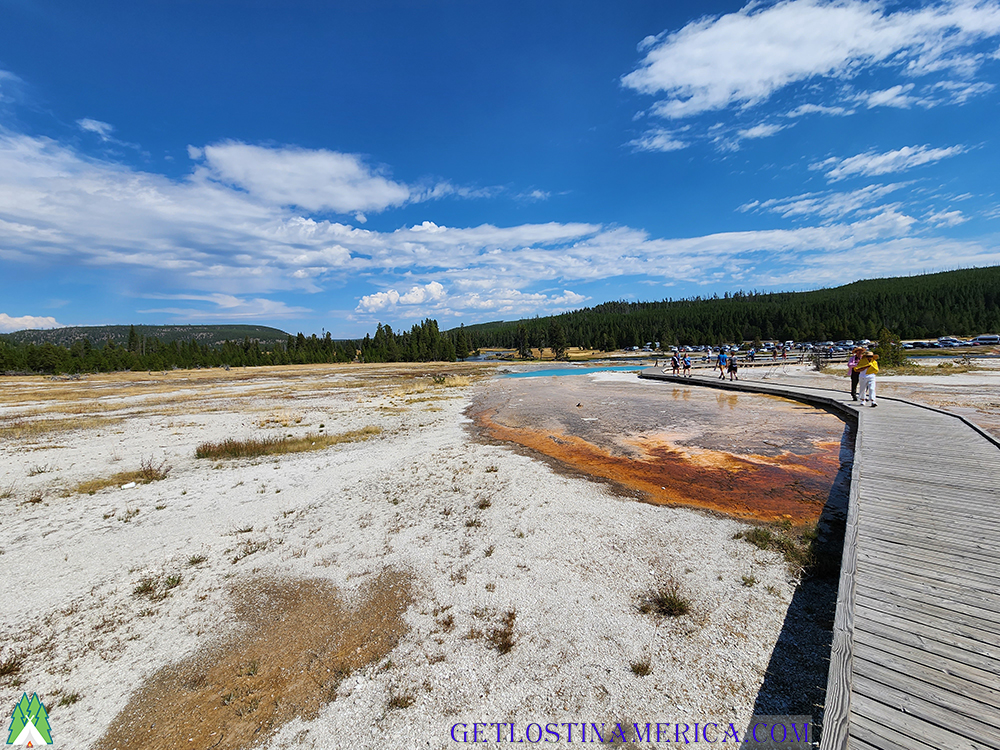
- Black Diamond Pool is the first Geyser in Biscuit Basin loop hike
-
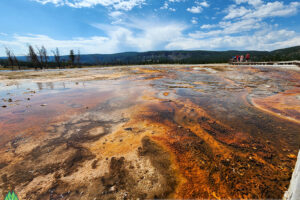
- Mineral colorization around the edge of Black Diamond Pool

-
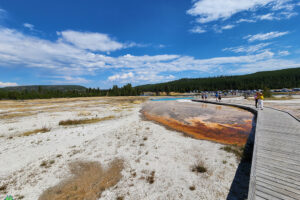
- Looking back at Black Diamond Pool and the parking area as we hike on around the loop at Biscuit Basin Yellowstone National Park with Get Lost in America your Yellowstone Cabin rentals experts
-
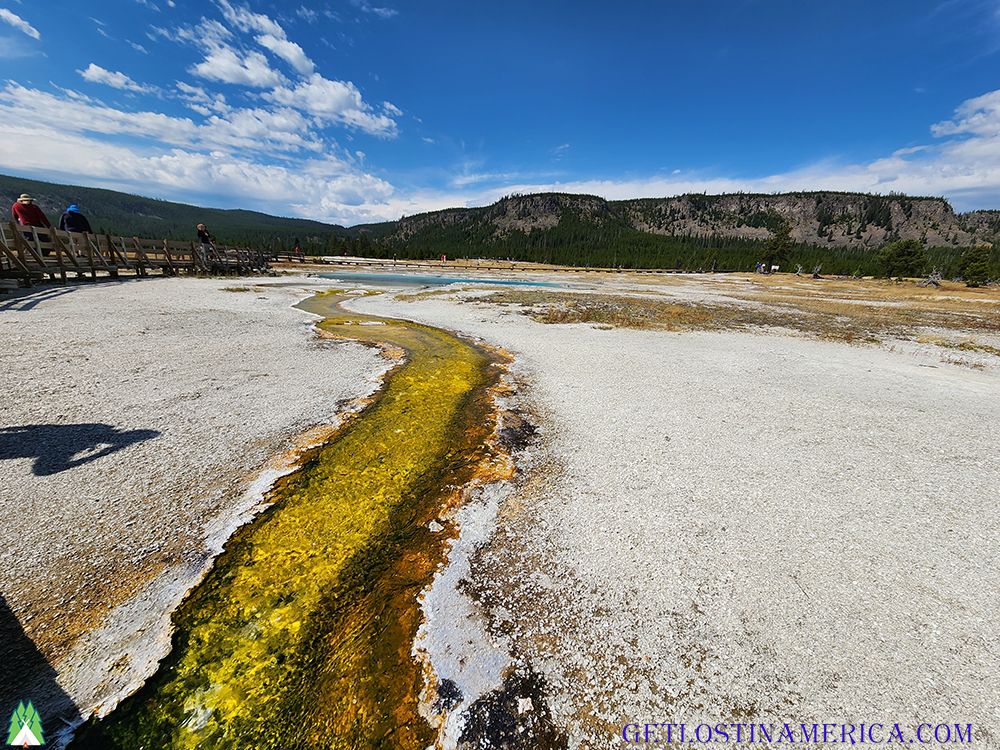
- Overflow of beautifully colored minerals heading to the Firehole River
-
- Mineral stream as I approach Sapphire Pool from a different angle

-
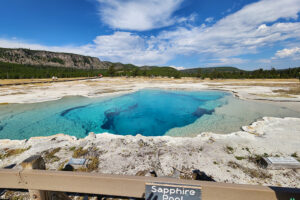
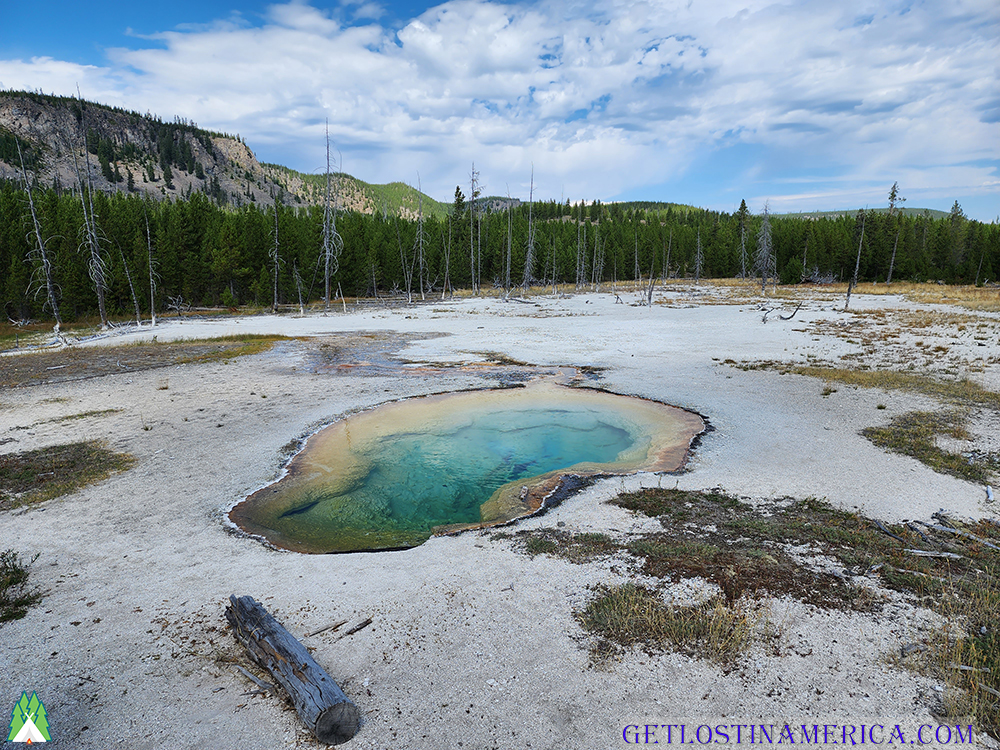
- Sapphire Pool, Yellowstone National Park: Biscuit Basin
-
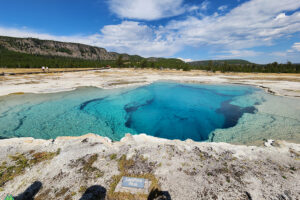
- Looking down into Sapphire Pool

-
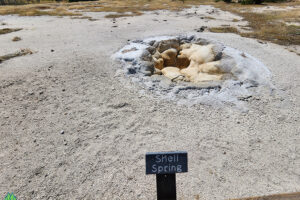
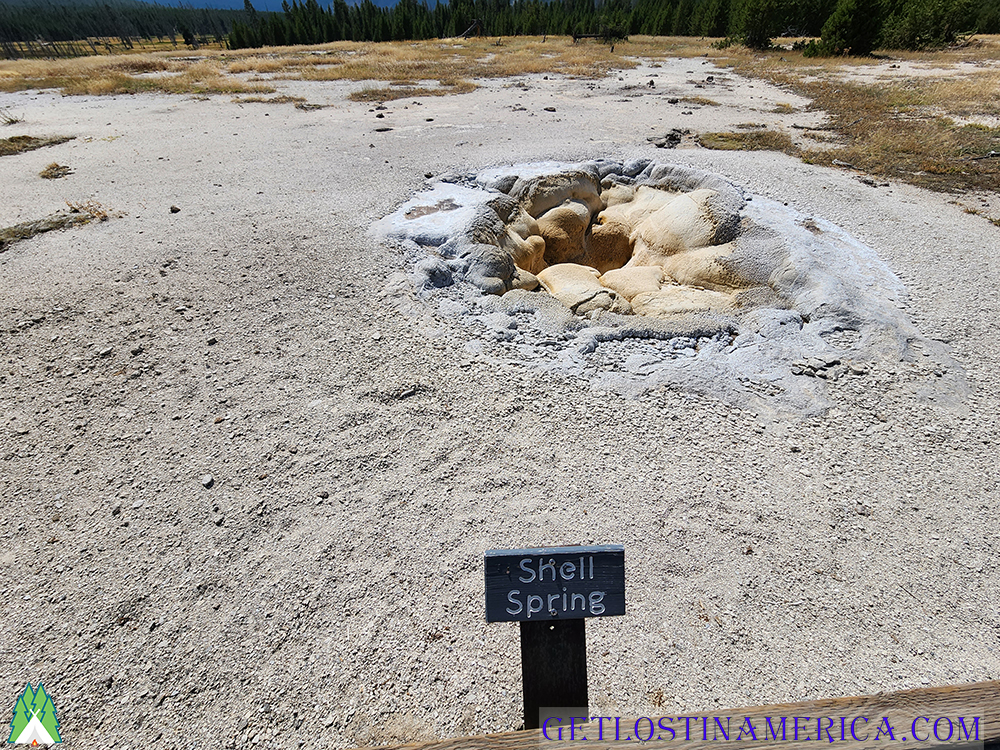
- Shell Spring on the Biscuit Basin Loop Hike
-
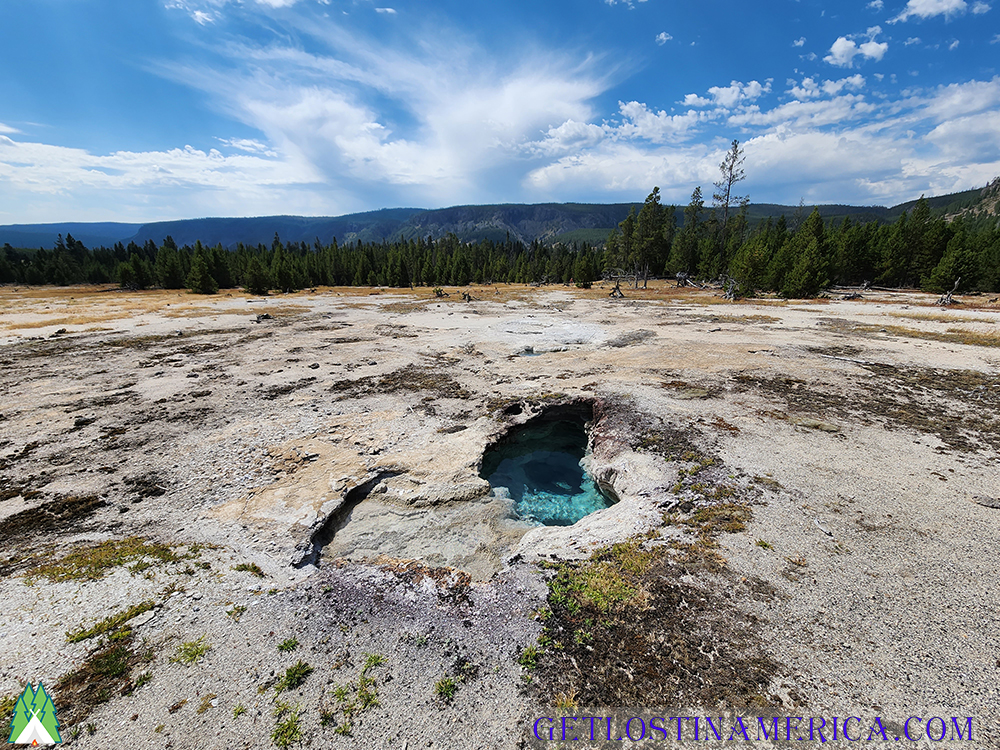
- Thermal mineral water has such a beautiful glacier blue to it
-
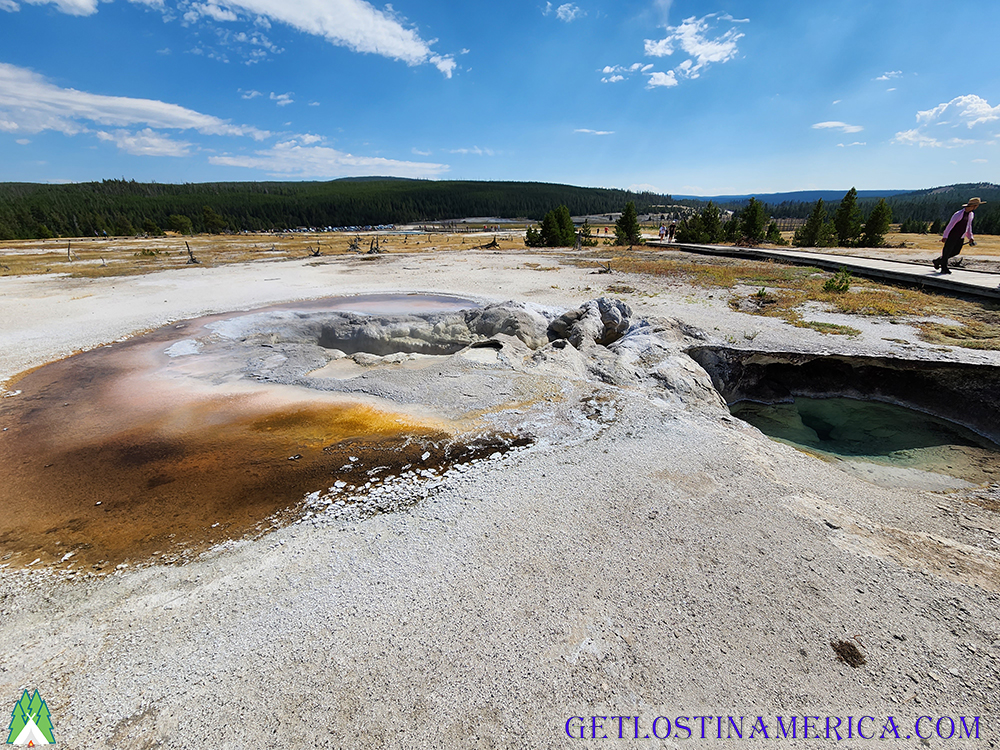
- Geyser at the junction of the returning loop is about to do a small eruption

-
- waiting patiently for the dance of water
-
- And the dance begins of water and steam in Biscuit Basin

-
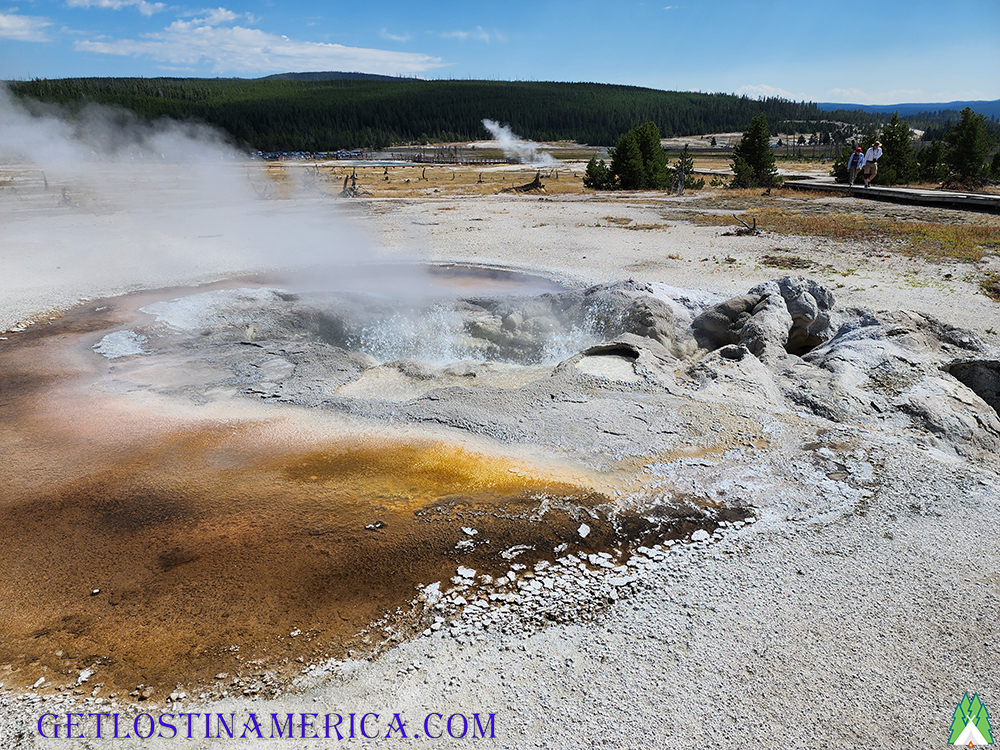
- I stood here and shot a series of the eruption enjoying the dance of the water as the geyser played its tune

-
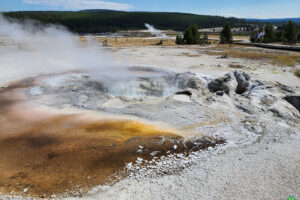
- Up and down to the side and all around it goes
-
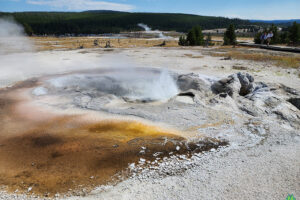
- And the dance comes to end till the moment

-
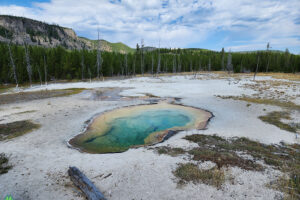
- Last hot spring before heading off to Mystic Falls
Mystic Falls Hike Yellowstone National Park
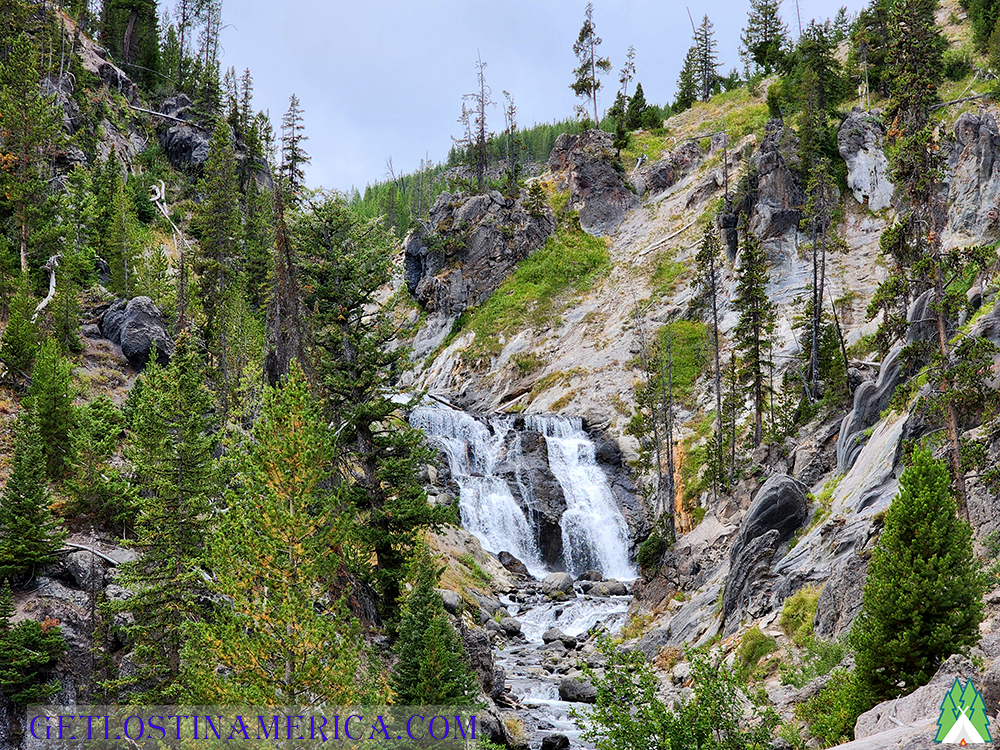
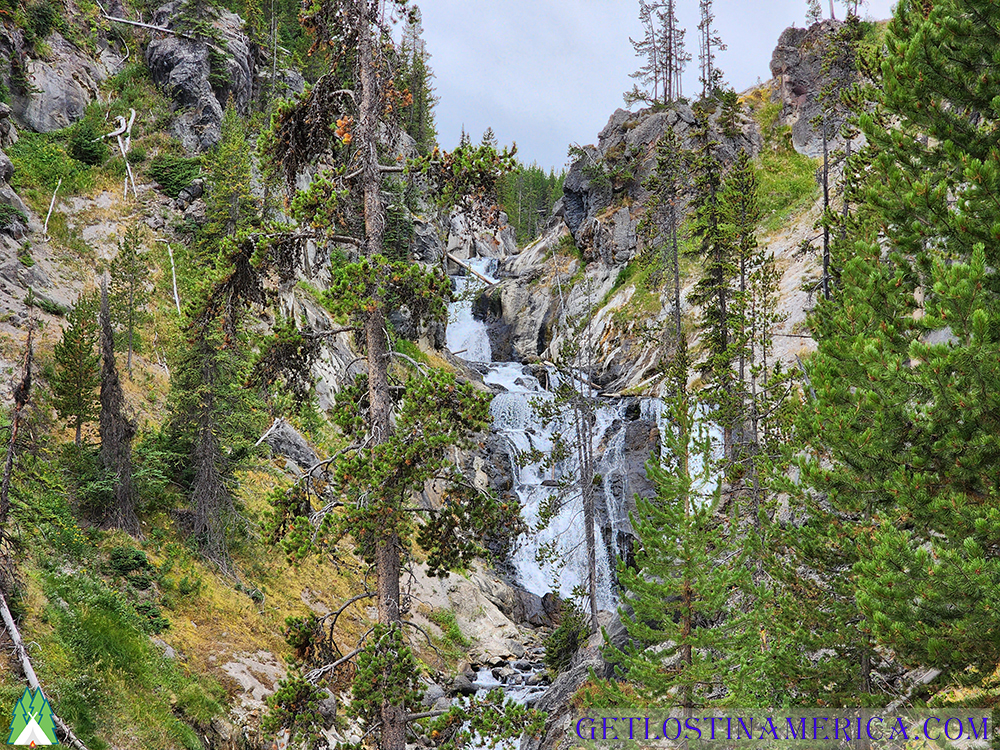
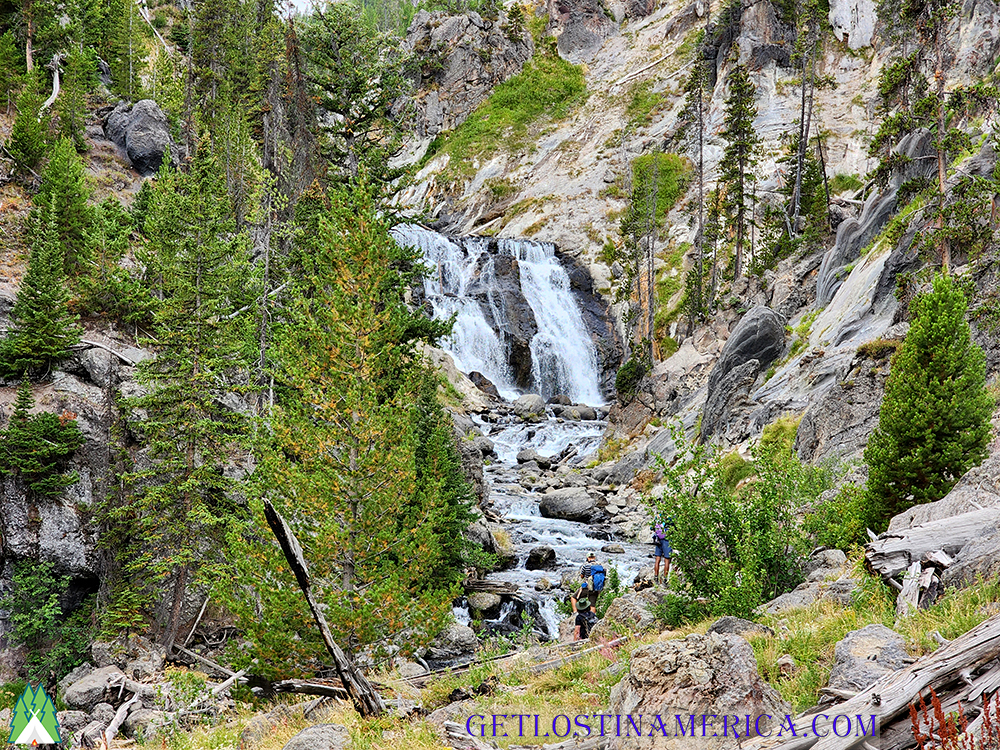
When Biscuit Basin is open, the Mystic Falls trailhead begins about half a mile into the boardwalk loop. From there you have two options: a 1.4-mile out-and-back to the base of the falls, or a 1.7-mile loop that climbs above the falls to a ridge overlook before looping back through the basin. The out-and-back is the easier choice and puts you directly in front of Mystic Falls, where the Little Firehole River drops 70 feet over a series of rocky ledges. The overlook loop adds a solid climb but gives you a perspective most visitors never see.
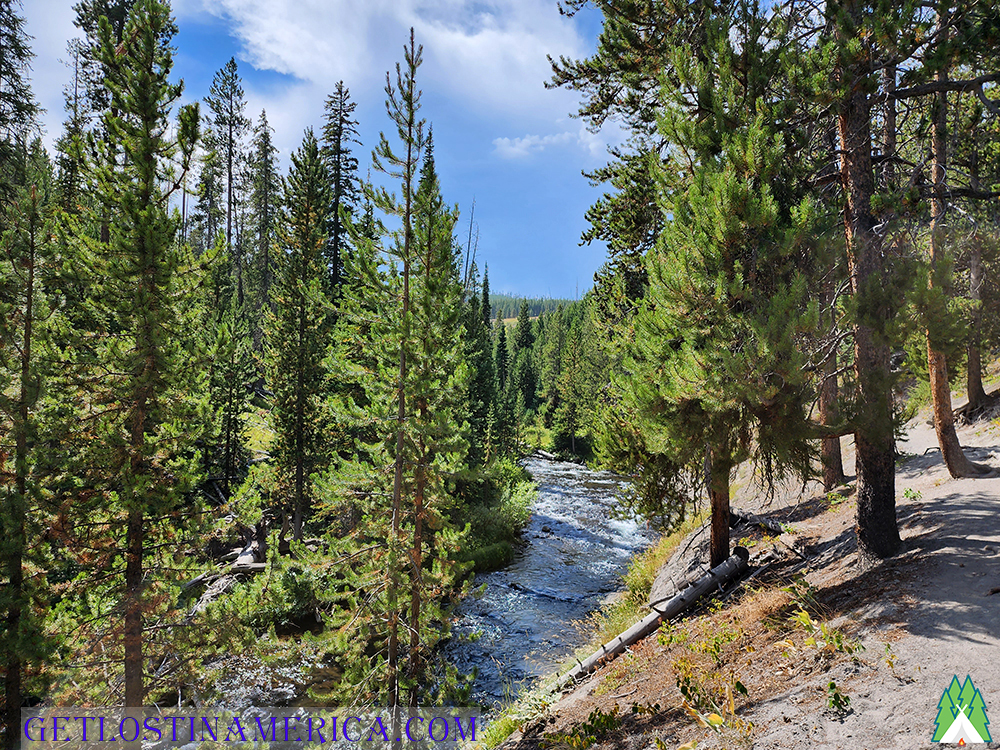
A tenth of a mile up the Mystic Falls Trail, you hit a junction with Fairy Falls Trail. This is where the loop splits. Take the left fork along the Little Firehole River for the most scenic route to the falls. The trail follows the creek through mixed conifer forest, opens briefly near a meadow ridge, then rounds a final bend where the falls come into full view. Rock stairs lead up past the falls to the overlook and the return route through the basin.
-
- Trailhead to Mystic Falls, this can be a loop hike of 1.8 miles or straight to the falls in .08 miles.

-
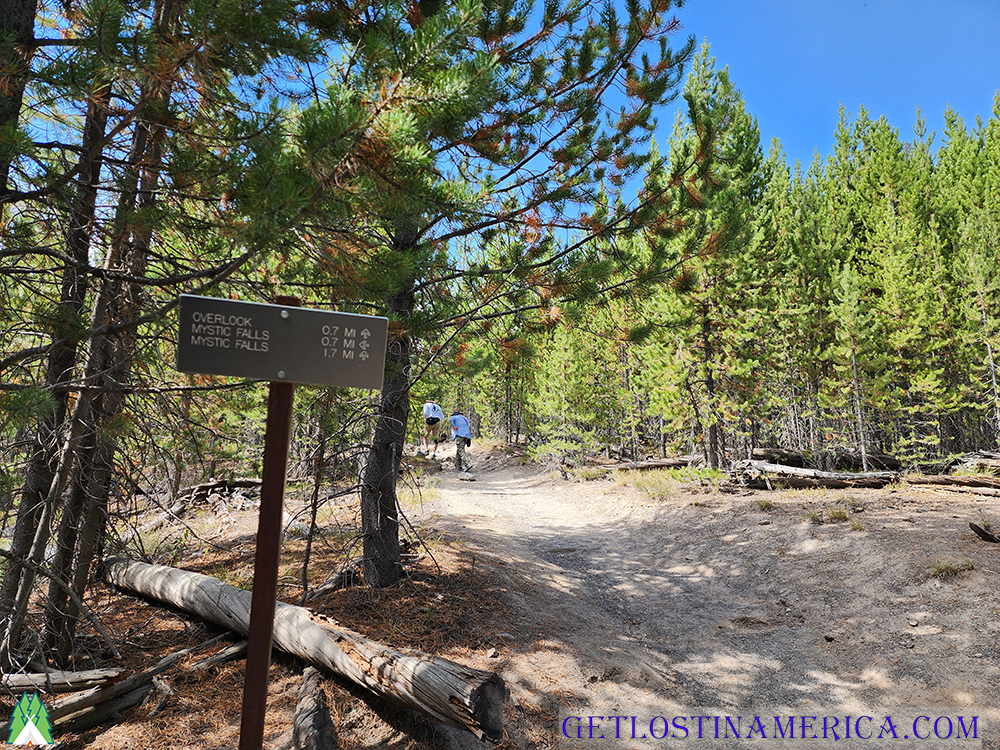
- First split in trail, here's where you decide to hike the loop or just go to the falls leaving Biscuit Basin Yellowstone National Park
-
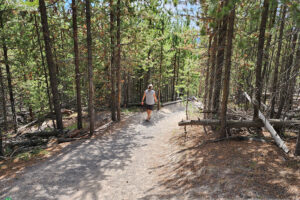
- On down the trail to the next junction

-
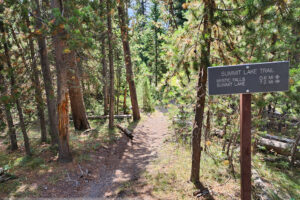
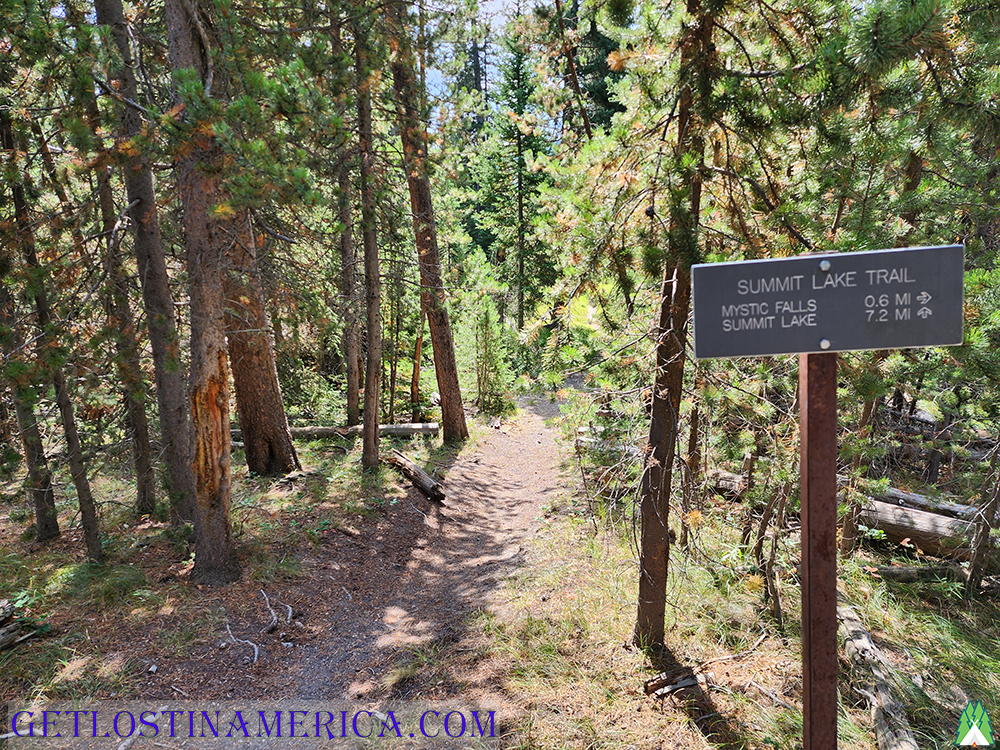
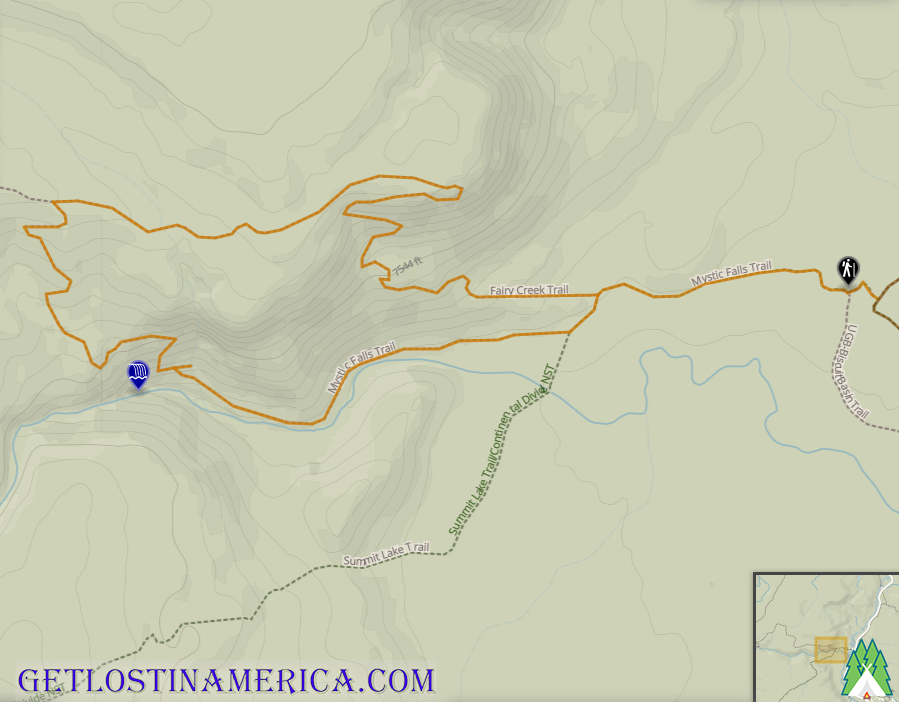
- At this junction on the trail to Mystic Falls, you decide whether to go to Summit Lake 7.2 miles or continue to Mystic Fall in .06 miles. This trail is a section of the CDT. The trail leading to Summit Lake into Idaho and back into Montana to the northern terminus of the CDT.
-
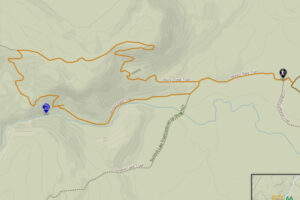
- Close up of the map showing the loop hike to Mystic Falls and the junction for Summit Lake on the Continental Divide Trail
-
- First views of the Little Firehole River
-
- Mystic Falls Trail opens up just below a ridge as you approach the falls

-
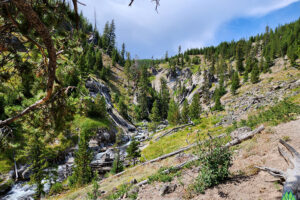
- Last bend in the trail before the Mystic Falls comes into view in Yellowstone National Park

-
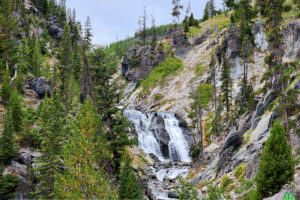
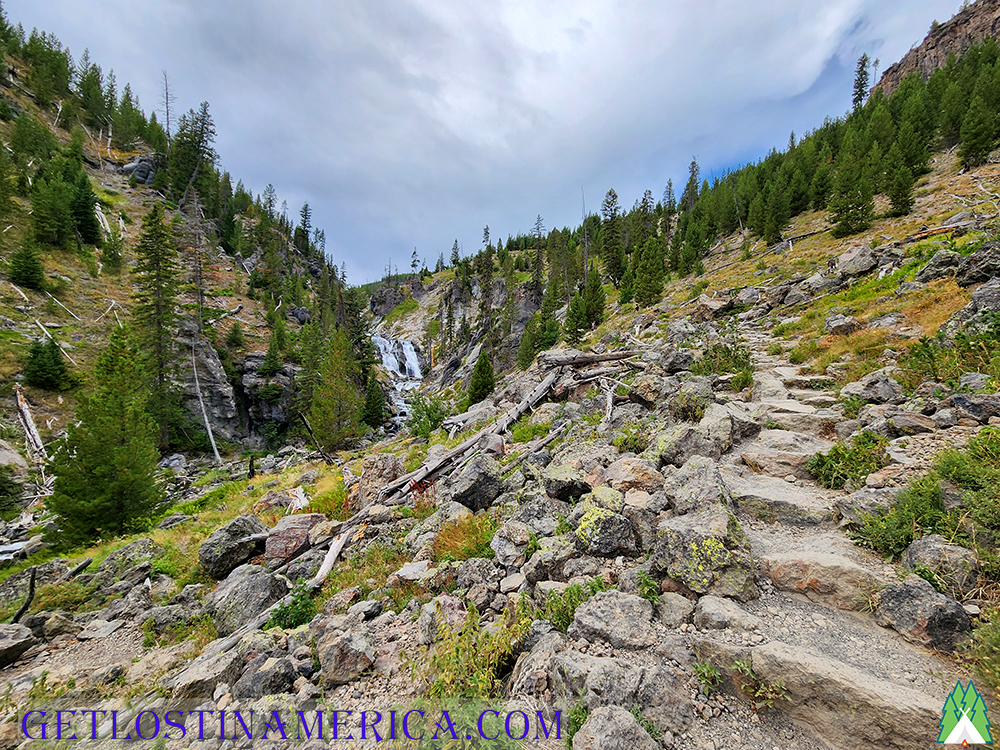
- Mystic Falls from the first location they come into view hiking up to them.
-
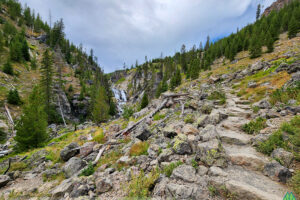
- Rock stairs leading up to Mystic Falls overlook and continuation of the loop trail
-
- Rock stairs leading up to Mystic Falls overlook and continuation of the loop trail
-
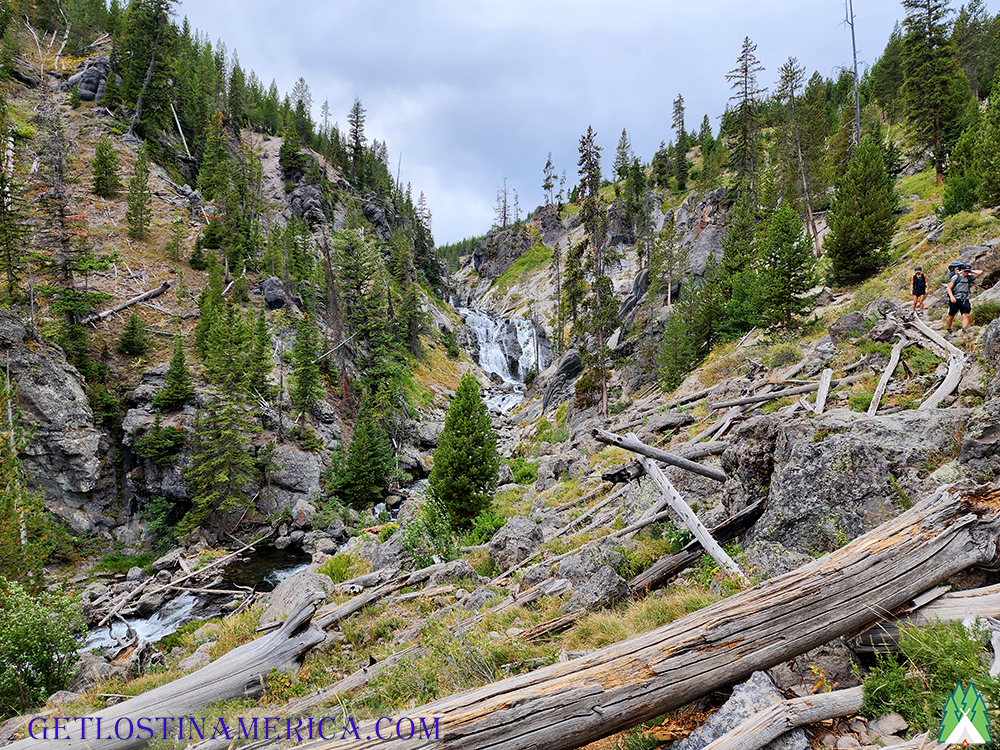
- Looking back around the corner at the full length and drop of Mystic Falls in Yellowstone National Park

-
- Close up through the trees of the falls on the Little Firehole River
-
- A look at the base of the falls
-
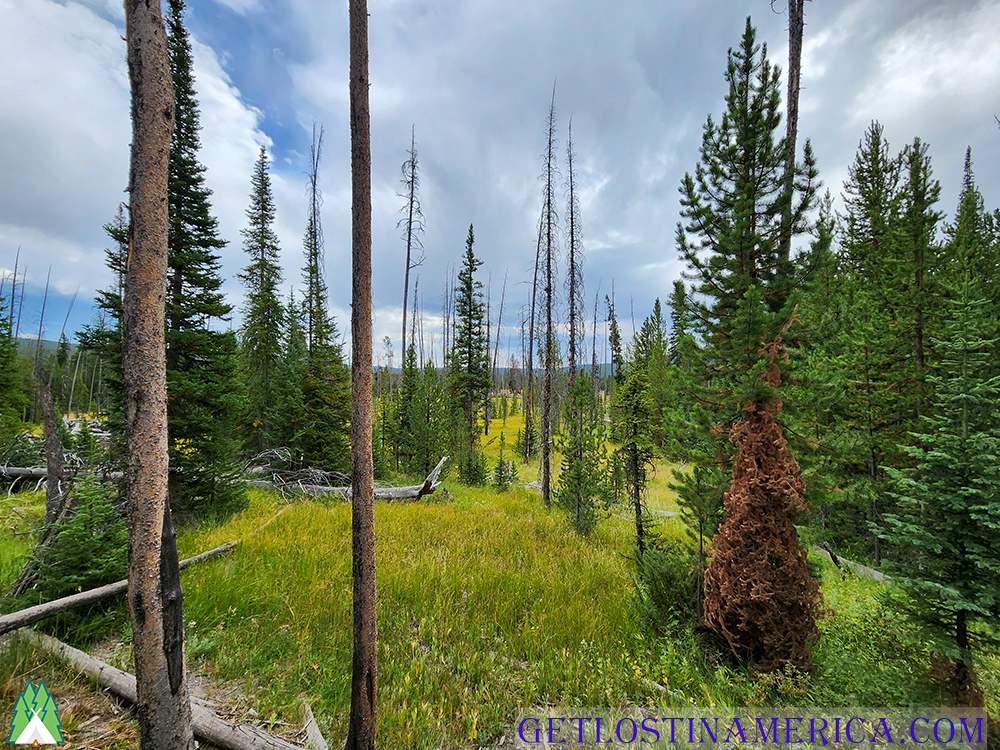
- A look through the forest as we reach Biscuit Basin on the way back down
-
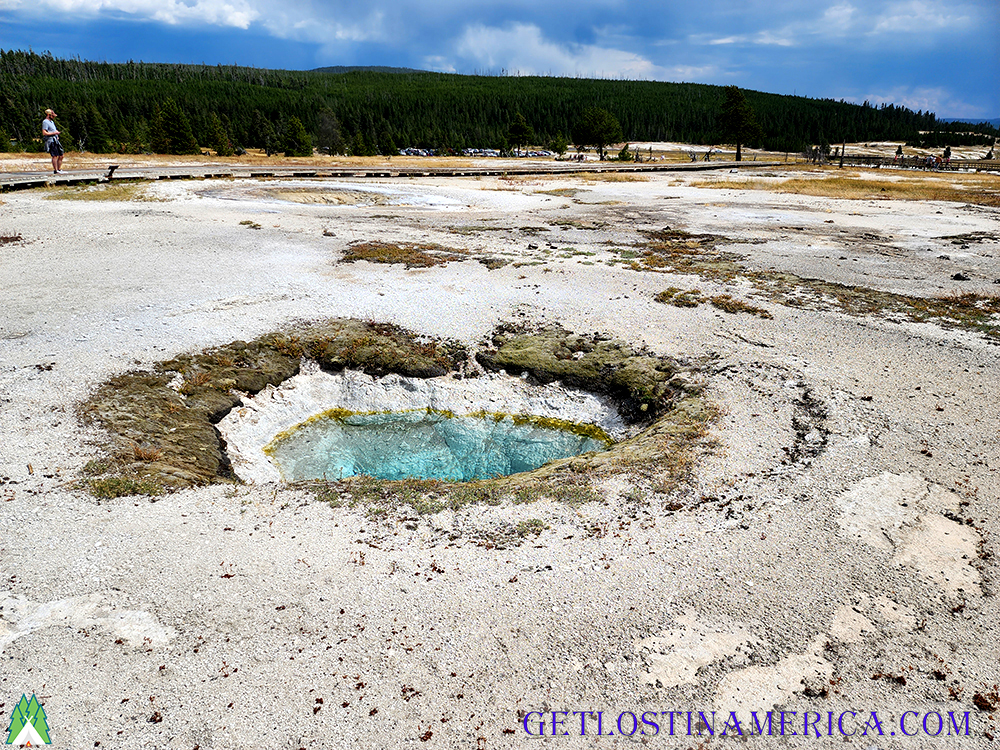
- Back on to the boardwalk to finish our hike around Biscuit Basin Yellowstone National Park
-
- Sapphire Pool from the junction on the loop returning from the hike
-
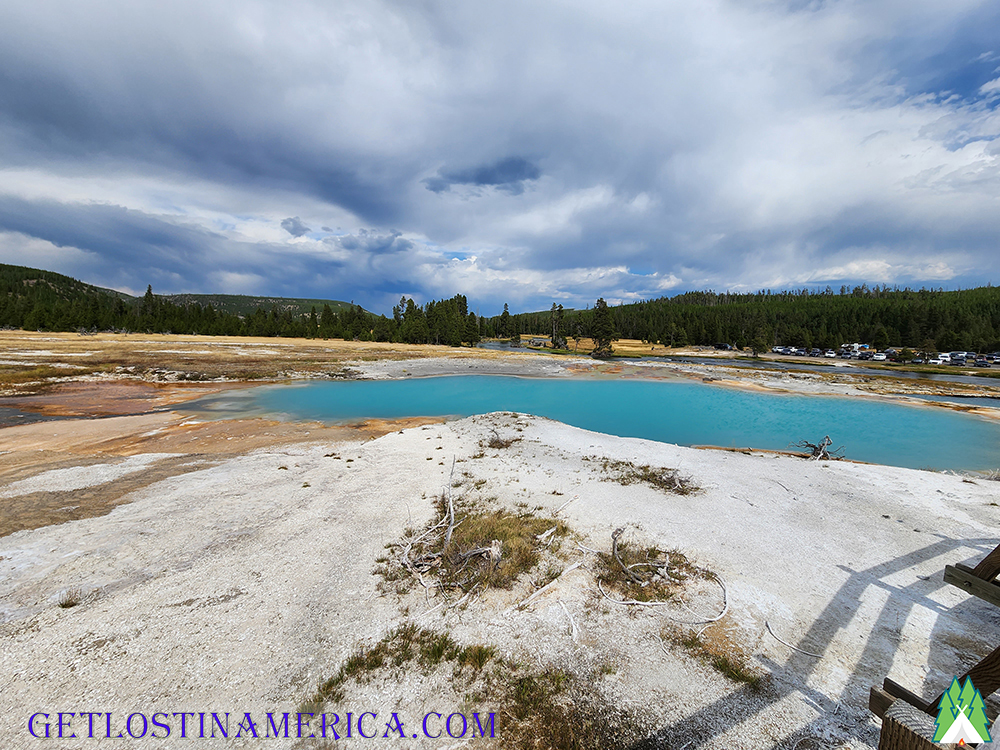
- Approaching Black Diamond Pool before crossing the Fire Hole River at the end of the hike as I watch the next storm roll in
-
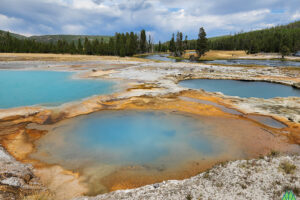
- Last of the hot springs, geysers and mud pots as I leave the trail
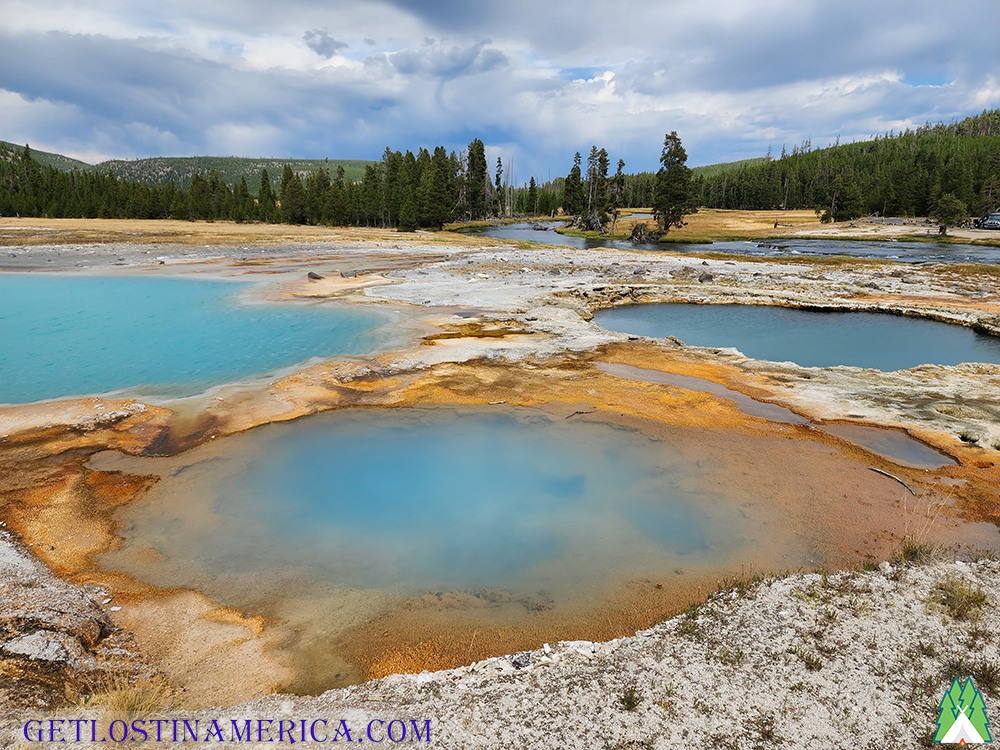
The Continental Divide Trail to Summit Lake
Most people who hike to Mystic Falls miss what comes next. At the junction where the trail splits — 0.6 miles from the base of the falls — a sign points toward Summit Lake at 7.2 miles. That route is a section of the Continental Divide Trail. I have hiked it, and it earns every step.
The CDT here climbs the Madison Plateau, threading through lodgepole forest and open meadow before arriving at Summit Lake — a remote backcountry gem that sits just below the Continental Divide. From there, the route eventually crosses into Idaho before swinging back north into Montana toward the northern terminus. For anyone following the CDT through Yellowstone, this stretch is the park at its quietest — no boardwalks, no crowds, no interpretive signs. Just thermal ground, massive sky, and the occasional bison doing whatever it wants. Permits are required for overnight travel in the Yellowstone backcountry. Plan accordingly.
Grand Prismatic Spring Overlook
While you are in this stretch of the park, the Grand Prismatic Overlook is worth the detour — a 1.2-mile round trip from the Fairy Falls Trailhead. Grand Prismatic Spring is the largest hot spring in the United States at 370 feet across and reaches temperatures near 160 degrees. The aerial perspective from the overlook trail is the only way to truly see its famous rainbow bands of orange, yellow, and green — thermophilic bacteria living at the thermal edges where the water cools enough to support life. From ground level at the Midway Geyser Basin boardwalk, you get the steam and the blue center. From the overlook, you get the whole picture.
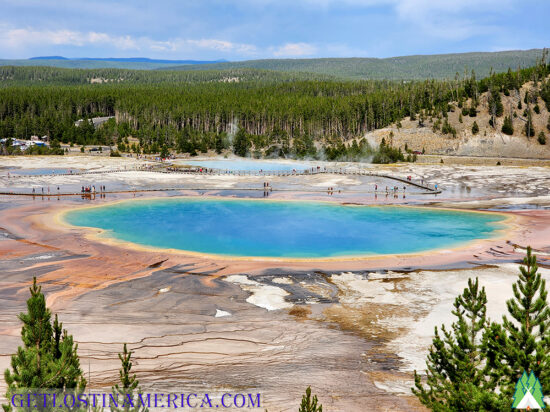
Grand Prismatic Spring from the overlook trail in Yellowstone National Park
Seismic Activity at Yellowstone: What the Data Shows
Yellowstone is one of the most seismically active regions on Earth, and the monitoring data coming out of recent years is worth understanding before your visit — not to alarm you, but because it adds real context to what you are standing on.
In July 2025, scientists with the Yellowstone Volcano Observatory detected a subtle but notable uptick in ground uplift along the north rim of the caldera, south of Norris Geyser Basin. The deformation rate briefly exceeded six inches per year — among the fastest recorded in the park in recent decades. The uplift tracked with a modest increase in seismicity in the same area. By mid-January 2026, GPS data showed the uplift had ceased. The YVO’s April 2026 monthly update confirmed earthquake activity returned to background levels, with 61 located events in March, the largest a M1.9 microearthquake near West Yellowstone. Volcano alert level remains NORMAL, aviation color code GREEN.
A 2025 study published in Science Advances added another dimension to the picture. Researchers used machine learning to re-examine 15 years of seismic recordings beneath the caldera and identified more than 86,000 earthquakes that had previously gone undetected — roughly ten times the known catalog. The finding does not mean Yellowstone is becoming more active. It means detection technology has finally caught up to what was always happening. More than half of those events occurred in swarms — clusters of small interconnected quakes that migrate along younger, rougher fault structures beneath the caldera. Scientists believe most of these swarms are driven by steam and hot water pushing through cracks in the crust, not by rising magma.
The last major caldera-forming eruption at Yellowstone was approximately 640,000 years ago. No researcher active in the field believes another is imminent. What they do say — and what the Biscuit Basin explosion demonstrated clearly — is that hydrothermal events remain a real and underappreciated hazard. They occur without warning, they are driven by shallow plumbing changes rather than magmatic intrusion, and they can happen in areas that see thousands of visitors per day. Stay on the boardwalk. That rule exists for a reason.
Planning Your Visit
Biscuit Basin is located approximately two miles northwest of Old Faithful along the Grand Loop Road. The parking area, boardwalk loop, and Mystic Falls trailhead are accessed by crossing a footbridge over the Firehole River. The boardwalk loop is 0.6 miles and rated easy. The Mystic Falls out-and-back adds 1.4 miles and modest elevation. The full loop including the overlook is 1.7 miles. The CDT junction to Summit Lake adds 7.2 miles one way — plan accordingly and carry plenty of water and food. Overnight trips require a backcountry permit.
The trail season runs from late May into early October depending on snowfall. Wildlife is present throughout — bison, elk, grizzly, black bear, and wolves all use this landscape. Give everything space. Carry bear spray and know how to use it.
Biscuit Basin itself remains closed as of May 2026. The Grand Loop Road is open. Confirm current closure status at nps.gov/yell before driving out. Conditions in this part of the park change without much notice — which, if you spend any time here, starts to feel like the whole point.
Worth the Drive
Yellowstone is often marketed in a way that undersells it. The geysers and hot springs are not just scenic — they are windows into an active volcanic system that is still being mapped and understood. Standing at the edge of Sapphire Pool, or looking down at the debris field where Black Diamond Pool blew, is not a theme park experience. It is a geology lesson that is still in progress. Biscuit Basin, when it reopens, will be different from what it was when I last walked it. That is the deal with Yellowstone. The place does not hold still.
— Capt. Grumpy | GetLostInAmerica.com
Graphic Hoodies of Yellowstone National Park
Yellowstone National Park wildlife on a sun protective graphic hoodies.




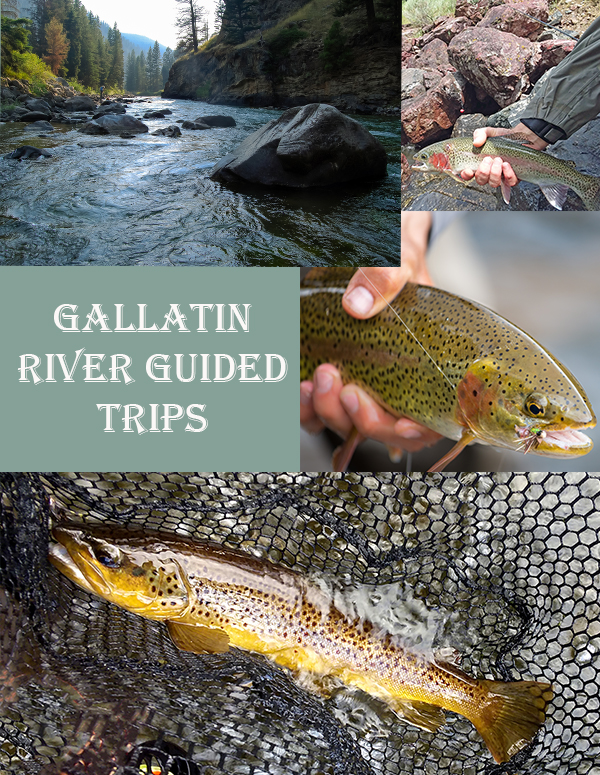
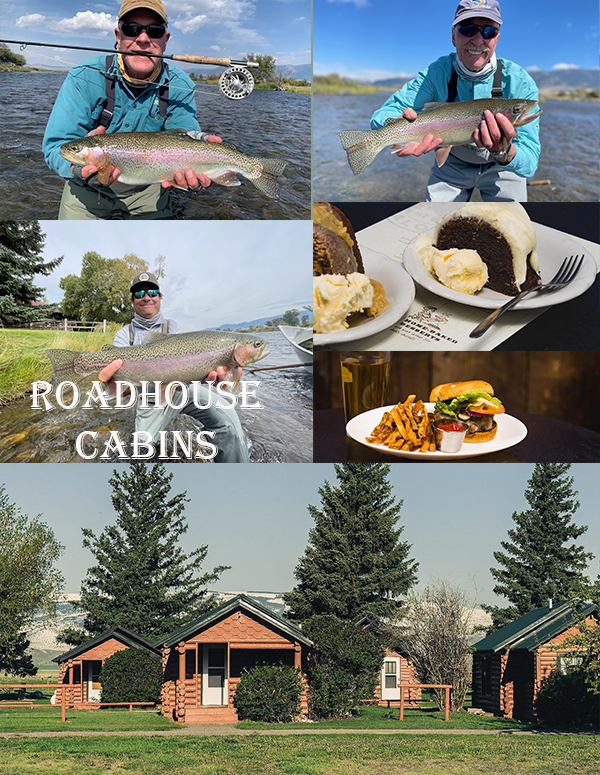
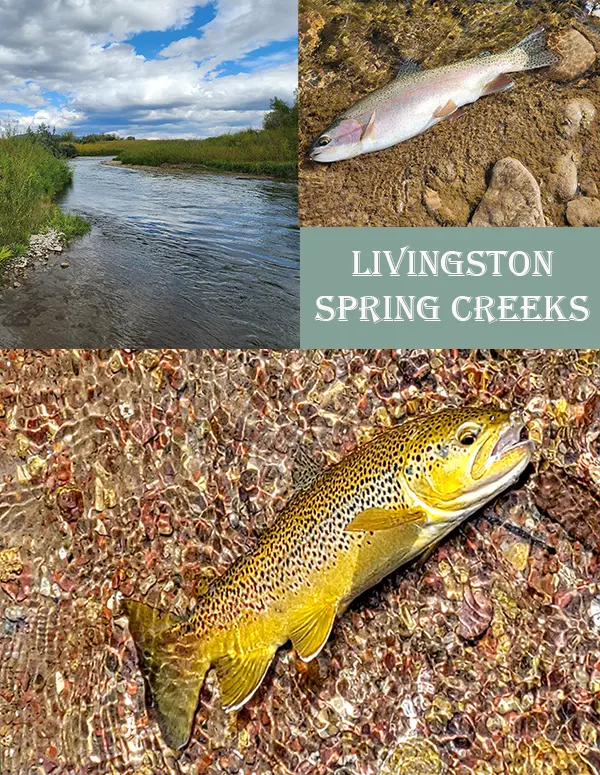
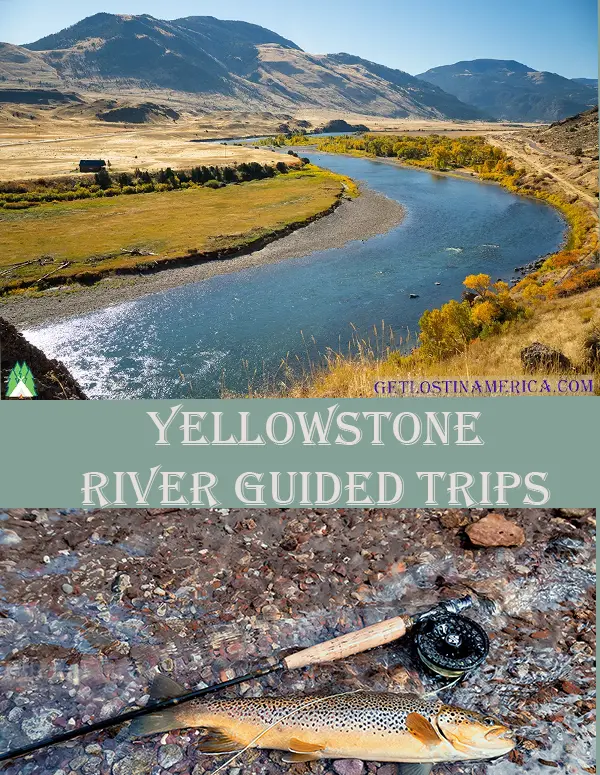
Fly Fish Yellowstone Park and Cabin Rentals
To us at Get Lost in America Yellowstone National Park is one of the wonders of the world. Surround by unique natural beauty, wildlife such as moose, grizzly bear, bison, antelope, black bear and plethora of birds. Get a unique Yellowstone Cabin Rentals and Montana fly fishing guide for the experience of a lifetime.