Gila Wilderness: A Snarky, Poetic Romp Through America’s First Wild Haven
Oh, the Gila Wilderness, you rugged, untamed beast of New Mexico’s southwest! A sprawling 558,065-acre middle finger to civilization, this place was the first chunk of dirt to be slapped with the “wilderness” label back in 1924, thanks to a certain tree-hugging dreamer named Aldo Leopold. Picture it: a land where roads are as welcome as a skunk at a picnic, where the Gila River snakes through like a tipsy poet penning odes to canyons, and where you can hike, fish, or just sit and argue with a cactus about the meaning of life. This isn’t your grandma’s national park with gift shops and Wi-Fi—this is raw, prickly, and gloriously free. So, lace up your boots, grab your fly rod, and let’s take a sarcastic, poetic stroll through the history, trails, backpacking vibes, fly fishing haunts, the Continental Divide Trail, the Gila Cliff Dwellings, and the campgrounds that dot the surrounding Gila National Forest. Buckle up, it’s gonna be a wild ride.
This is our guide to the raw, untamed spirit of the Gila Wilderness and its main cultural site, the Gila Cliff Dwellings National Monument. We’ll explore its fierce history, challenging trails, and whispered secrets. Get ready to feel small in the best way possible.
Table of Contents
A History That’s Wilder Than a Coyote on Tequila
Let’s rewind to a time when “wilderness” wasn’t just a buzzword for granola-munching Instagram influencers. Back in the early 1900s, Aldo Leopold, a Forest Service ranger with a penchant for solitude and a beard that probably whispered ecological wisdom, was traipsing through the Gila’s rugged folds. This guy looked at the Mogollon Mountains, the Gila River’s shimmering curves, and the endless piñon-juniper sprawl and said, “You know what? Let’s keep this place pure. No roads, no loggers, no nonsense.” In 1924, his bosses at the U.S. Forest Service nodded (probably while sipping bad coffee) and declared the Gila the world’s first designated wilderness area. That’s right, folks, the Gila was strutting its untamed stuff 40 years before the Wilderness Act of 1964 made it official.
But the Gila’s story isn’t just about Leopold’s eco-crusade. Long before his boots hit the dirt, the Mogollon people were building cliffside condos in the 1280s, leaving behind the Gila Cliff Dwellings that we’ll gush about later. The Chiricahua Apache called this place home, moving in around 1200-1600, fiercely guarding it like it was the last slice of pizza. Fast forward to the 1800s, and the Gila saw miners, ranchers, and prospectors chasing gold and glory, only to be humbled by the landscape’s sheer “you’re not the boss of me” attitude. By the time Leopold showed up, the Gila was already a living museum of human grit, natural beauty, and the occasional bear who didn’t give a hoot about your campfire songs.
Wildfires and floods have tried to mess with the Gila’s mojo over the years, but this place is tougher than a $2 steak. It’s survived mega-fires, monsoons, and even the Forest Service’s questionable decision to let feral cattle roam like they owned the place (spoiler: they got helicoptered out in 2022). Today, the Gila stands as a testament to what happens when humans decide to let nature do its thing, no questions asked.
Hiking Trails: Your Guide to Blisters and Breathtaking Views
The Gila National Forest and its designated Gila Wilderness boast over 800 miles of trails. These are not casual walking paths. Many trails are faint, overgrown, or crisscrossed by downed trees from past fires, so preparation for any day hiking is essential.
Before you go, it’s critical to check for current conditions. The official Gila National Forest gov website is the best source for trail closures, fire restrictions, and weather alerts. Be aware that cell service is nonexistent in most of the wilderness, so a satellite messenger, along with a physical map and compass, are important safety items.
The Catwalk National Scenic Trail
Let’s ease into things with the Catwalk. This is a spectacular one-mile trail that feels more like an adventure course than a typical hike. It consists of a metal walkway bolted directly onto the sheer walls of Whitewater Canyon, suspended above a rushing creek.
The trail offers a dramatic taste of the area’s geology and is perfect for a short trip. It is one of the more accessible outdoor activities for families. It provides big rewards without requiring backcountry survival skills.
Little Bear Canyon to Jordan Hot Springs
Ready for a classic Gila adventure? For those who like their hikes with a side of geothermal pampering, the 15-mile out-and-back to Jordan Hot Springs via Little Bear Canyon is a fan favorite. You’ll ford the Gila River 15 times (yes, your feet will be soggy), weave through slot canyons, and end up at a hot spring that’s basically nature’s hot tub. It’s a moderate trek, but the reward is a soak in 90-degree water while you contemplate why you didn’t pack more snacks. Pro tip: avoid spring break unless you want to share your spa day with a frat party.
You will wander through incredible canyons that seem to swallow the sky. Your reward is a wonderful soak in a natural hot spring, a perfect way to soothe tired muscles. This is one of the most popular day hikes in the area for a reason.
Gila Loop Trail
If you’re looking for a serious challenge, the Gila Loop Trail is waiting. This is a demanding 22.5-mile trek near Pinos Altos that features over 2,500 feet of climbing and more than 50 river crossings. This is a tough route for experienced hikers.
Hikers often find the trail overgrown and difficult to follow in sections. This is a multi-day trip for backpackers who are comfortable with navigation. The solitude and stunning views are well worth the effort for those prepared for the journey.
West Fork Gila River Trail
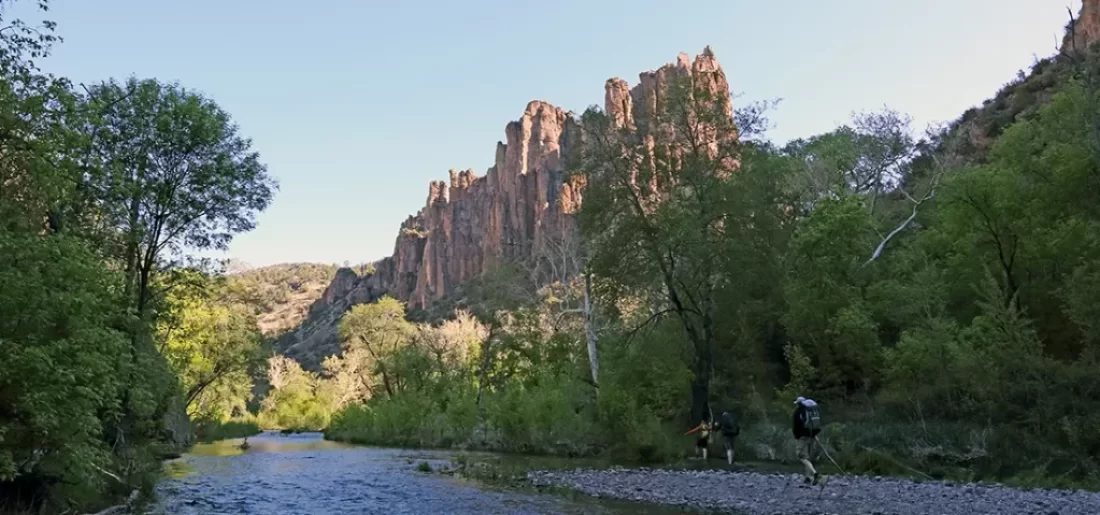
This one’s a classic for those who don’t mind getting their shoes wet—think 35 shin-deep river crossings over a 16-mile loop. Start at the Gila Cliff Dwellings parking lot, wander through slot canyons, and marvel at the solitude (one hiker saw only four other people in two days). The trail’s flat but rocky, so sturdy boots and trekking poles are your BFFs. Bonus: you’ll pass by the cliff dwellings, so you can flex your history nerd credentials.
The Gila’s trails are as varied as a buffet at a questionable diner. From easy day hikes to multi-day epics, there’s something for everyone—whether you’re a newbie looking for Instagram-worthy views or a grizzled backpacker who thinks “comfort” is a four-letter word. Just bring water, a map, and a willingness to embrace the chaos.
The trail itself is relatively flat but very rocky. You’ll get to experience deep slot canyons and stunning solitude. It’s a great way to see the Gila Cliff and then immediately disappear into the wild.
Here is a quick comparison of a few popular day hikes:
| Trail Name | Distance (Round Trip) | Difficulty | Highlights |
|---|---|---|---|
| Gila Cliff Dwellings Trail | 1 mile | Moderate | Historic dwellings, canyon views, educational. |
| Catwalk Trail | 2 miles | Easy to Moderate | Unique suspended walkway, narrow canyon, creek. |
| Jordan Hot Springs (from Visitor Center) | 15 miles | Strenuous | Multiple river crossings, hot springs, deep canyon. |
| Lightfeather Hot Springs | 2 miles | Easy | Short hike, riverside hot springs, family-friendly. |
Horseback Riding in the Gila
The vastness of the Gila Wilderness makes it ideal for exploration on horseback. Many of the same trails used for hiking are open to stock animals. This allows you to cover more ground and carry more gear for extended trips into the backcountry.
Several outfitters in the Silver City area offer guided horseback riding trips. These can range from short day rides to multi-day pack trips. It’s a fantastic way to experience the Gila from a different perspective, just as early settlers and rangers once did.
Backpacking in the Gila: Where You and Your Pack Become One
Backpacking in the Gila is a true test of self-reliance. There are no visitor centers deep in the wilderness. Trail signs can be few and far between, and you must be prepared to navigate and find your own water sources, treating all water before drinking.
The rewards, however, are immense. You’ll experience a level of quiet that is hard to find in the modern world. You will also get to see some of the most spectacular natural features in the American Southwest.
The Classic 55-Mile Gila Wilderness Loop
This epic journey is a 4-5 day, 55-mile trek that showcases the best of the Gila. It begins and ends at the Gila Cliff Dwellings National Monument. You will navigate both the West Fork and the Middle Fork of the Gila River.
Expect well over 100 river crossings on this trip. The scenery is constantly changing, from narrow canyons to open meadows and high-country forests. A good GPS device and physical maps are absolutely necessary for this adventure.
Middle Fork to The Meadows
For a shorter but equally epic trip, try the 3-day Middle Fork loop to The Meadows, a grassy paradise that’s basically the Gila’s version of a five-star resort (minus the room service). You’ll hike 25 miles, ford the river more times than you can count, and camp under towering cliff faces. The trail’s overgrown in spots, so expect to bushwhack like you’re starring in a low-budget adventure flick. The fishing here is top-notch—Gila trout and chub are practically begging to be caught (with a permit, of course). Just watch out for monsoon season, unless you want to swim your way out.
Backpacking in the Gila is not for the faint of heart or the poorly prepared. Water availability is sketchy outside the river forks, trails can vanish like your ex at a family reunion, and wildfires have left some areas looking like a post-apocalyptic movie set. But the payoff? Solitude, starry skies, and the smug satisfaction of knowing you’re tougher than 90% of the folks back in civilization.
Fly Fishing the Gila River: Where Trout Mock Your Skills
If you think fly fishing is just waving a stick over water, the Gila River will humbly (or not so humbly) set you straight. The Gila River, with its West, Middle, and East Forks, is a fly angler’s paradise, home to the elusive Gila trout—a fish so rare it’s basically the unicorn of the Southwest. These golden beauties were nearly wiped out by nonnative species and overfishing, but thanks to conservation efforts, they’re back and ready to taunt you with their finicky bites.
The Middle Fork is the go-to for fly fishing, with clear pools and riffles that scream “cast here, dummy.” Gila trout and chub are plentiful, but you’ll need a New Mexico fishing license and a Gila trout stamp (because bureaucracy loves to crash the party). The West Fork is another hotspot, especially near the Gila Cliff Dwellings, where you can cast a line while pretending you’re in a Hemingway novel. Just don’t expect the fish to cooperate—they’re as sassy as the river itself.
Spring is prime time for fishing, when snowmelt pumps up the river’s flow and the trout are feeling frisky. But beware the monsoon season (July-August), when the river can turn into a chocolate syrup mess. Wading is a must, so pack waders or embrace the soggy life. And please, for the love of Leopold, follow Leave No Trace principles—don’t be the guy who leaves beer cans on the riverbank.
The Gila’s fishing vibe is as wild as it gets—no stocked ponds or easy access here. You’ll hike in, sweat a bit, and maybe curse when your line snags on a willow. But when you hook that Gila trout under a canyon wall with a bald eagle circling overhead, you’ll feel like you’ve won the wilderness lottery. Just don’t expect the trout to applaud your efforts.
The Continental Divide Trail: The Gila’s Spine of Sass
The Continental Divide Trail (CDT) is the Gila’s resident overachiever, a 3,100-mile beast that stretches from Mexico to Canada, with 248 miles slicing through the Gila National Forest like a knife through warm butter. The Gila section, particularly the alternate route through the Gila River canyon, is a fan favorite among thru-hikers, who rave about its “epic” vibes and “soul-crushing” river crossings.
This isn’t your average trail. The CDT in the Gila is a 100-mile choose-your-own-adventure where you’ll ford the river so many times you’ll start dreaming in wet socks. The trail follows the Middle Fork, winding through canyons that make you feel like you’re in a Indiana Jones flick, minus the Nazis. Hikers report crossing the river up to 100 times in a single stretch—bring trekking poles and a waterproof sense of humor.
The CDT’s Gila section is a mix of solitude and scenery, with campsites like The Meadows offering grassy reprieves and views that’ll make you forget your blisters. But it’s not all rainbows and butterflies—trails can be overgrown, water sources dry up outside the river, and monsoons can turn your hike into a swimming lesson. Thru-hikers like Raven and Freebird, who’ve tackled the CDT, PCT, and Appalachian Trail, call the Gila section “unforgettable,” which is hiker code for “I almost died, but it was awesome.”
If you’re not up for the full CDT, you can still dip your toes (literally) in the Gila’s portion. Start at the Gila Cliff Dwellings and follow the Middle Fork for a 2-3 day taste of the trail’s magic. Just don’t expect trail signs to hold your hand—bring a map, a GPS, and a willingness to embrace the chaos. The CDT in the Gila is a love letter to the wild, written in mud, sweat, and the occasional tear.
Visiting the Gila Wilderness and Gila Cliff Dwellings National Monument
The main cultural attraction within this wild landscape is the Gila Cliff Dwellings National Monument. These ancient homes, tucked away inside a narrow canyon, offer an incredible window into the lives of the Ancestral Pueblo people. The monument is managed by the National Park Service (Park Service), which works to preserve these fragile structures.
A Glimpse into the Mogollon World
The Mogollon culture thrived in this area for centuries. The National Park Service tells us they built these cliff dwellings in the late 1200s. About 10 to 15 families called these 46 rooms home.
They farmed corn, beans, and squash on the mesa tops above the canyon. They hunted deer and foraged for local plants, including desert succulents. Then, around the year 1300, they moved on, leaving their homes behind.
No one knows for sure why the Mogollon people departed. It could have been drought, conflict, or other reasons. They left behind a nearly perfectly preserved gila cliff dwelling, protected from the elements by the deep caves.
What to Expect on Your Visit
Reaching the dwellings requires a walk up a one-mile loop trail. It’s a moderate climb with some steep sections and an elevation gain of 180 feet. You’ll even get to climb wooden ladders to enter the caves where the main dwellings are located.
The visitor center for the national monument is located about a mile from the dwellings themselves. It is open daily with consistent operating hours, though it’s always wise to check the official website for any changes. There you can find exhibits on Mogollon culture, view a short film, and browse the park store.
Guided tours are often available and offer fantastic insights from park rangers. Visiting the Gila Cliff Dwellings is a powerful experience, connecting you directly to the people who called this rugged place home over 700 years ago.
Planning Your Gila Adventure
A trip to the Gila Wilderness or the Gila National Forest requires some planning. The region is remote, and services are limited once you leave the larger towns. Here’s what you need to know.
Getting There
The primary gateway to the northern Gila is Silver City, New Mexico. From there, the Gila Cliff Dwellings are about a 44-mile drive north on the winding State Highway 15. The drive itself is scenic but takes about two hours due to the sharp curves and narrow sections.
An alternative route is via State Highway 35, which passes by Lake Roberts and offers another beautiful drive. For those coming from the east, taking Highway 152 over Emory Pass provides stunning long-range views before descending toward the Gila region. Check road conditions before you go, especially in winter.
Best Time to Visit
Spring and fall are generally the best times to visit the Gila. Temperatures are pleasant for hiking, and the rivers are typically at a safe level for crossing. Wildflowers can be abundant in the spring.
Summer brings the monsoon season (usually July and August), with frequent afternoon thunderstorms that can cause dangerous flash floods in the canyons. Winter can bring snow and ice, especially at higher elevations, making some roads and trails impassable. No matter when you visit, be prepared for changing weather.
Safety and Supplies
Silver City is the last place to get gas, groceries, and other supplies before heading into the Gila. The visitor center at the Gila Cliff Dwellings has water fountains, but there is no potable water in the campgrounds near the dwellings. You must bring all the food and water you will need for your trip.
The lack of cell service means you are on your own once you enter the forest. Always tell someone your itinerary and expected return time. Be aware of wildlife, including black bears, mountain lions, and rattlesnakes, and know how to store your food properly.
Nearby Attractions
While in the area, there are other points of interest to explore. Lake Roberts offers fishing, boating, and more developed camping facilities. The small town of Pinos Altos, a former mining camp, has a historic saloon and museum. For those interested in geology/hot springs, several other natural hot springs are accessible in the area, though they require some hiking.
Campgrounds: Where to Lay Your Head in the Gila National Forest
The 3.3 million-acre Gila National Forest offers a wide range of camping options. You can find developed campgrounds with basic amenities or choose dispersed camping for a more solitary experience. Remember that most forest service campgrounds in this area are primitive, with no water or trash service.
Cosmic Campground
If you love looking at the stars, this place is for you. The Cosmic Campground is an official International Dark Sky Sanctuary, one of only a handful in the United States. The clear, dark night skies here are truly unbelievable.
This is a primitive campground with no water, but it does have several concrete pads designed for telescopes. The lack of light pollution provides an astonishing view of the Milky Way. It’s a must-visit for amateur astronomers.
Upper and Lower Scorpion Campgrounds
These two small campgrounds are the closest to the Gila Cliff Dwellings National Monument. They are free and operate on a first-come, first-served basis. They serve as a great basecamp for hiking the West Fork trail, with the trailhead for TJ Corral just a short walk away.
There is no water available at these sites, so you must bring your own. You can fill water containers at the visitor center during its operating hours. Their convenient location makes them very popular with hikers and visitors to the cliff dwellings.
Gila Hot Springs Campground
If primitive camping isn’t your style, check out this private campground. Located a few miles from the national monument, it offers tent sites and RV spots. The main attraction is the on-site thermal soaking pools, fed by natural hot springs.
After a long day of hiking, a soak in the hot springs feels incredible. This campground provides a comfortable way to experience the area. You get the wilderness by day and some comfort by night.
Grapevine Campground
Just five miles from the cliff dwellings, Grapevine is another excellent primitive option. It has six sites located right next to the Gila River. It’s perfect for those who want quiet and easy river access.
Like other Forest Service campgrounds, there’s no water here. But its peaceful setting is a huge draw. You can fall asleep to the sound of the river flowing by and wake up ready for another day of exploration.
Conclusion of Gila Wilderness
The Gila Wilderness is more than just a place on a map. It’s an experience that stays with you, from the challenge of a river crossing to the deep silence of a starry night. It’s a powerful connection to a long history and a living lesson in nature’s resilience.
From Aldo Leopold’s visionary dream to the ingenuity of the Ancestral Pueblo people, this land tells a deep story. It challenges you to be self-reliant and rewards you with unmatched solitude and beauty. The Gila Wilderness and Gila Cliff Dwellings National Monument does not just show you the wild; it lets you become part of it.