Hebgen Lake Recreation Area: Fly Fish, Camp and Explore
Hebgen Lake Recreation Area is a fly fisher’s dream, tucked away near West Yellowstone and Madison River. It’s where the still waters promise hefty trout and the mountain air sharpens your senses. This isn’t just fishing; it’s an encounter with nature that etches itself into memory.
Setting up at Hebgen lake recreation area: fly fish, camp and explore, you’re stepping into a world of angling prestige. We’ll guide you through navigating to prime spots, mastering dry fly techniques, and finding serene camping locations to rest your head after days spent on the water.
I spent close to a decade living and working within casting distance of Hebgen Lake. Spenting morning off Rainbow Point with Gary B., throwning flash back pheasant tails. I’ve watched the callibaetis spinner falls turn this water into a feeding frenzy so thick you could hear the rises before you saw them. I’ve been on the water during the 1959 earthquake anniversary commemorations, camped at Rainbow Point through early September frosts, and guided anglers who had fished the world — and still left Hebgen calling it one of the best days they’d ever had.
What I’m going to give you here isn’t a travel brochure. It’s what I’d tell you over breakfast in West Yellowstone the morning before we hit the water together.
Ready for trophy trout or picturesque sunrises? That’s what awaits here in Montana’s outdoors—big skies included. Dive in as we unfold how best to time your visit for those epic hatches and share tips that could land you amidst monster catches under Big Sky country’s expanse.
Hebgen Lake has been a place of wild nights and days of reflection. From Hebgen Lake in every direction is amazement from 40 square miles of petrified forests to thousands of miles fly fishing streams. Not mention hiking trails and wilderness areas.
Table of Contents

Right sun protective outdoor apparel is important for a successful day. Best fly fishing apparel learn more.
Fly rod choice is a Denny Rickards Signature Fly Rod. This six weight has the right sensitivity for gulpers and the power for streamers.
Unveiling Hebgen Lake Recreation Area’s Fly Fishing Paradise
Hebgen Lake is where fly fishers’ dreams come alive, with waters teeming with trophy trout and skies filled with the promise of a perfect cast. It’s not just another spot on the map; it’s the heartthrob of West Yellowstone, where big sky country reveals its aquatic treasures.
Legendary Waters Await Anglers
Nestled near the famous Madison River, Hebgen Lake Montana stands as a testament to nature’s ability to both awe and challenge anglers. The callibaetis dry fly patterns dance across its surface during peak hatches from late July to early September, signaling prime time for those in pursuit of monster trout. As these legendary creatures rise for their surface feeds, you can almost hear your heartbeat syncing with each ripple they create.
The lake itself extends generously across miles long landscapes and reaches out wide enough to give every angler their fair share of this fishing paradise. A stone’s throw away lies Yellowstone National Park – yet here at Hebgen Lake recreation area, you find an exclusive world renowned for unmatched fly fishing experiences that rival even those found within park boundaries.
Prime Time for Trophy Trout at Hebgen Lake Recreation Area
Dawn or dusk? That’s often the question when chasing gulpers – large rainbow trout known for gulping mayflies off the water’s surface during spinner falls. To make sure you’re casting your line at just right moment consider this: The best times are between 10:30 am and 2 pm under a blazing sun or through gentle morning mist in early summer months especially noted in late July through September as confirmed by seasoned guides who have watched countless spinners descend upon these rich waters year after year.
To say “fishing opportunities abound” would be an understatement here at Hebgen Lake Recreation Area Montana Fishing scenes unfold before your eyes like pages from an angler’s diary full of musings about ‘the one that got away.’ But worry not. With proper techniques learned perhaps over years spent wading streams or gleaned from friendly chatter shared among fellow fishermen along weed beds lining Madison Arm good chances are you won’t leave empty-handed but rather brimming stories worthy sharing around campfires back Rainbow Point Campground – speaking which…
Rainbow Point Campground, set against surrounding mountains offers more than scenic lakeside spots; it serves up serenity on a silver platter allowing anglers moments reprieve preparing next day adventures possibly exploring South Fork Madison River why maybe try hand quake lake if feeling particularly bold?
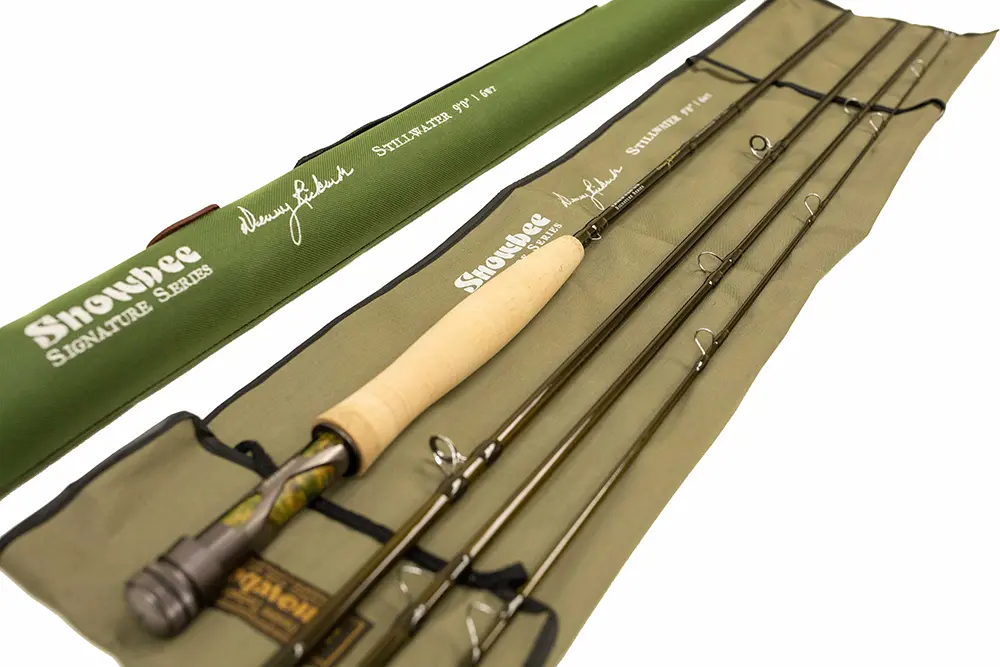
Denny Rickard Signature Nine Foot - Six Weight
Hebgen Lake Gulpers — What They Are and How to Fish Them
What Makes Hebgen Lake’s Gulper Fishing Legendary
Anglers travel from across the country specifically for one thing: the gulpers. If you’ve never witnessed a Hebgen Lake gulper hatch, it’s difficult to explain the scale of it. On a good morning in late July or August, the surface of the lake erupts with large rainbow trout working spinner falls in slow, methodical arcs — heads up, mouths open, unhurried. They’re not chasing baitfish. They’re sipping spent callibaetis mayflies with the confidence of fish that have done this a thousand times.
The term “gulper” refers specifically to these large rainbows — fish often in the 18–24 inch range — that lock onto a feeding lane and work it systematically during peak spinner falls. They are not easily spooked, but they are selective. A drag-free drift matters more here than almost anywhere else in Montana.
How to Fish Gulpers on Hebgen Lake
Timing: The window is narrow and consistent. Spinner falls typically begin between 10:00 and 10:30 am, with peak feeding running through 1:30–2:00 pm. Wind will shut it down. A calm, overcast morning in August is the highest-probability setup you’ll find anywhere in stillwater trout fishing.
Approach: Work from a boat or float tube. Watch for the feeding rhythm — a gulping trout often returns to nearly the same spot on consecutive rises. Lead the fish. Cast 3–4 feet ahead of where you expect the next rise, let it sit, and wait. The mistake most anglers make is overcasting or moving the fly.
Flies: Callibaetis Sparkle Dun, Callibaetis Parachute, and Comparadun patterns in sizes 14–16 are the standards. Carry both spinner and dun imitations — fish the dun during the hatch, transition to the spent spinner as the fall progresses. Pheasant Tail Nymphs fished on a slow retrieve are effective when fish are feeding subsurface between hatch cycles.
Hebgen Gulper Tip: If fish are rising but ignoring your fly, check your leader. Hebgen’s surface can be glass-calm and fish see everything. Drop to a 5X or 6X tippet before changing flies.
So, don’t second-guess packing pheasant tail nymphs on your next trip. They’re a surefire hit across the many conditions you’ll find in Hebgan’s arms and stretches—perfect for mastering those waters.
Hebgen Lake Tip:
Hebgen Lake is a fly fisher’s dream with trophy trout and legendary waters, especially from late July to September. Prime time for big catches is midday under the sun or morning mist.
Rainbow Point Campground offers serene lakeside spots ideal for anglers seeking both adventure and tranquility in nature’s embrace.
-
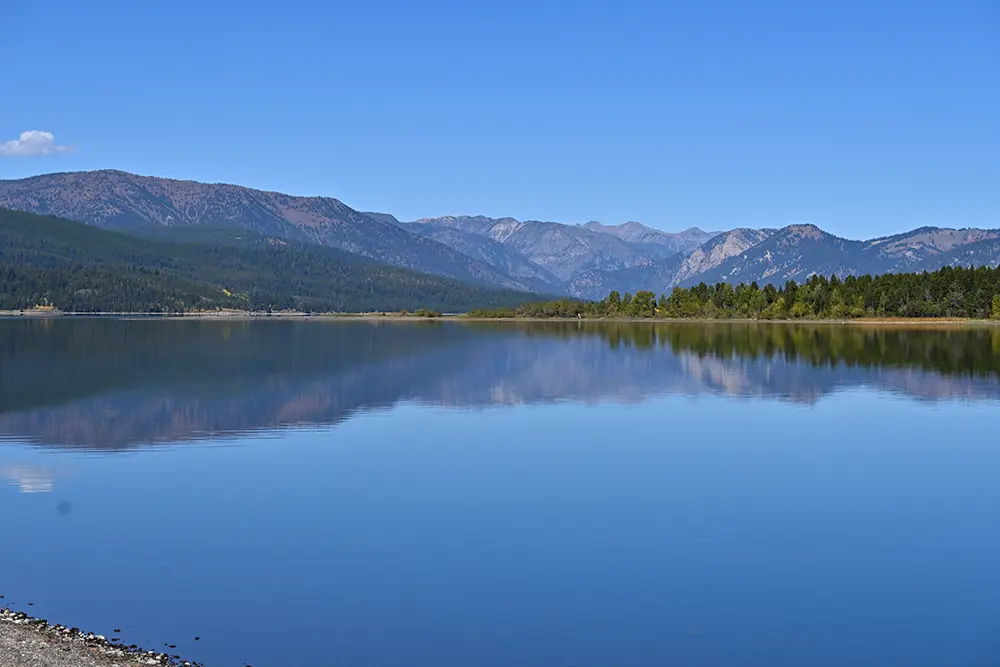
- Cruising Hebgen Lake Recreation Area on a morning scenic drive.
-
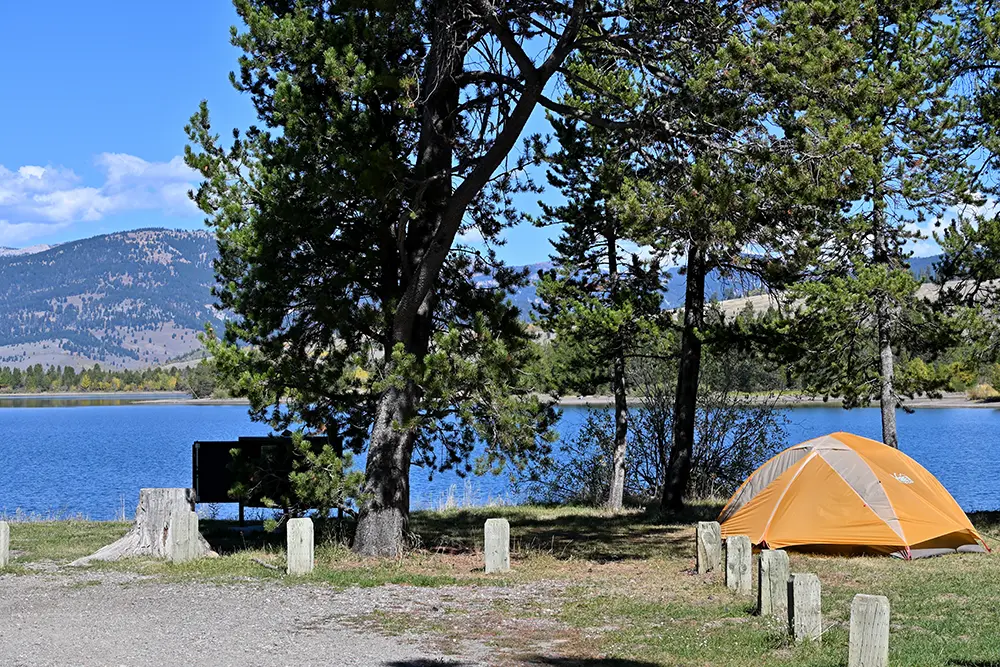
- Basecamp Spring Creek National Forest Campground on South Shore of Hebgen Lake, Montana.
-
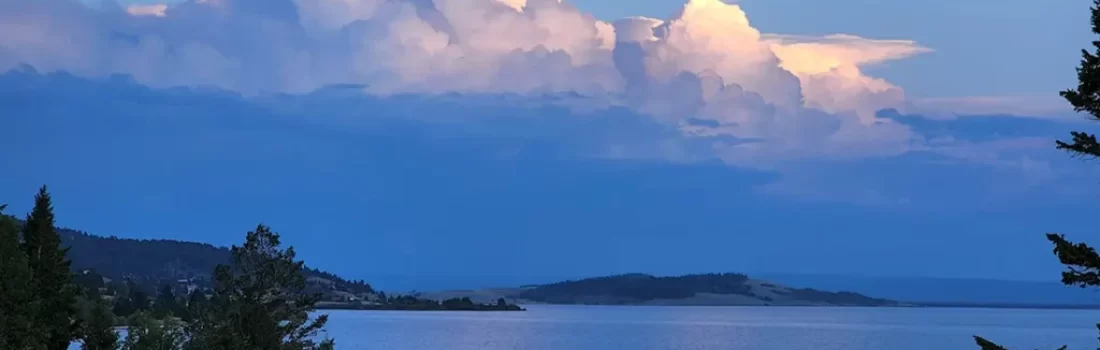
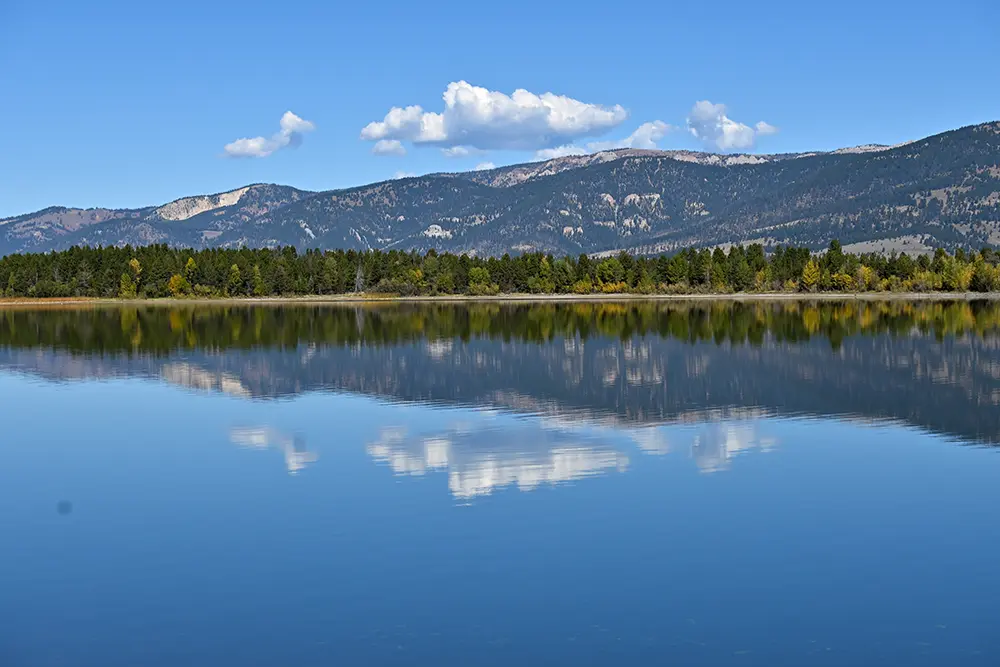
- Reflecting Clouds on Hebgen Lake.
-
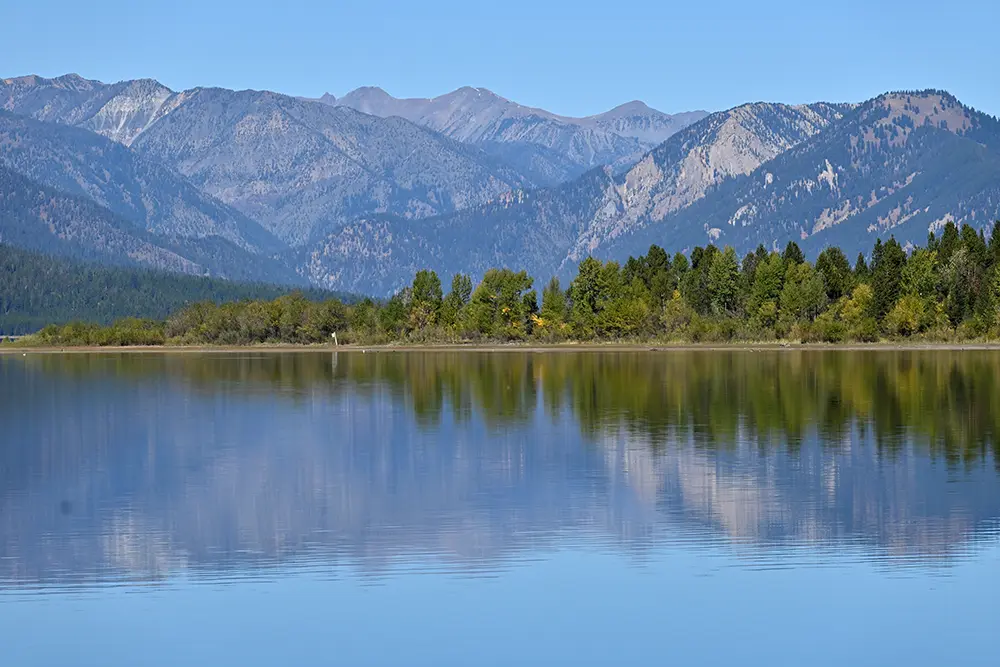
- Summer reflecting mountains upon Hebgen Lake, Montana.
Navigating to Fly Fish Camp at Hebgen Lake Recreation Area
Picture this: You’re cruising down a dirt road, windows down with the fresh Montana air filling your lungs. Ahead lies an angler’s dream—Hebgen Lake Montana—a fly fish camp where big sky views meet legendary waters. Whether you’re coming from West Yellowstone or elsewhere, getting there is part of the adventure.
If you’re starting off in West Yellowstone, head northwest on US-191 N/US-287 N for about 8 miles until you hit Rainbow Point Campground turnoff—it’s hard to miss and just screams ‘start your engines’. The concrete boat launch here whispers promises of trophy trout lurking beneath productive weed beds. If dry fly fishing is what gets your heart racing faster than that dirt road dust cloud behind you, then setting up camp here might be akin to finding El Dorado.
On the south side of Hebgen Lake are developed campgrounds such as Spring Creek National Forest Campground, BLM dispersed camping areas and National Forest Primitive Camping Areas, Learn more about Montana National Forest Campgrounds.
Launching Your Quest for Trout
The South Fork Arm boasts gentle launches as smooth as a well-cast line; perfect if launching boats isn’t quite second nature yet. Get ready because these ramps are like springboards into some serious rainbow trout action—and let’s not forget their cousins, the brown trout which also fancy these parts of Hebgen Lake.
You don’t need me telling tales out of school—the South Fork Arm speaks for itself when it comes to prime lake Montana fishing spots. And if stealthy tactics are more your style, try creeping along those elusive monster trout feeding lanes by kayak or canoe launched from one of these friendly shores.
Finding Your Sweet Spot Alongside Rainbow Point
A stone’s throw north will land you smack dab at Rainbow Point where proximity equals opportunity—or in our case—trout galore. This point campground serves up front-row seats to arguably the best stage Mother Nature ever designed for dry fly patterns and callibaetis mayfly hatches known far and wide among those who wield a fly rod like Excalibur himself.
No fairy tale folks; just ask any seasoned fly fisherman who has had their breath taken away not only by gulping gulpers but also by majestic mountains framing every cast against clear blue skies unique to Big Sky Country around Hebgen Lake Recreation Area. Now remember what I said about sweet spots? They’re real alright—ask anyone returning with stories taller than those surrounding peaks after wrestling rainbow warriors amongst dancing callibaetis during peak hatch season (late July through September).
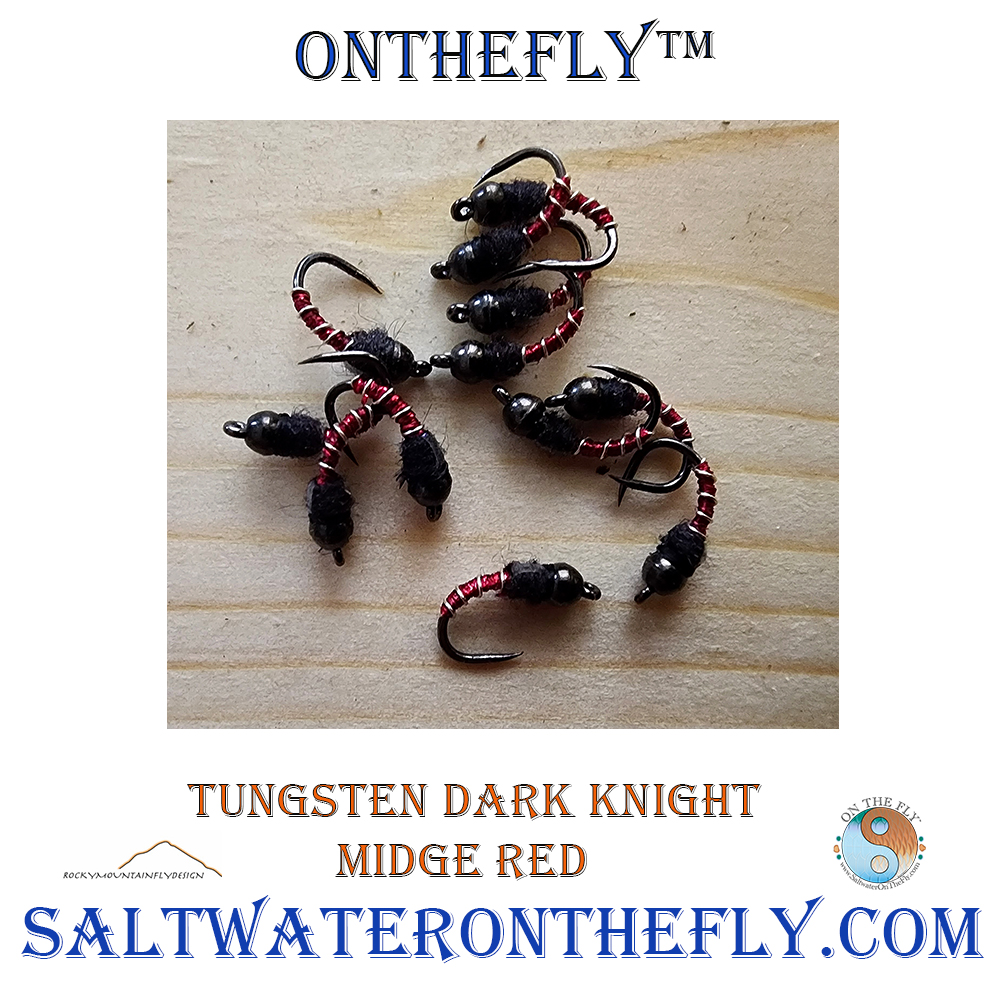
While waiting for the gulpers to start their feeding frenzy. Search with midges, baetis, and callibaetis nymphs.
Your Trusty Guide Through Twisting Paths
Last but never least: Let’s talk logistics before lines get wetted since nobody wants that kind of damp squib start. From Madison River runs carving through Yellowstone Park all the way south, it’s crucial to plan your route and pack appropriately. This ensures a smooth trip where you can focus on the thrill of the catch rather than worrying about what you might have forgotten.
Hebgen Lake Tip:
Hit the road to Hebgen Lake and dive into an angler’s paradise where trophy trout await. Set up camp, launch your boat smoothly, and find your sweet spot for some legendary dry fly fishing. Just make sure you plan ahead so nothing dampens your adventure.
Techniques for Mastering Fly Fishing on Hebgen Lake
Fly fishing on Hebgen Lake isn’t just about casting a line and hoping for the best. It’s an art, honed by understanding the lake’s unique ecosystem and mastering techniques that speak to its finicky fish. So grab your fly rod—let’s talk strategy.
Dry Fly Fishing Mastery
The surface of Hebgen Lake can erupt with activity as trout chase hatches of Callibaetis mayflies—a spectacle that turns any angler’s head. To make these moments count, savvy anglers trust in dry fly patterns mimicking this hatch. Think precision: cast your line so that your Callibaetis dry fly lands gently atop the water, perfectly mirroring a real mayfly touching down.
If you’re out when spinner falls occur or during peak hatching times from late July through September, timing is everything. Between 10:30 am to 2 pm are golden hours where “Gulpers”—trout feeding voraciously on insects—come out to play. Your dry flies need not be complex; sometimes simplicity reigns supreme with patterns like Pheasant Tail nymphs bringing notable success.
Navigating Subsurface Tactics Fly Fishing Hebgen Lake Recreation Area
Beneath those tranquil waters lie weed beds—the playground of big Montana browns and rainbows waiting for something tasty to drift by overhead. In these deeper realms, tail nymphs come into their own league as effective weapons in an angler’s arsenal. A well-presented Pheasant Tail Nymph, drifted along submerged vegetation edges or drop-offs where fish lurk, can yield impressive results—even more so if tied off a dropper setup with a buoyant dry fly bobbing above.
Tailoring Gear For Success
You wouldn’t show up at Yellowstone Park without bear spray; similarly don’t hit Hebgen without proper gear prepped for diverse conditions found here—from serene bays like Grayling Arm to wind-whipped channels near Rainbow Point Campground or South Fork Madison River stretches which test even seasoned arms.Fly rods should balance sensitivity with enough backbone—to throw delicate dries but also battle against monster trout taking advantage of strong winds across miles wide expanses within our national park neighbor’s viewshed.Your choice in lines will depend heavily upon whether you’re sight-fishing clear shallows around West Yellowstone entrances (think floating lines) versus dredging deep runs (here sinking tips save days). And let us not forget reels—an overlooked component until one hooks into what feels like aquatic freight trains common throughout Hebgan known only too well among local fishing guides.
Remember folks: At its heart, effective communication is all about connecting with your audience. It’s crucial to convey your message in a way that resonates and sticks with them. To do this well, you need to understand their needs, speak their language, and engage them on a personal level.
Hebgen Lake Tip:
Master fly fishing at Hebgen Lake by mimicking mayfly hatches on the surface and using nymphs in deeper waters. Get your gear right—from rods to lines—and watch for trout during peak hours and conditions.
Hebgen Lake Hatch Chart
| Month | Primary Hatches | Best Patterns | Notes |
|---|---|---|---|
| May | Midges, early Blue-Winged Olives | Zebra Midge, BWO Parachute #18–20 | Ice-off fishing; cold water, nymphs dominate |
| June | Pale Morning Duns, Caddis, Midges | PMD Parachute, Elk Hair Caddis #14–16 | Shoulder season; crowds minimal |
| July | Callibaetis, PMDs, early Damsels | Callibaetis Parachute #14–16, Damsel Nymph | Gulper season begins late July |
| August | Callibaetis (peak), Damselflies, Dragonflies, Tricos | Callibaetis Sparkle Dun, Dragon Fur Nymph, Damsel Bugger | Peak gulper month; best conditions mid-morning |
| September | Callibaetis, Fall Baetis, Tricos | BWO Parachute, Pheasant Tail Nymph | Crowds drop; fish aggressive pre-winter |
| October | Fall Baetis, Midges | BWO, Zebra Midge | Late season; dress warm |
-
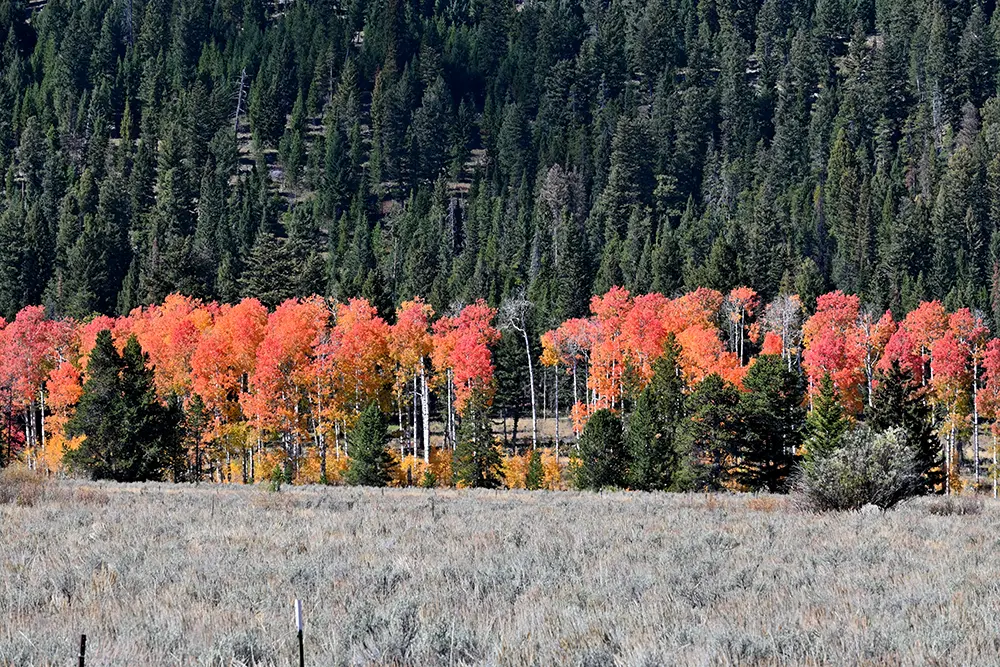
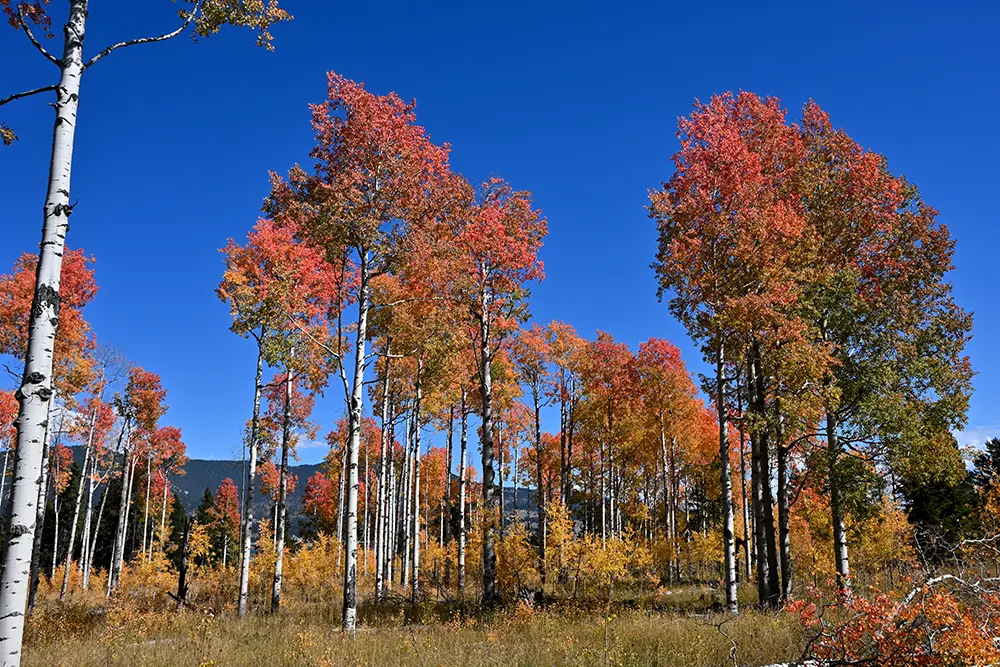
- Aspen grove in all its fall dress to greet the day along the shores of Hebgen Lake.
-
- Aspen grove in fall foliage.
-
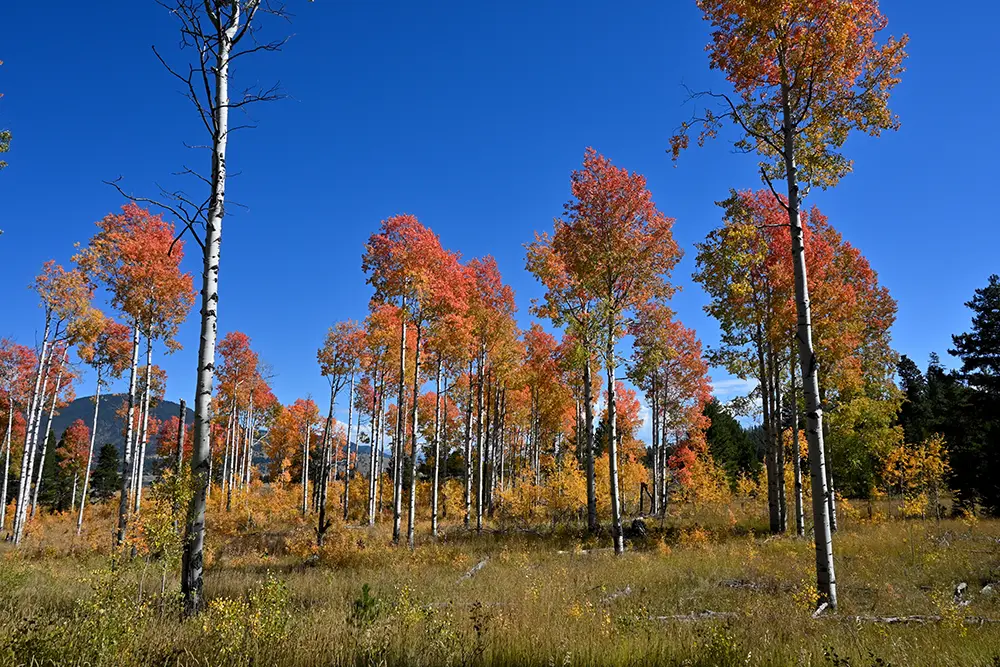
- Aspens in colors of orange, yellow, and gold.
-
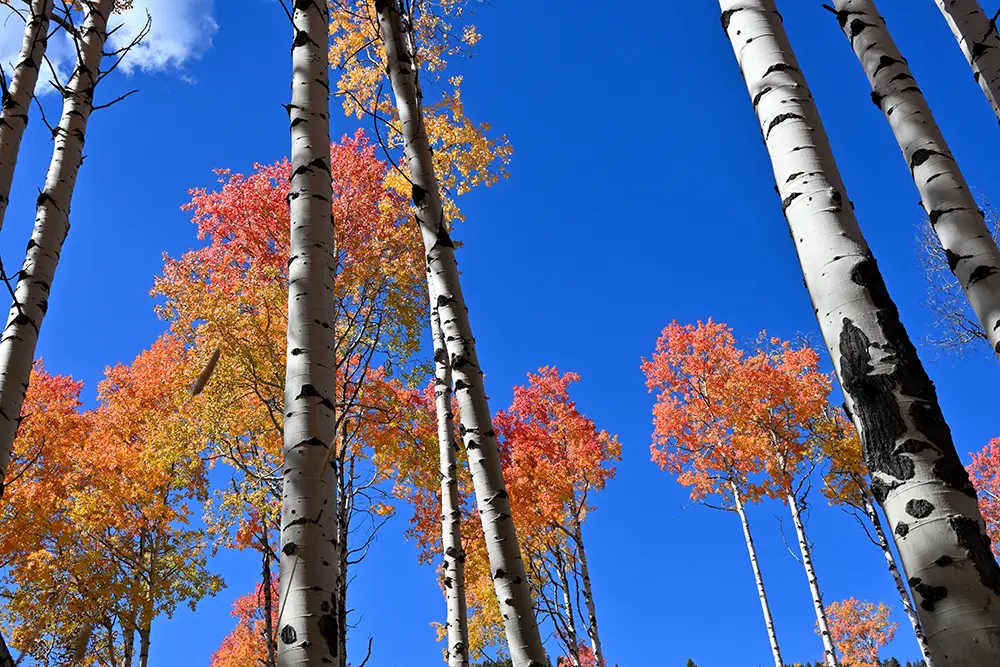
- Aspens and Sky
Camping by the Lakeside – Embracing Nature’s Serenity
After a day spent casting lines for rainbow trout and brown trout, nothing beats retreating to your own slice of paradise at Rainbow Point Campground. There is State/BLM sites. With its scenic lakeside camping spots cradled by surrounding mountains, this gem in Montana offers more than just a place to pitch your tent.
Nestled within the embrace of nature’s grandeur, these vacation homes away from home provide anglers and nature lovers with unparalleled tranquility. Imagine waking up to the gentle lapping of waves against the shore, stepping out into crisp morning air that carries whispers of adventure across Hebgen Lake’s expanse.
Prime Spots for Your Home Base
The key is choosing the right spot where convenience meets natural beauty. And let me tell you—Rainbow Point doesn’t disappoint here. Not only does it put you steps away from some serious fly fishing action but also gives you front-row seats to Mother Nature’s show each sunrise and sunset.
If we’re talking about proximity to productive weed beds—the kind that are like magnets for those monster trout—you’ve hit jackpot territory around here. Just imagine setting up camp with views so striking they’ll make every photo look postcard-perfect; all while being minutes away from waters teeming with fish ripe for catching on dry flies or tail nymphs like Pheasant Tail.
A Haven For Anglers Hebgen Lake Recreation Area
You might think I’m spinning tales as tall as Montana pines when I say folks come far and wide just for what lies beneath these glacially carved depths—but believe it. The Rainbow Point provides an ideal launchpad (quite literally if you’re bringing along a boat) onto Hebgen Lake’s vastness which stretches miles long and miles wide waiting patiently below towering peaks.
Book yourself a spot near South Fork Arm, where gentler concrete launches ease your journey into water world—or snag one closer to Rainbow Point itself. Both offer access points tailored not only toward experienced fly fishermen but anyone looking to soak in serene vistas while dangling their line hoping today will be another tale-worthy catch.
An Evening Amidst Alpine Air
As the sun dips below the horizon, and anglers put their rods away, a different kind of magic starts at Campfire . Just north of West Yellowstone on the shores of Hebgen Lake, gather around roaring fires to share stories with fish partners and new friends that resonate across the serene waters. It’s here where memories are made—under open skies dotted with stars—as laughter mingles with the scent of pine and hearty meals are savored. This is more than just a getaway; it’s an experience steeped in camaraderie and love for both fishing tales and preserving the breathtaking nature that surrounds us.
Hebgen Lake Tip:
Camp by Hebgen Lake and wake up to adventure. Choose Rainbow Point for top-notch fishing and stunning views, with easy water access.
End your day at Campfire for starlit nights filled with laughter, campfires, and shared fish tales in Montana’s wilderness.
Campground Reservations & Access Details
(Expand the current camping section with this specifics block)
Rainbow Point Campground
Located on the north shore of Hebgen Lake, approximately 8 miles northwest of West Yellowstone via US-287 N.
- Managed by: Gallatin National Forest
- Reservations: Recreation.gov — search “Rainbow Point Campground Montana”
- GPS: 44.8889° N, 111.2544° W
- Sites: Standard and group sites available; concrete boat launch on site
- Best for: Dry fly anglers targeting gulpers from boats or float tubes; direct lake access
Spring Creek National Forest Campground
Located on the south shore of Hebgen Lake.
- Managed by: Gallatin National Forest
- Reservations: Recreation.gov — search “Spring Creek Campground Hebgen”
- GPS: 44.8456° N, 111.2867° W [VERIFY]
- Best for: Quieter setup; good access to south shore weed beds
BLM Dispersed Camping
Dispersed camping is available in select areas along the south shore. No reservation required, 14-day limit applies. Check current BLM guidelines at blm.gov.
Booking Tip: Rainbow Point fills fast from late July through Labor Day weekend. Book 2–3 months ahead if your trip falls during gulper season. Cancellations open up — check Recreation.gov regularly if you’re last-minute.
Montana Destinations to Hike, Fly Fish, or Other Worldly Stops
A globe with a lot to chose from. Alaska Wilderness or Fly Fish Iceland. Learn more about fly fishing Montana.
Timing Your Visit for Optimal Fishing Conditions
Fly fishing at Hebgen Lake is a delicate dance with nature, and timing your steps to the rhythm of spinner falls and hatches can lead you straight into an angler’s waltz. If catching Gulpers—those trophy trout that rise eagerly to feast on surface insects—is high on your list, then late July through September should be marked in bold on your calendar.
Late July: The Kickoff of Spinner Falls
Early summer mornings by the lake are serene; it’s just you, the gentle lapping water, and possibly a curious moose or two. But as an experienced fly fisherman knows well, these quiet moments before 10:30 am are merely the calm before the storm. It’s when spinners start falling—a spectacle not to be missed—and prime time for fly fishing enthusiasts begins.
The window between 10:30 am and 2 pm is magical during this period. It’s when rainbow trout break their cover from weed beds in pursuit of fluttering mayflies making their last dances upon water’s mirror-like surface. You’ll want to have your Callibaetis dry fly patterns ready because that’s what they’re gulping down like candy at a parade.
Early Morning Tactics That Triumph in Hebgen Lake Recreation Area
Rise with dawn’s early light if targeting those monster browns is part of today’s adventure plan—it pays off more often than not around here near West Yellowstone National Park borders where pristine waters kiss big sky Montana landscapes.
Your trusty dry flies will shine best now but don’t shy away from mixing things up either; sometimes all it takes is switching out to a Pheasant Tail nymph dropped beneath that bobbing foam hopper pretending it hasn’t got a care in world while secretly conspiring against unsuspecting trout below.
Navigating Nature’s Calendar – When Late Summer Hatches Dominate
Come August through early September afternoons take center stage under Hebgen Lake skies where billowing clouds might promise brief showers but also signal some serious hatch action underneath them. This natural phenomenon ushers eager anglers into yet another round opportunity land one (or several) majestic leaps air—the kind stories passed down generations about.
Recreation.gov camping information and campground bookings can help secure lakeside spots ensuring easy access right outside tent flap come morning or even better views spectacular sunsets accompanied by soundtrack splashes leaping fish dinner hour approaches.
Remember, each visit is unique and tailored to your personal preferences. Conditions are never exactly the same twice, adding excitement and unpredictability to the mix. Every single trip to Hebgen brings you closer to the ever-changing rhythms of aquatic life cycles and dynamic weather patterns—making sure no two experiences are alike.
Hebgen Lake Tip:
Mark your calendar for late July to September if you’re after Hebgen Lake’s Gulpers—those trophy trout. Get up early and hit the water by 10:30 am when spinner falls bring magic, or switch tactics with a nymph if dawn’s first light is your chosen time. Remember, every trip offers unique conditions that add thrill to the chase.
Conditions by Month — When to Go and What to Expect
| Month | Water Temp | Crowds | Wind | What to Expect |
|---|---|---|---|---|
| May | Cold, 45–55°F | Very Low | Variable | Ice-off conditions; roads may be soft; nymph fishing productive |
| June | 55–62°F | Low | Moderate | Shoulder season gem; PMD hatches begin; great for anglers who want elbow room |
| July | 62–68°F | Moderate–High | Calmer mornings | Gulper season opens late month; book campsites early |
| August | 65–70°F | High | Calm mornings, afternoon builds | Peak gulper month; fish early before wind moves in; best overall conditions |
| September | Dropping, 58–65°F | Moderate, drops sharply after Labor Day | Variable | Underrated month; fish aggressive, crowds thin, aspens turning |
| October | 48–58°F | Very Low | Cold and variable | Late season nymphing; dress for cold; some years snow by mid-month |
Weather Note: Afternoon thunderstorms are common July–August. Get on the water early, take advantage of the 10am–2pm gulper window, and be off the lake before 3pm on days with building clouds.
-
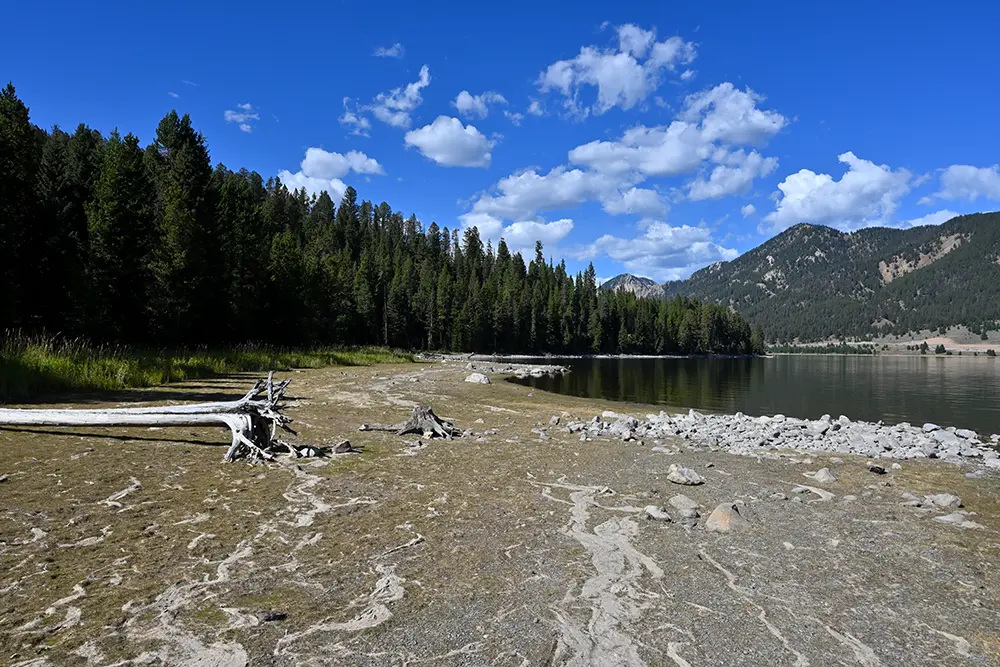
- Shores of Hebgen Lake in September..
-
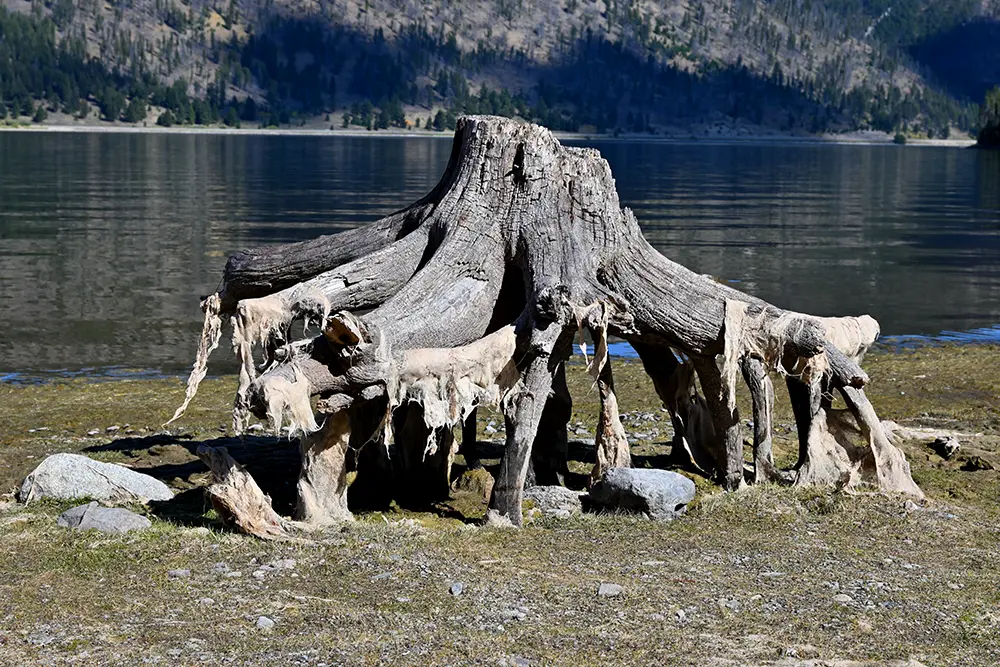
- Natures art displayed on the shoreline of Hebgen Lake.
-
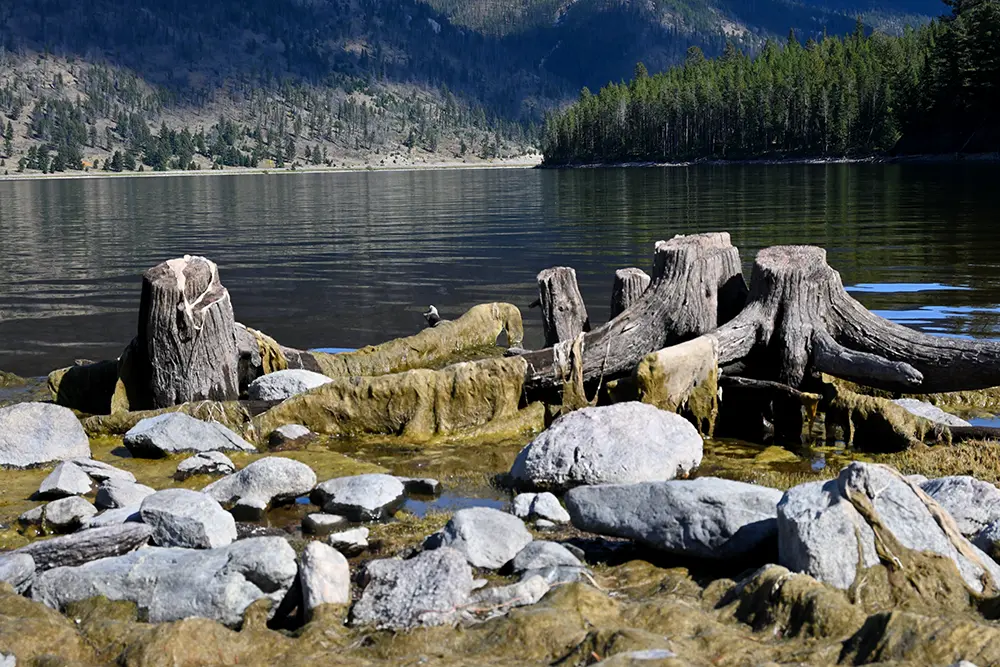
- Stumps of days gone past, Montana Hebgen Lake.
-
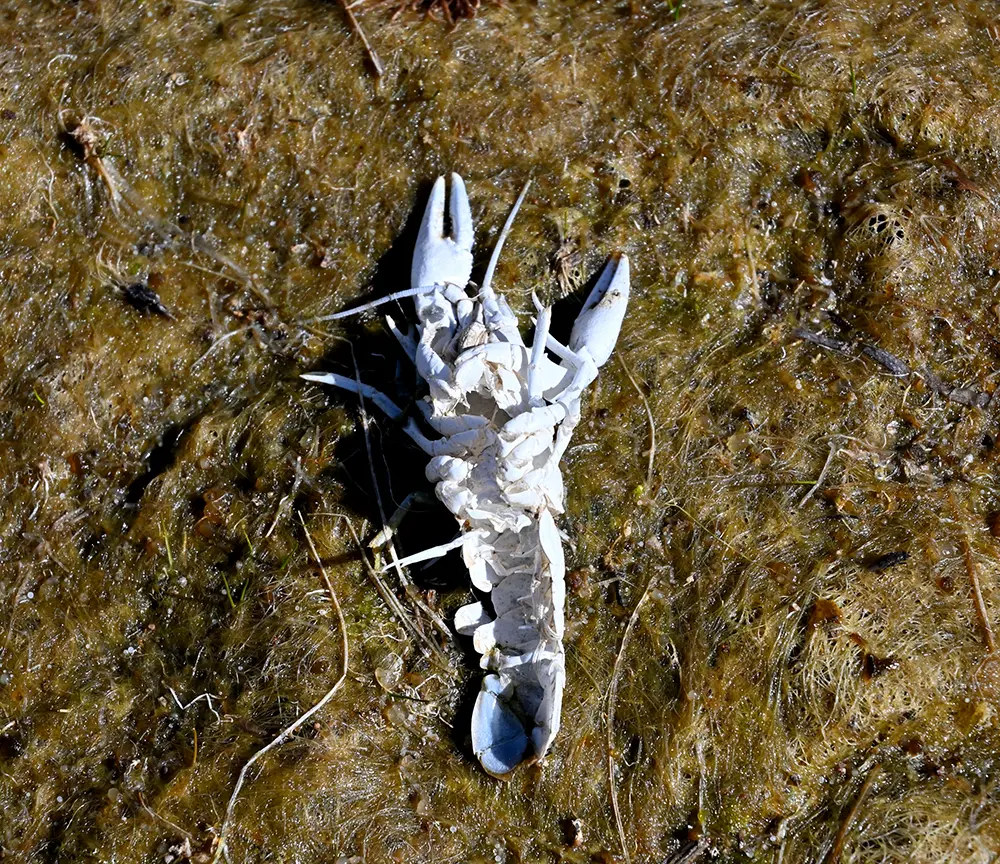
- Crawfish Skeleton
Exploring Nearby Fly Fishing Havens
If you’ve had your fill of Hebgen Lake’s prolific waters, or just want to mix up your angling adventures, the surrounding areas won’t disappoint. Just a cast away from Hebgen, blue ribbon fisheries like the Madison River and Earthquake Lake offer some of the most varied fly fishing experiences in Montana.
Madison River: A Continuation of Trout Paradise
The Madison River is a natural extension for any serious fly fisherman looking for diversity in their catch. Known as one of America’s top trout fishing destinations, this river boasts healthy populations of brown and rainbow trout that can challenge even seasoned anglers. Its clear currents flow through scenic valleys offering both peaceful solitude and an exciting chase after elusive monster trout.
Fly patterns are essential here; using a well-tied Callibaetis dry fly can be particularly rewarding during hatch season. As you float along its famous riffles and runs, remember it’s not only about landing the big one—soaking in those epic views adds another layer to an already stellar day on the water. Have questions learn more about Fly Fishing Madison River.
Gallatin River: A Scenic Route to Fly Fishing Success
The Gallatin River cuts through stunning landscapes near Big Sky Montana where towering mountains reflect off its surface—a picturesque backdrop while you wade into its cool flows. This isn’t just pretty country though; it’s fertile ground for hooking browns, rainbows, and native cutthroat with skillful casts of pheasant tail nymphs among other productive flies.
Mornings spent by weed beds might yield hefty rewards but do keep an eye out—this area is also frequented by local wildlife who seem as curious about fishermen as we are about them. While no campfire tale would be complete without mention of “the one that got away,” stories here often end with triumph thanks to expert guidance from nearby fishing guides. Or do it DIY learn more about Gallatin River Fly Fishing.
Henry’s Fork: An Angler’s Dream Stream
Nearby Henry’s Fork complements your experience with challenges fit for kings—the kind wearing crowns made of scales and fins. Learn more about the Henry’s Fork. Whether opting for serene stretches at Cliff Wade Lakes or navigating Firehole’s energetic waters, each spot promises something special—from robust hatches that draw hungry trout topside to deep pools holding secretive giants ready for battle against stout rods.
Your strategy should include early morning starts when spinner falls bring fish eagerly feeding at the surface—a spectacle not soon forgotten.
Yellowstone National Park: Fly Fishing Adventure
Do a guided trip or do DIY. It can be that moment of AWE. Learn more about Fly Fishing in Yellowstone National Park.
Diverse Delights Around Earthquake Lake & Beyond
Not far north lies Earthquake Lake—or ‘Quake Lake‘ if you’re chatting up locals over breakfast at Rainbow Valley Lodge. This stunning body of water was formed back in 1959 when a massive earthquake triggered a landslide, effectively damming the Madison River. Today, it serves as a striking reminder of nature’s power and an idyllic spot for fishing or simply soaking in Montana’s rugged beauty.
Montana Fly Fishing Tip:
Hit up nearby fly fishing gems like the Madison River and Earthquake Lake for diverse catches, epic views, and wildlife encounters that turn a day of casting into legendary stories.
-
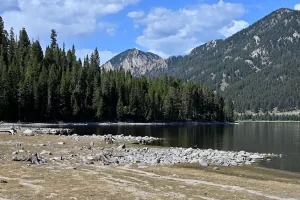
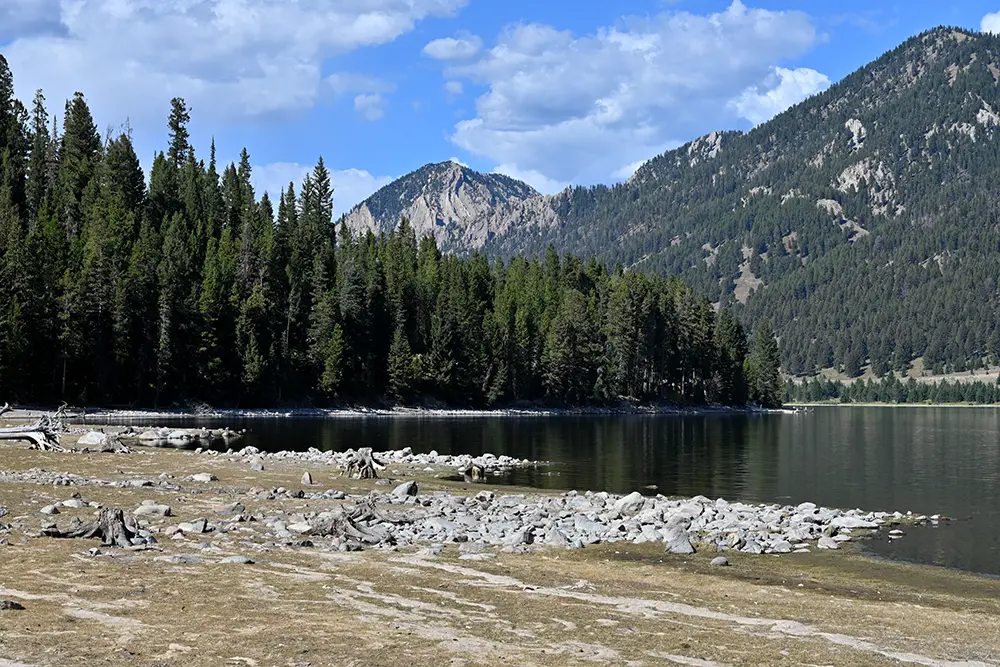
- More of Hebgen Lakes shoreline
-
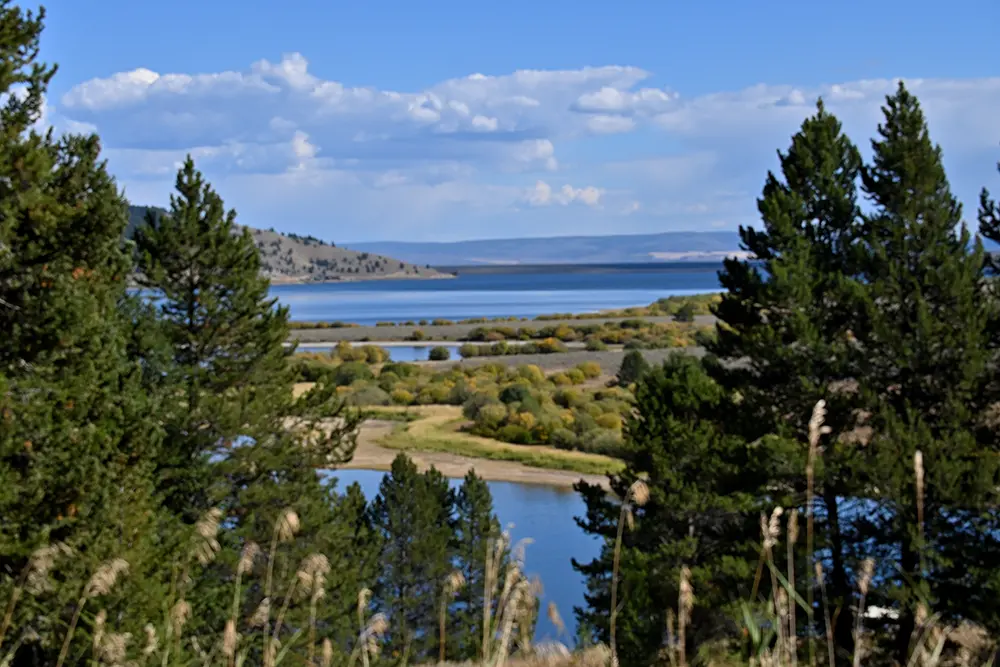
- On a ridge above Hebgen Lake.
-
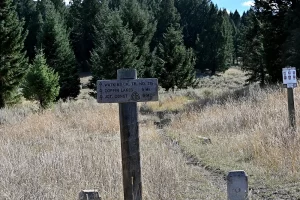
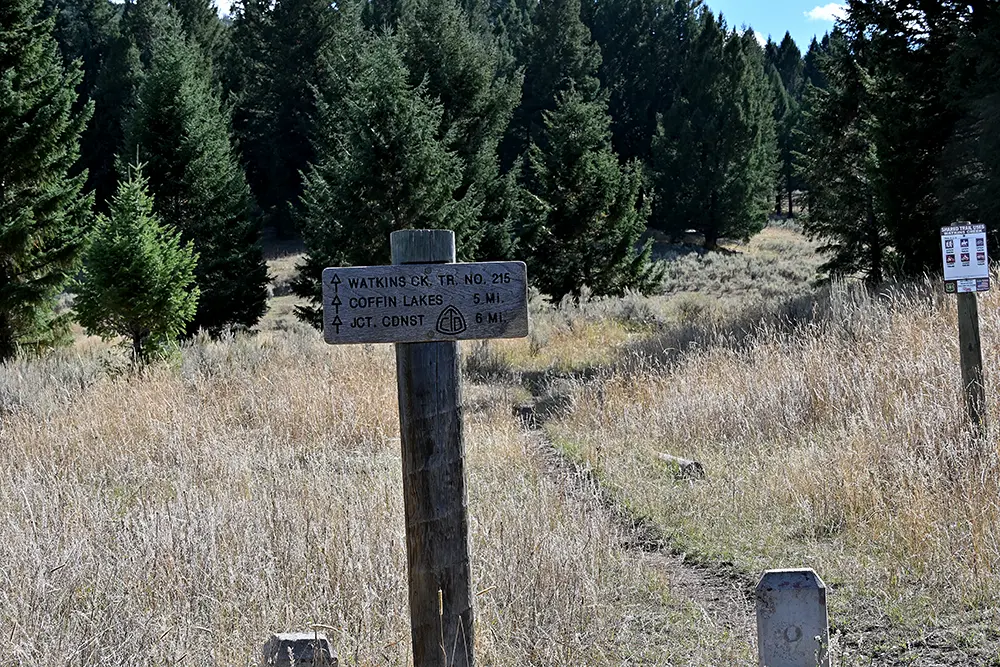
- Six miles to connect with the continental divide trail from the Hebgen Lake Recreation Area.
-
- The End of what I am not sure.
Wildlife Encounters & Scenic Views Around Hebgen Lake
Hebgen Lake is not just a haven for fly-fishing enthusiasts but also a hotspot for those looking to immerse themselves in wildlife and the natural beauty of Montana. Spanning miles long and wide, this serene lake offers more than just casting lines; it’s where majestic mountains meet aquatic life, with Yellowstone National Park as its backdrop.
Nature lovers can delight in spotting various species that call this area home. Elk meander along the lush forests while ospreys dive from the sky into the shimmering waters hunting for fish. On a lucky day, you might even catch sight of bald eagles soaring overhead or moose grazing near Earthquake Lake—a geological marvel formed by seismic activity that still captivates visitors.
The surrounding mountains serve as silent sentinels to all this teeming life, offering panoramic landscapes worthy of any photographer’s dream shot. It’s easy to see why Hebgen has become synonymous with tranquility among those who have had their breath taken away by its scenic vistas.
Aquatic Life at Hebgen Lake Recreation Area
Beyond land dwellers, Hebgen’s clear depths are rich with trout—rainbow and brown alike—that beckon anglers year-round. With dry flies skimming across weed beds during hatch periods or tail nymphs like Pheasant Tail tempting fish below surface level—fishing here is nothing short of dynamic.
The lake’s fertile waters act as an ideal habitat where monster trout rise eagerly to feedings making every fishing day unique and thrillingly unpredictable. As spinner falls bring about feeding frenzies on calm mornings or late evenings in early summer through September—the spectacle truly unfolds right before your eyes if timed perfectly between 10:30 am and 2 pm.
Territorial Fauna Beyond The Waterfront
Moving inland from the South Fork Arm—one can’t help but encounter wildlife endemic to Yellowstone National Park which borders parts of Hebgan less than miles north via West Entrance Road near Rainbow Point Campground. Here you’ll find yourself amongst creatures large and small—from squirrels darting through underbrush after pine nuts—to bison roaming grasslands displaying raw power yet peaceful coexistence within their environment.
This interaction between terrestrial fauna amidst picturesque surroundings reminds us how interconnected our ecosystems are—and how essential it is we maintain them not only for recreation areas like these but also for generations ahead who will seek solace in such places as well according to recent conservation efforts reported locally.
With proper respect towards nature combined with ethical angling practices encouraged throughout the Yellowstone region—we ensure sustainability so future adventurers may continue witnessing these remarkable scenes around. By adhering to responsible fishing guidelines and respecting wildlife habitats, we help maintain the delicate balance of this ecosystem. This approach supports conservation efforts and ensures that the beauty of Yellowstone is preserved for generations to come.
Hiking Yellowstone Eco-System
Surrounding area of the Yellowstone Eco-System encompasses over a million areas of diversity. In Yellowstone Park Biscuit Basin to Mystic Falls or the Lee Medcalf Wilderness. Hiking in from the Madison River Canyon to Lightning Lake. Learn more about the Greater Yellowstone Ecosystem.
Montana Exploration Tip:
Hebgen Lake is a fly-fishing paradise and wildlife haven with breathtaking views. Spot elk, ospreys, and maybe even eagles or moose as you fish for trophy trout in these fertile waters.
The lake’s aquatic life thrives, offering anglers unpredictable excitement with each visit. On land, Yellowstone’s diverse creatures remind us to respect nature and fish responsibly to preserve this sanctuary for the future.
-
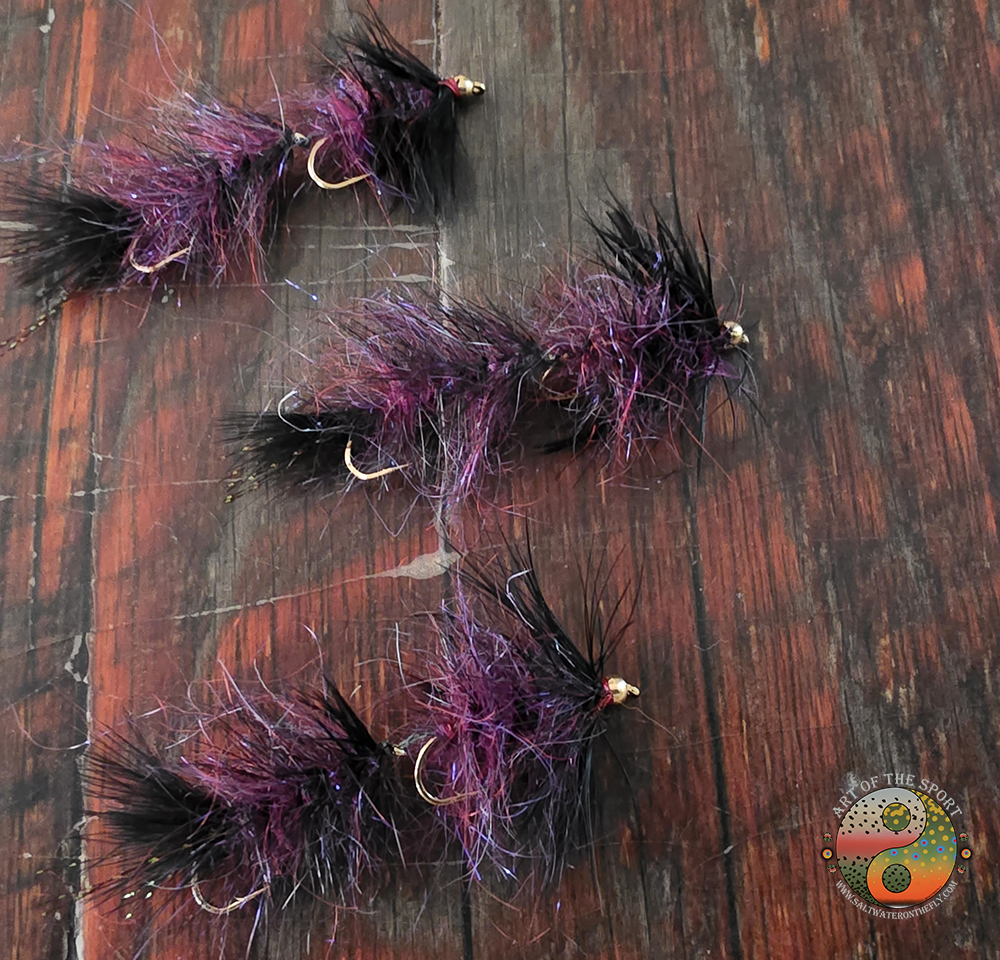
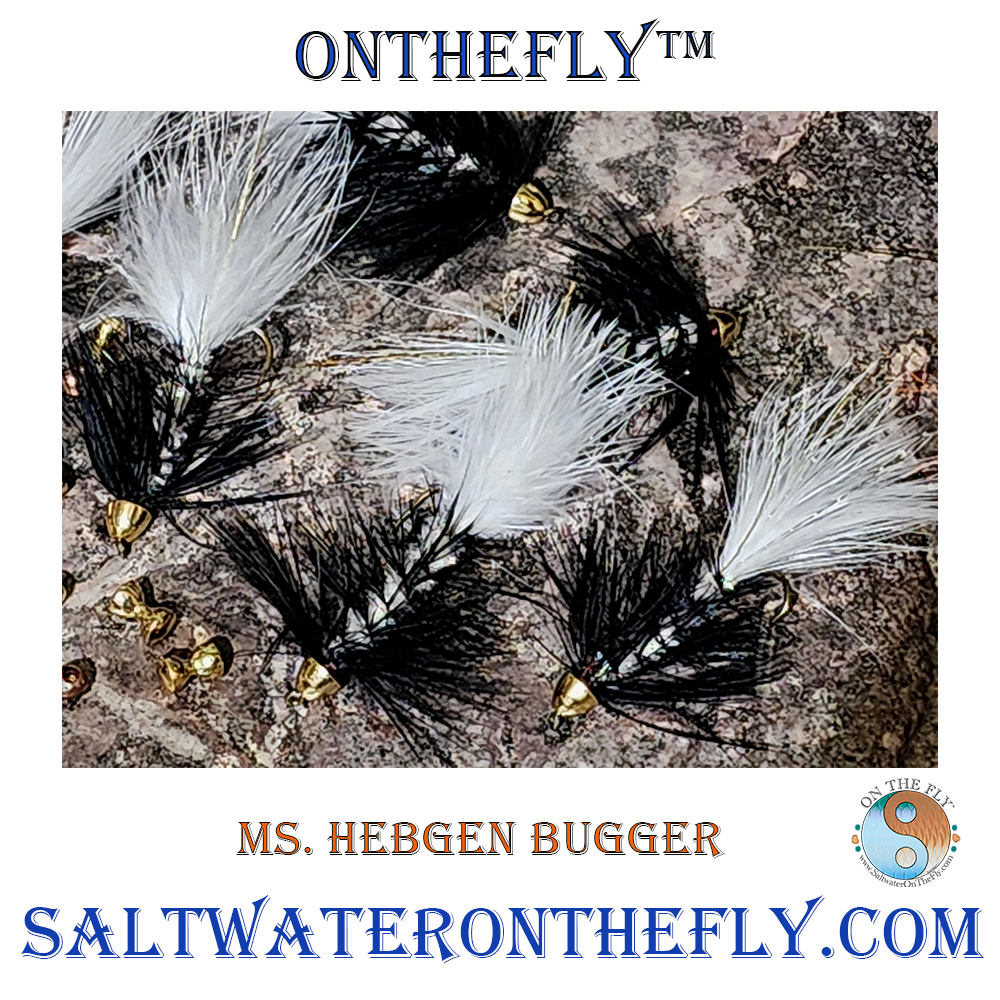
- Woolly Buggers work great on Heben Lake Ice out to Ice in.
Tips & Tricks Ensuring Successful Hebgen Lake Outings
Fishing for the wily trout in Hebgen Lake is like trying to solve a complex puzzle where every piece is crucial. With the right fly rod, your cast can dance across the surface, teasing hungry fish from their aquatic hideouts. But success isn’t just about having a good rod; it’s about knowing how to use it with finesse and precision.
Strategizing with Top-Notch Gear
The difference between an okay day on the lake and an epic one often comes down to gear selection. For instance, picking out that perfect dry fly pattern can be as satisfying as hitting a bullseye from fifty yards away—it’s all about making sure you have what those finicky Hebgen trout crave. And let me tell you, when those rainbow or brown trout see a well-presented Callibaetis dry fly or pheasant tail nymph floating by, they find it harder to resist than I do grandma’s apple pie.
Having various flies at hand isn’t overkill; it’s smart fishing—like bringing both sunscreen and rain gear on Montana’s unpredictable weather days. Remember that weed beds are more than underwater jungles—they’re dining rooms for our finned friends. A range of different patterns will help you cater to whatever’s hatching at any given time during your visit.
Making Every Cast Count at Hebgen Lake Recreation Area
To truly master these waters requires understanding that subtlety is key—and not just because stealth keeps you off the fishes’ radar (although imagine being so sneaky even Bigfoot couldn’t snap a pic). The real trick lies in reading water conditions like they’re yesterday’s sports scores: easy once you know how. This means recognizing where trophy trout tend to feed around structures such as drop-offs near weed beds or slow-moving sections of Madison Arm.
You’ll want lines matched perfectly with each unique situation—thicker ones might muscle through wind but could scare away skittish grayling arm dwellers quicker than shouting “Free worms.” On calm days? Opt for thinner lines allowing gentle presentations likely resulting in tight lines signaling successful hookups.
Hebgen Lake Recreation Area, renowned for its world-class fishing opportunities alongside Yellowstone Park boundaries provides everything anglers dream of—but only if approached wisely.
Leveraging Local Knowledge
Heed the insights of those who know Hebgan best, as they guide you through its vast wilderness. Their tips are invaluable for anyone hoping to land the big one amid an environment that’s both challenging and rewarding. With each piece of advice, you’ll be better prepared to navigate these waters and experience fishing adventures that will become stories told for years to come.
Hebgen Lake Tip:
Master Hebgen Lake’s trout with the right gear and local know-how—cast precisely, match your flies to the hatch, and read the water like a pro for an unforgettable fishing adventure.
Conservation Ethical Angling Practices at Hebgen
Fishing at Hebgen Lake, just outside Yellowstone National Park, isn’t just about the thrill of the catch; it’s a pact with nature. Every cast into these pristine waters carries a responsibility to uphold conservation efforts that keep this ecosystem thriving. With legendary rainbow trout and brown trout calling these waters home, practicing ethical angling is more than courtesy—it’s essential for sustainability.
Understanding Local Regulations
The first step in responsible fishing is knowing and following the rules set forth by park authorities. These regulations are crafted not to limit fun but to safeguard fish populations for future generations to enjoy their own adventures on the South Fork Arm or along any bank of this magnificent lake montana fishing paradise. When you check out the latest fishing report, take note of current guidelines because staying informed means staying respectful of our shared natural resources.
Maintaining an up-to-date knowledge base helps anglers adjust practices as conditions change throughout seasons—like which fly patterns are permissible or if certain areas require special techniques like catch-and-release during spawning times.
Catch and Release: A Staple Practice
To ensure each trophy-sized sipper spotted during peak hatches from late July through September lives on, mastering catch-and-release techniques becomes crucial. The art lies in gentle handling; minimize time out of water for your iridescent conquests while using barbless hooks to facilitate quick releases back into Hebgen’s depths where they belong.
By allowing monster trout—the celebrities among Hebgan’s aquatic denizens—to swim free after capture ensures they can continue contributing genetically to an already robust population brimming beneath those glassy surfaces we so admire every daybreak over Montana’s Big Sky horizon.
Balancing Recreation with Habitat Preservation at Hebgen Lake Recreation Area
Echoing across quake lake whispers tales of resilience—a landscape reborn from seismic shifts now teems with life once again thanks largely due partaking visitors who respect its fragile balance between recreation area enjoyment habitat preservation efforts alike make sure whenever stepping onto boat launch whether dirt road traveled long miles get there leave no trace behind except maybe ripple fading quickly away soon joined countless others crisscrossing wide expanse clear cool blue wonder called Hebgan Lake Montana Fishing Report updates remind us vital role play keeping healthy productive both today tomorrow all tomorrows come after that too.
Incorporating E-E-A-T (Experience, Expertise, Authoritativeness, Trustworthiness) principles: not just for Hebgen Lake Recreation Area, but every where.
Through countless casts among the rich weed beds accessed via Yellowstone’s West Entrance, I’ve seen firsthand how vital it is to stick to the strict conservation policies in place. These experiences have not only enhanced my respect for this delicate ecosystem but also solidified my commitment to preserving it for future generations of anglers and nature lovers alike.
Hebgen Lake Tip:
Hebgen Lake fishing is a pact with nature, where following regulations and practicing catch-and-release are key to preserving the trout population for future generations.
Stay informed about Hebgen’s rules to fish responsibly; use barbless hooks and quick releases during peak hatches to keep those trophy trout thriving in Montana’s waters.
Fishing at Hebgen isn’t just recreation—it’s about respecting the balance between enjoying this quake lake reborn from seismic shifts and maintaining its fragile ecosystem for all tomorrows.
FAQs in Relation to Fly Fish Camp Hebgan Lake Recreation Area
Is Hebgen Lake fly fishing only?
No, Hebgen Lake offers both fly and conventional tackle fishing. Anglers have choices.
Is there fishing between Quake Lake and Hebgen Lake?
Yes, you can fish the Madison River stretch connecting Quake and Hebgen Lakes.
Can you boat on Hebgen Lake?
Sure thing – boating is a go on Hebgen’s waters for anglers or leisure cruisers alike.
Where is Hebgen Lake Recreation Area?
You’ll find it in Southwest Montana, just northwest of West Yellowstone.
Conclusion of Hebgen Lake Recreation Area
Wrap up your rods, it’s time to reflect. At fly fish camp Hebgan lake recreation area, you’ve learned the ins and outs of snagging that trophy trout. Remember the calm waters by Rainbow Point? That’s where patience meets success.
Tune in to nature’s clock; dawn and dusk are when those monster trout can’t resist a well-cast line. Mastering dry flies like Callibaetis mayflies isn’t just skill—it’s art.
Cherish every cast along Madison River or under Montana’s vast skies—each offers lessons for life on and off the water. Keep conservation close to heart; what we preserve today ensures fishing tales for tomorrow.
Your next visit is more than an outing; it’s another chapter in your angling adventure at Hebgen Lake—a haven of legendary proportions, always ready to challenge your fly-fishing prowess.
Tying for Hebgen: Three Materials That Change Your Game
Hebgen Lake is stillwater. That changes everything about fly selection. In a river, the current does the work — flies move whether you want them to or not. On Hebgen’s weed beds, you’re in control. That means every fiber of your fly either has life in the water or it doesn’t. The three materials below are what we reach for when the fish are looking and we need something that moves like the real thing.
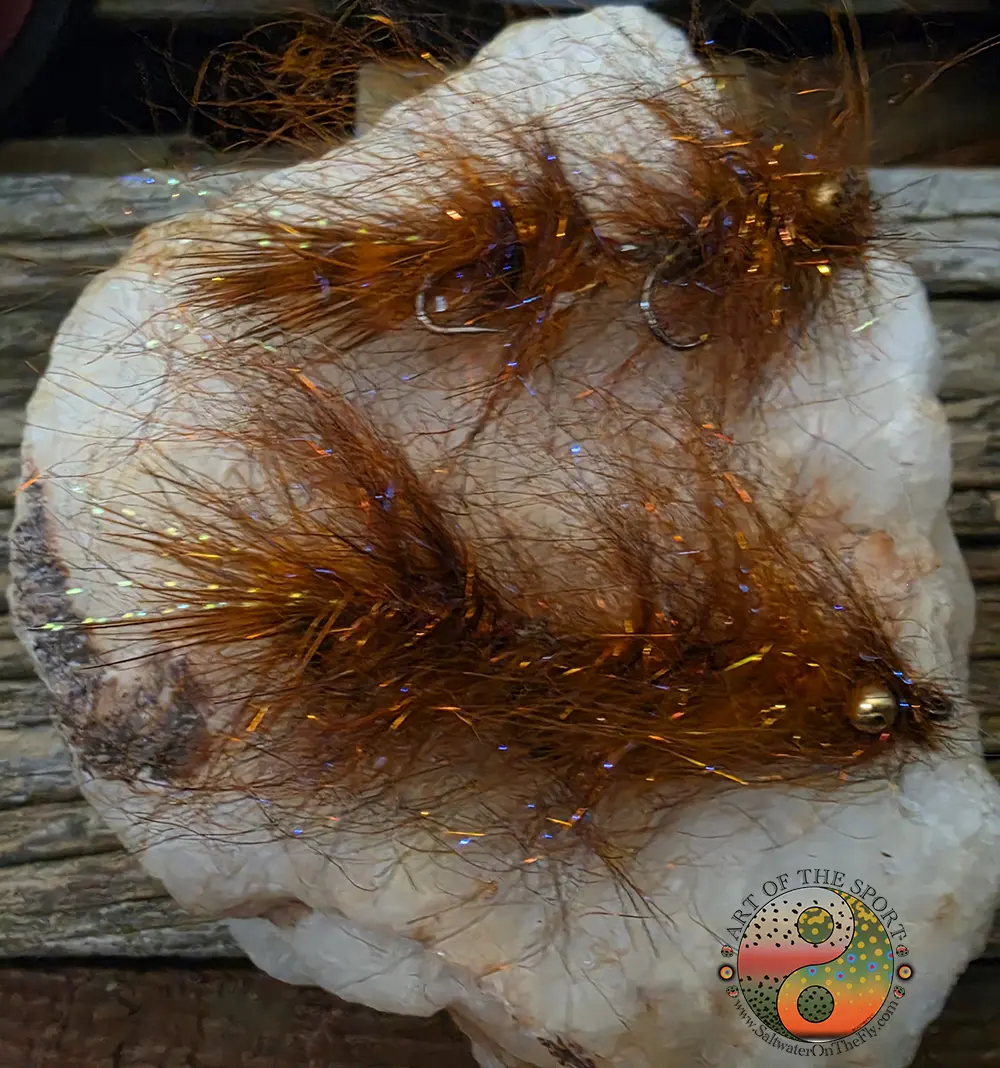
Monster Bush Fur — The Foundation
Monster Bush Fur started as a saltwater material and earned its way into serious freshwater tying because it does what most synthetics and most natural furs can’t do together: it moves in still water and it survives teeth.
On Hebgen, that combination matters. Trim it short and dense for stonefly nymphs that need a ragged, buggy silhouette rubber legs can never quite replicate. Leave it longer for streamer collars and leech bodies where those fibers work in the current created by your retrieve alone. It holds color through a full day of casting, and a 20-inch rainbow’s jaw doesn’t destroy it.
Best Hebgen applications: Sculpin and baitfish patterns, streamer collars, Woolly Bugger variations, dubbing loops on large nymphs.
Available in multiple colors at saltwateronthefly.com
Dragon Fur — Dragonfly Nymph (Articulated)
Dragonfly nymphs are one of the most overlooked food sources on Hebgen Lake, and that’s exactly why they work so well. While everyone else is waiting on the callibaetis hatch, a Dragon Fur nymph stripped slowly through weed edges will find fish that have seen every callibaetis imitation in the box.
Dragonfly nymphs in Hebgen’s weed beds are large, olive-brown, and slow-moving. The articulated Dragon Fur pattern imitates that movement exactly — the jointed design gives the fly a subtle S-curve action on a slow strip or on the drop that is nearly impossible to achieve with a single-hook pattern. Fish it on a floating line with a long leader, count it down to the weed top, and strip it back in 4-inch pulls with long pauses.
Best presentation: Cast toward weed edges in 4–8 feet of water. Let it sink to within 12 inches of the bottom. Strip, pause, strip. Takes often come on the pause.
Tying note: Dragon Fur builds the body and thorax without adding dead weight — fibers stay mobile even when wet. Combine with rubber legs and a bead head for a pattern that works from ice-out through September.
Available at saltwateronthefly.com
Damsel Bush Fur Leech — The Crossover Pattern
The damselfly nymph migration on Hebgen Lake in July is one of the most significant feeding events most anglers walk right past. When damsels migrate toward shore to hatch, they swim in a distinctive side-to-side undulation near the surface — and large trout follow them for yards at a time.
The Damsel Bush Fur Leech bridges two patterns into one. Tied slender with Monster Bush Fur in olive or tan, it reads as a damselfly nymph in the upper water column — same profile, same movement, same size range. Strip it faster or fish it deeper and it reads as a leech, which Hebgen’s rainbows and browns hunt all season long. One fly, two windows of opportunity, and the material makes it work without extra weight or bulk.
Best presentation: Size 8–10 on a 9-foot floating line with a 9-foot leader, 4X tippet. Fish parallel to weed edges, just below the surface. A slow, steady retrieve with occasional pauses works better than an erratic strip on calm days.
Color note: Olive is the match for Hebgen’s damsel population. Black and tan Damsel Bush Fur Leeches pull fish when targeting browns along deeper weed edges after dark or in low-light conditions.
Available at saltwateronthefly.com