Badlands National Park: Where I Hiked the Window Trail, Outsmarted 101 Degrees, and Was Saved by a Cricket Burger
There are two kinds of people who visit Badlands National Park in the middle of summer: those who check the forecast, and those of us who prefer the element of surprise. I have always been a surprise man myself. It keeps life interesting, and occasionally it keeps life at 101 degrees Fahrenheit, which is what the thermometer was threatening by noon on the day we rolled into the Badlands.
Now, I’ve spent enough decades outdoors to know that the prairie in July does not negotiate. So we did what any reasonably intelligent, moderately sunburned crew would do — we got up early, hiked hard for four hours in the cool of the morning, and then fled toward air conditioning and cold beer like our lives depended on it. Because, frankly, they sort of did.
What follows is everything you need to plan your own trip: every hiking trail in the park, complete camping details, a photography guide, the points of interest along the loop road, and the history of this magnificently hostile landscape — plus the mandatory pilgrimage to Wall Drug and a lunch stop at Firehouse Brewing in Rapid City that produced one truly excellent stout, one bland plate of nachos, and one burger made of crickets. Yes, crickets. We’ll get to that.
Table of Contents
Grand Canyon UPF-50 Graphic Hoodie
Grand Canyon Graphic Hoodie has extended sleeves with thumb hole cuffs, Sewn in facemask for that extra produce from the sun. Outdoor Performance at every tune Get Yours Now.
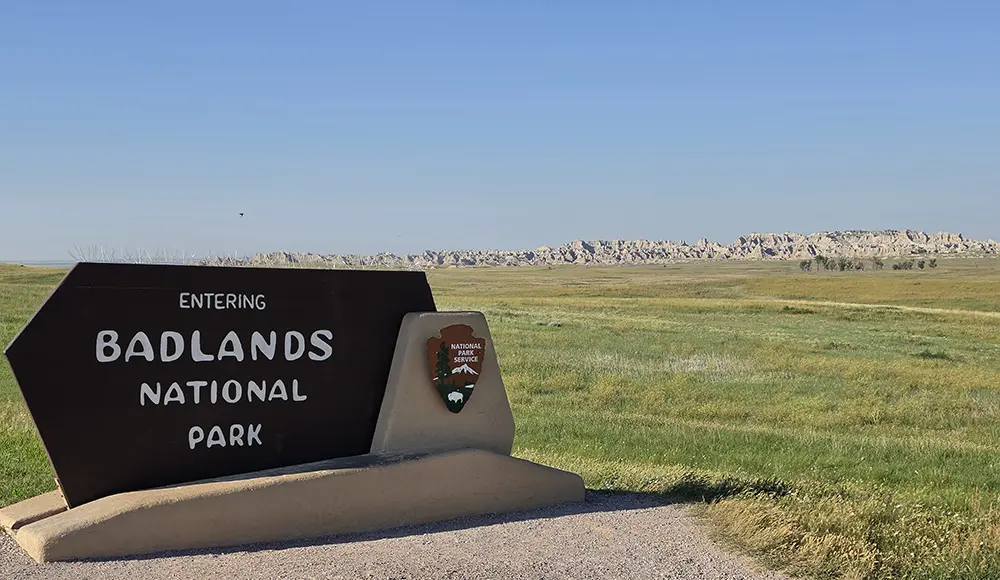
Entering Badlands National Park East Entrance
Reason the Badlands Look Like That (A Detailed History)
The Geology: 75 Million Years of Bad Decisions by Water
The Badlands are what happens when geology gets impatient. The story starts about 69 to 75 million years ago, when this entire region sat at the bottom of a shallow inland sea — the Western Interior Seaway — quietly stacking up black Pierre Shale full of marine fossils. The sea drained, the land rose, and over the following tens of millions of years, rivers, floodplains, and volcanic ash from the west laid down layer after layer of sediment like a giant, poorly supervised lasagna.
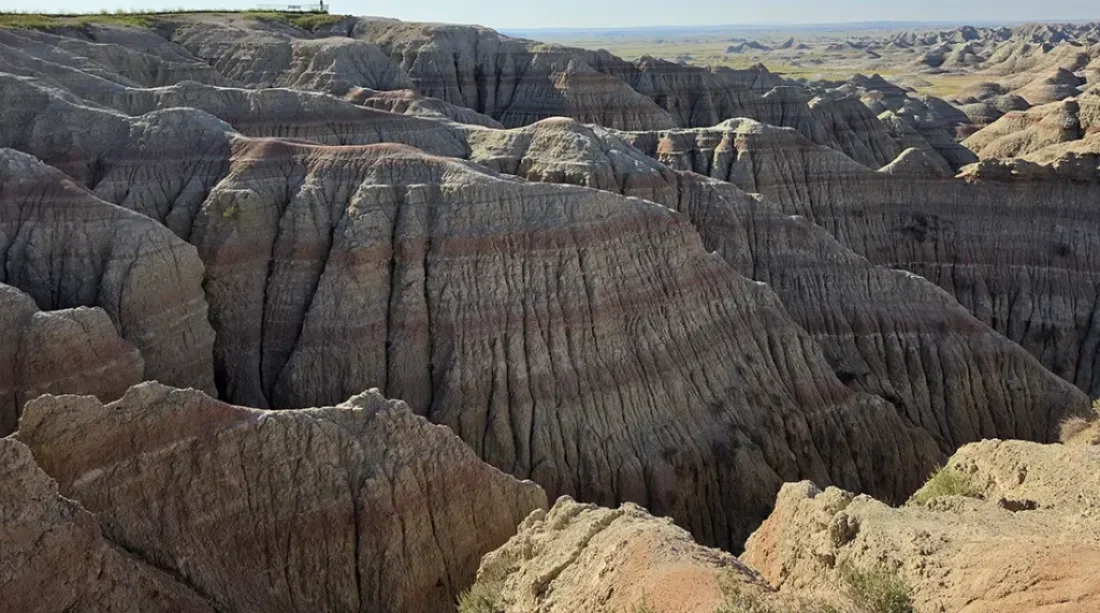
Then, roughly half a million years ago, erosion showed up and started taking it all apart. The Cheyenne and White Rivers and their tributaries began carving through those soft sedimentary layers at a genuinely alarming rate — the Badlands erode about an inch per year, which in geologic terms is basically a demolition derby. The result is the Badlands Wall: a 60-mile spine of buttes, spires, pinnacles, and banded canyons in shades of tan, red, gray, and yellow that looks like it was designed by someone who’d had too much coffee.
Geologists estimate the whole show will be gone in another 500,000 years. So don’t dawdle.
The Fossils: One of the Richest Beds on Earth
The layers exposed here — particularly from the late Eocene and Oligocene epochs, roughly 34 to 37 million years ago — hold one of the world’s richest deposits of mammal fossils. We’re talking three-toed horses, saber-toothed cat-like nimravids, giant pig-adjacent nightmares called entelodonts, ancient rhinos, and dog-sized camels. Paleontologists have been pulling scientific treasure out of these hills since the 1840s, and visitors still stumble across fossils regularly. (If you find one: photograph it, note the location, tell a ranger, and leave it. The fine for pocketing fossils is substantial, and the karma is worse.)
The People: Lakota Homeland
Humans have used this land for more than 11,000 years, and for centuries it has been the homeland of the Oglala Lakota, who named it mako sica — literally “bad lands.” French-Canadian fur trappers agreed, calling it les mauvaises terres à traverser: “bad lands to travel through.” When the people who lived here and the people just passing through independently arrive at the same review, you can trust it.
The area’s history carries real weight. In 1890, the Stronghold Table in what is now the park’s South Unit was one of the last sites of the Ghost Dance, shortly before the massacre at Wounded Knee just south of the park. Today the South Unit — roughly half the park — sits within the Pine Ridge Reservation and is co-managed with the Oglala Sioux Tribe. It’s a remote, largely undeveloped area, and visiting it respectfully means checking in at the White River Visitor Center first.
The Park: Monument to National Park
Homesteaders tried farming this country in the early 1900s and the country politely declined. The area was authorized as Badlands National Monument in 1929, formally established in 1939, and redesignated Badlands National Park in 1978. Today it protects 244,000 acres of eroded rock and the largest undisturbed mixed-grass prairie in the National Park System — home to bison, bighorn sheep, pronghorn, prairie dogs by the acre, and the endangered black-footed ferret, one of the rarest mammals in North America.
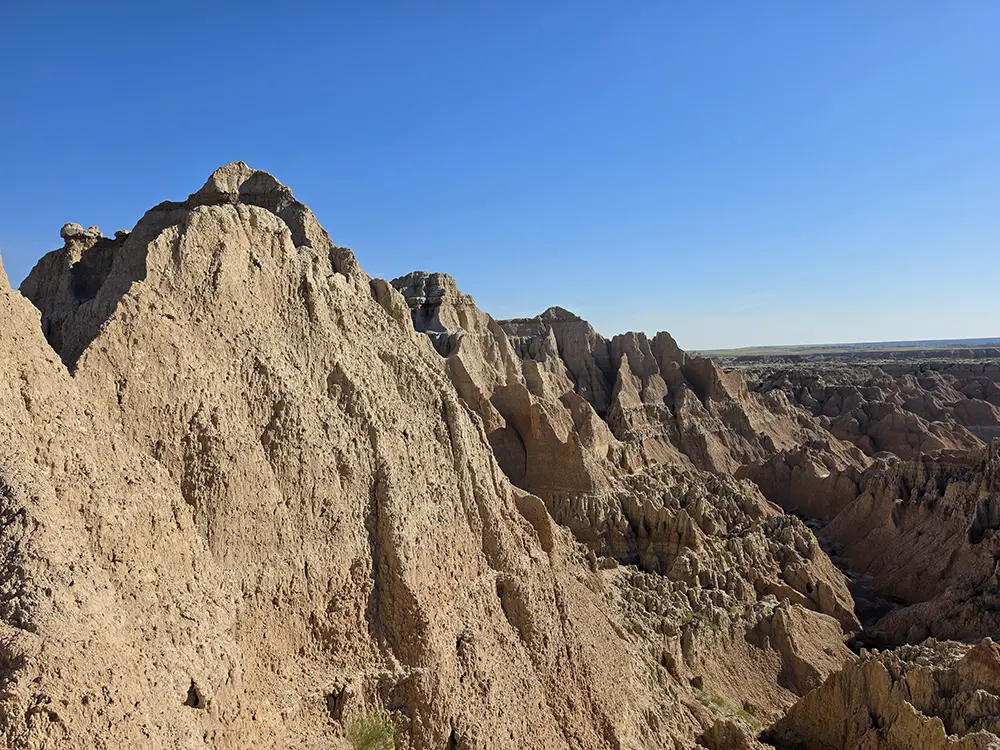
Stroll at the First Overlook-East Entrance
The Complete Badlands National Park Hiking Trail Guide
Here’s a fun fact about the Badlands: there are only eight developed trails, and every single one launches from the Badlands Loop Road (Highway 240). Here’s a more fun fact: the park has an Open Hike Policy, meaning you may legally wander off across all 244,000 acres wherever your judgment — or lack thereof — takes you. Very few national parks trust you this much. Try to be worthy of it.
All distances are round trip. All trails are fully exposed. In summer, the Badlands treat shade as a rumor.
1. Window Trail — Easy, 0.25 miles
Our first stop of the morning and worth every one of its several hundred steps. A short boardwalk leads to a natural “window” in the Badlands Wall with a framed view of an intricately eroded canyon. It’s the single best scenery-to-effort ratio in the park, which is why I did it before the sun could take a personal interest in me. Perfect for sunrise, kids, and people whose knees have filed formal grievances.
2. Door Trail — Easy, 0.75 miles
Starts from the same big parking lot as the Window. A quarter-mile accessible boardwalk passes through a break in the Wall called “the Door” and drops you into a moonscape of eroded rock. Past the boardwalk’s end, yellow markers guide you into the formations, and travel is at your own risk — which out here means “watch your footing and don’t hike like a tourist.”
3. Notch Trail — Moderate to Strenuous, 1.5 miles
The famous one. You hike up a canyon, climb a log-and-cable ladder up a butte, follow a ledge with genuine drop-offs, and arrive at “the Notch” — a gap in the Wall with a sweeping view over the White River Valley and Pine Ridge Reservation. Skip it if you’re afraid of heights, if the ladder is wet, or if a thunderstorm is anywhere in the county. Otherwise, it’s the best adventure-per-mile in the park.
4. Cliff Shelf Nature Trail — Easy to Moderate, 0.5 miles
A half-mile loop of boardwalks and stairs through a juniper forest perched on a slumped block of the Wall — one of the only shady-ish spots in the park. There’s sometimes a pond here after rain, which attracts wildlife, which attracts photographers, which attracts more photographers.
5. Fossil Exhibit Trail — Easy, 0.25 miles
Fully accessible boardwalk with fossil replicas and exhibits of the ancient beasts that once roamed here. It’s a quarter mile of “wait, THAT lived HERE?” Ideal for kids and anyone who enjoys imagining rhinos in South Dakota.
6. Saddle Pass Trail — Strenuous, 0.7 miles
Short but rude. Climbs steeply up the Badlands Wall — over 200 feet of loose, slippery gain — to connect with the Castle and Medicine Root trails. Absolutely miserable when wet; Badlands mud has the personality of greased pottery clay.
7. Medicine Root Trail — Moderate, 4 miles
Combines with the Castle Trail into a roughly 4-mile loop through mixed-grass prairie and scattered formations. Flat, quiet, and excellent for wildflowers, birds, and the occasional rattlesnake reminding you whose prairie this is.
8. Castle Trail — Moderate, 10 miles round trip
The longest maintained trail in the park, running about 5 miles one way between the Fossil Exhibit area and the Door/Window/Notch parking lot. Flat, exposed, sparsely marked with red posts, and gloriously empty compared to the boardwalks. Carry more water than you think you need, then add more. In July, start at dawn or don’t start.
Bonus: Sage Creek Wilderness / Open Hike
For the genuinely adventurous, the Sage Creek Basin offers unmarked, unmaintained backcountry roaming among the bison — roughly 20+ miles if you do the full loop. Navigation skills required. Bison diplomacy skills also required: give them 100+ yards, because a bison can outrun you, and unlike you, he knows it.
Heat warning, from personal experience: We hiked from early morning until late morning and bailed as the mercury sprinted toward 101°F. This was not cowardice; this was strategy. Summer ground temperatures in the formations can run far hotter than the air. Hike at dawn, carry a minimum of one liter of water per person per hour in heat, wear a real hat, and save the midday hours for museums, visitor centers, or — spoiler — breweries.
Points of Interest Along the Badlands Loop Road
The Badlands Loop Road (SD Highway 240) is roughly 30–40 miles of scenic driving with more than a dozen overlooks, and every one of them will try to convince you it’s the best one. Highlights, roughly east to west:
- Big Badlands Overlook — First overlook from the Northeast Entrance and a proper jaw-dropper. Superb at sunrise.
- Door & Window Parking Area — Trailhead central: Door, Window, Notch, and the east end of the Castle Trail all launch here.
- Ben Reifel Visitor Center — Exhibits, fossil prep lab (watch paleontologists actually working in summer), water refills, rangers, and air conditioning, which by noon qualifies as a point of interest all by itself.
- Cliff Shelf & Cedar Pass — The green(ish) corner of the park, plus the lodge and campground.
- White River Valley Overlook & Panorama Point — Big, layered, endless views. Panorama Point at sunrise is a photographer magnet.
- Bigfoot Pass & Prairie Wind Overlooks — Quieter stops with prairie sweeping to the horizon.
- Fossil Exhibit Trail — See above; ancient monsters, modern boardwalk.
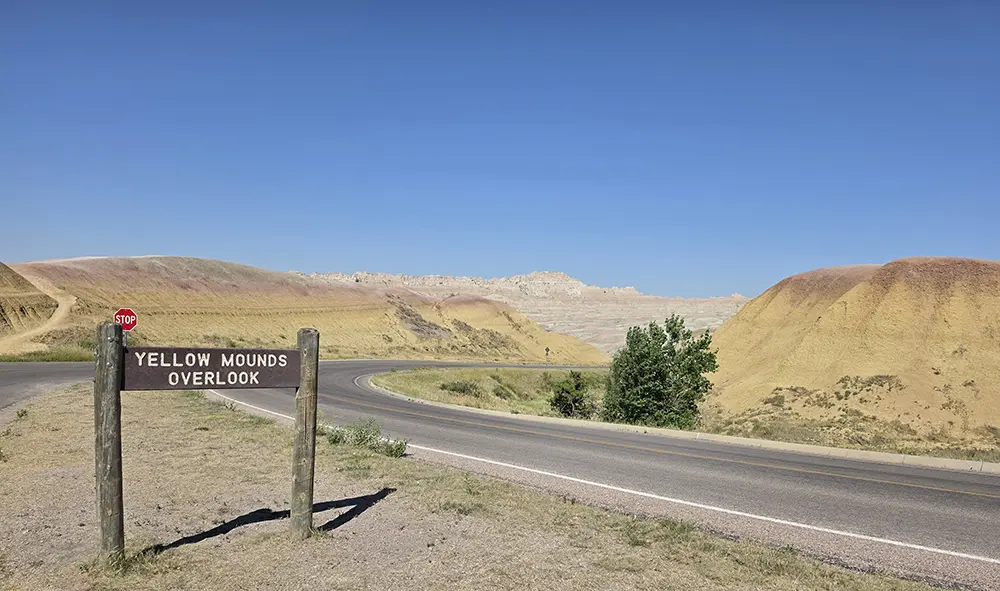
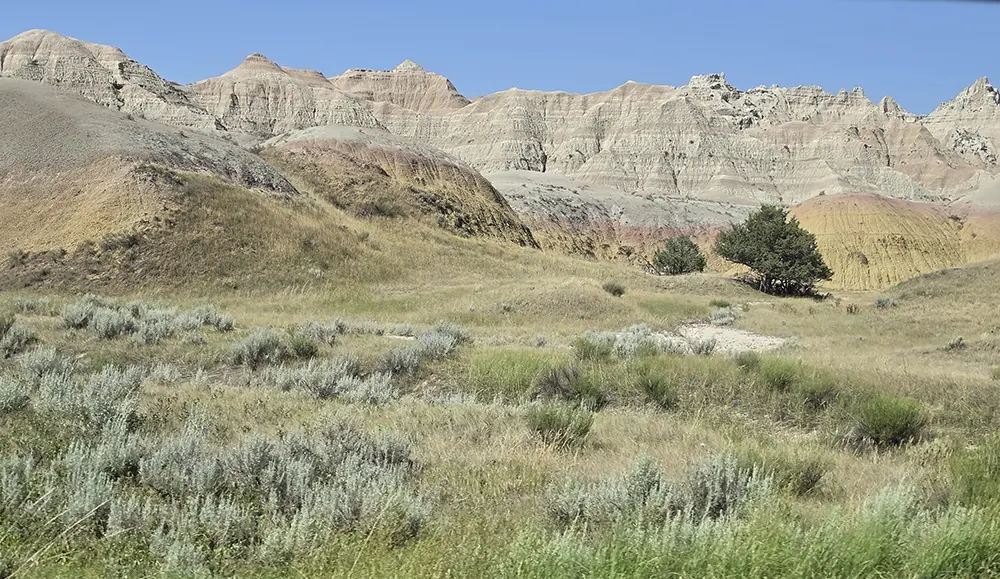
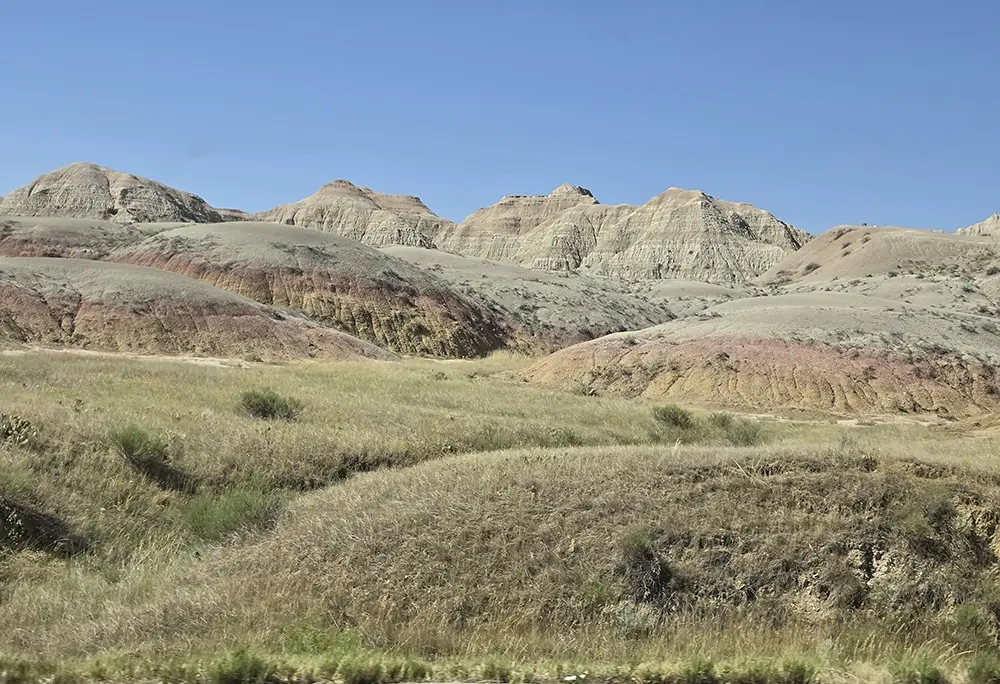
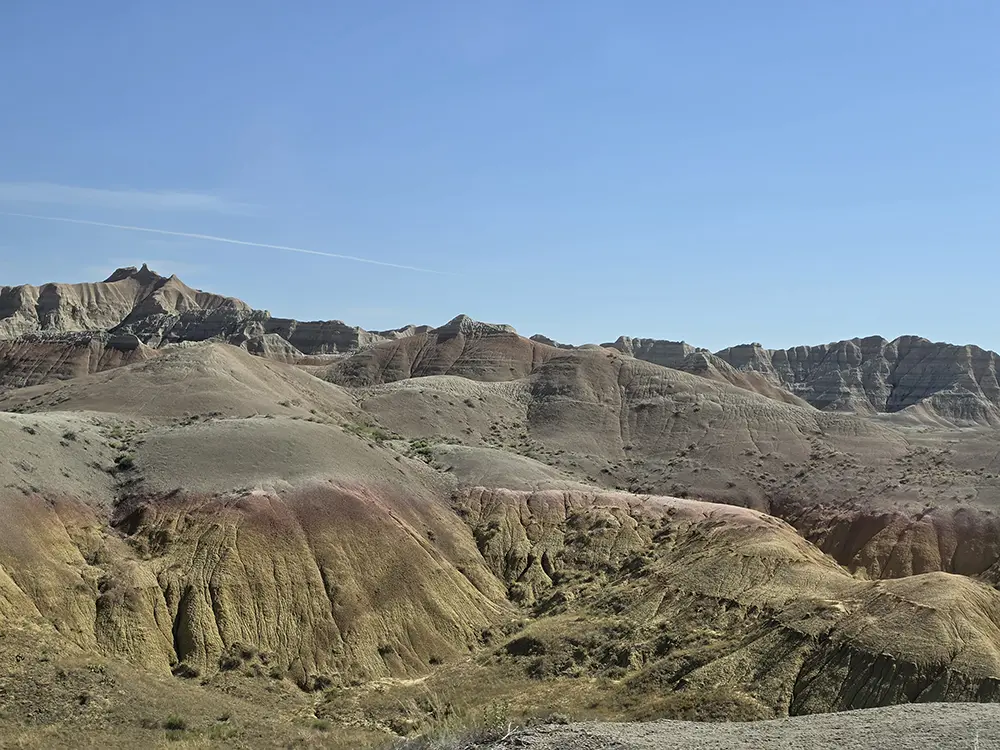
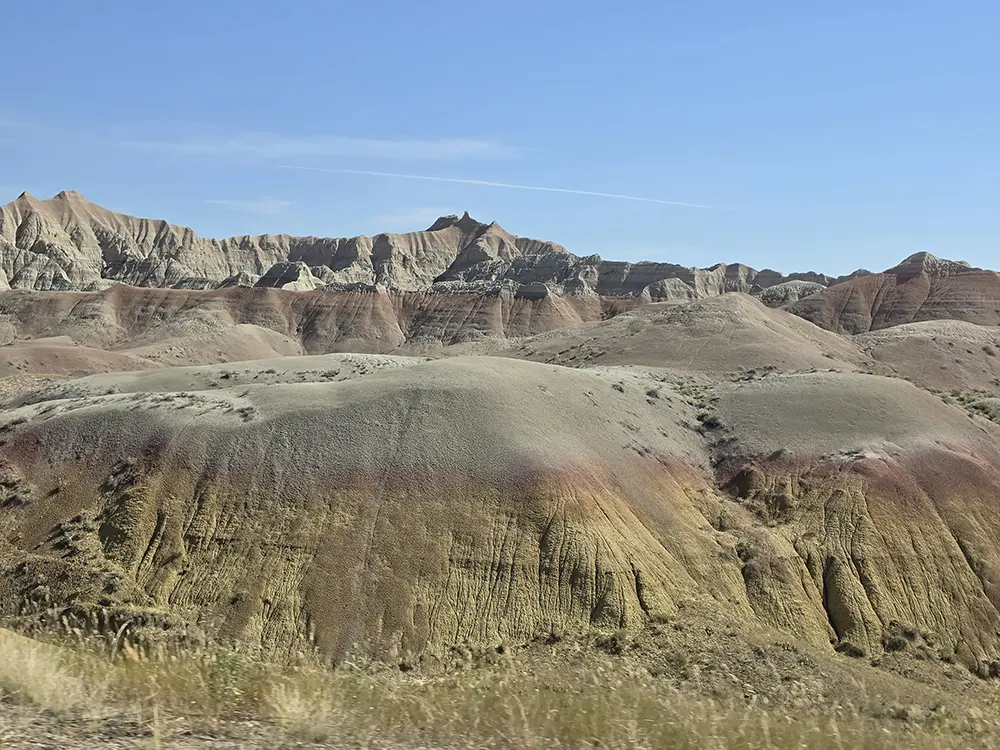
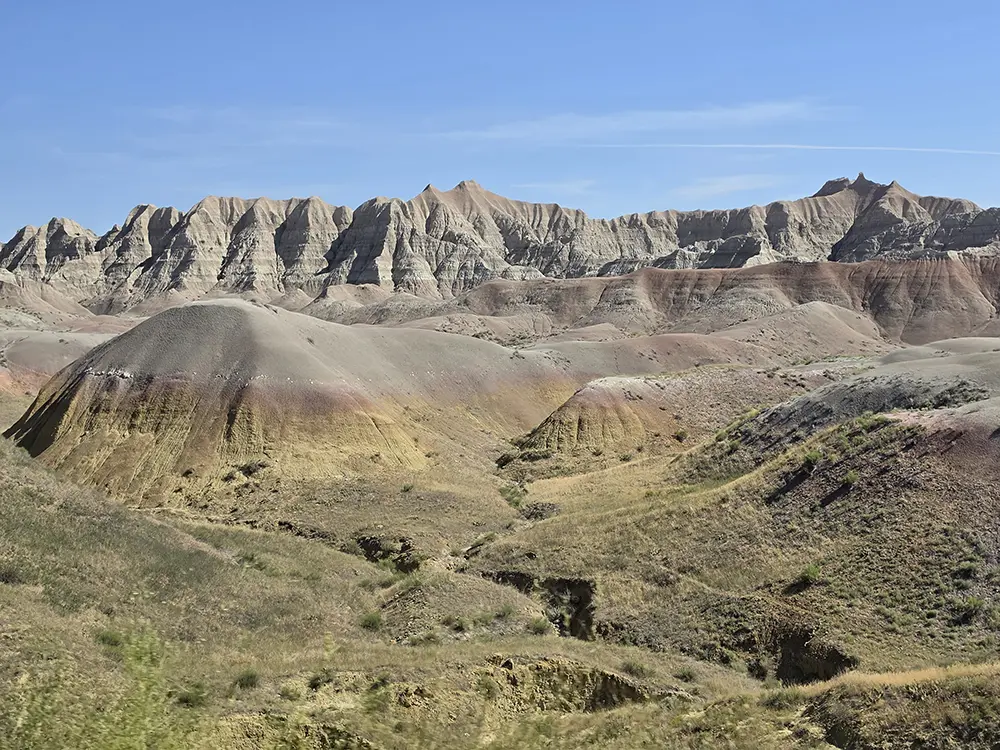
- Yellow Mounds Overlook — The most colorful spot in the park. Mustard-yellow and purple-banded hills that look frankly Photoshopped. Best in late-day light.
- Pinnacles Overlook — Classic sunset spot near the Wall exit, with bighorn sheep frequently posing nearby like they’re on commission.
- Roberts Prairie Dog Town — Along the gravel Sage Creek Rim Road: acres of prairie dogs barking, popping, and running a real estate operation of staggering scale. Do not feed them; they bite the hand that feeds them, occasionally literally, and plague is a real (if rare) thing in prairie dog colonies.
- Sage Creek Basin Overlook — Bison country. Bring binoculars and humility.
- Minuteman Missile National Historic Site — Just outside the park off I-90: a preserved Cold War nuclear missile silo and visitor center. From 34-million-year-old fossils to ICBMs in one morning — South Dakota contains multitudes.
Yellow Mounds Overlook
Badlands National Park Camping: Complete Details
Cedar Pass Campground (The Civilized Option)
- Location: Near the Ben Reifel Visitor Center, right under the formations
- Sites: 96 level sites, including tent sites, RV sites, some with electric hookups (30/50 amp), plus 4 group sites and ADA-accessible sites
- Amenities: Flush toilets, cold running water, covered picnic tables, pay showers in summer, dump station, evening ranger programs at the amphitheater, and the Cedar Pass Lodge restaurant nearby
- Reservations: Required in season, via Recreation.gov. Book early for summer — sites open months in advance
- Cost: Roughly $37/night for tent sites and $47/night for electric sites for two people, with a small fee per extra adult (verify current rates before booking; they creep upward like everything else)
- Season: Roughly late March/April through mid-October, with a limited winter loop
- Fires: No campfires anywhere in the park — grassland fire danger is serious. Camp stoves and propane grills only
- Note: The park is now cashless; bring a card
Sage Creek Campground (The Character-Building Option)
- Location: West side of the North Unit off the unpaved Sage Creek Rim Road
- Sites: About 22 primitive sites, first-come, first-served
- Cost: Free — the best price in the National Park System
- Amenities: Pit toilets and covered picnic tables. No water. None. Bring all of it
- RV limit: Vehicles over 18 feet prohibited (horse trailers excepted — part of the campground is designated for horse camping)
- The catch/the reward: Bison stroll directly through camp like they own the place, because they do. No generators, no fires, no light pollution — which brings us to the night sky, below
- Road conditions: The rim road can close after rain or snow, and Badlands gumbo mud will eat your rental car
Backcountry Camping
Thanks to the Open Hike Policy, you can backpack and camp almost anywhere as long as you’re at least half a mile from any road or trail and out of sight of them. No permit required, though registering at a kiosk or checking in at the visitor center is smart. Water sources in the backcountry are essentially nonexistent or too silty to filter — pack in every drop.
Badlands Photography Guide
I’ve hauled cameras through a lot of country, and the Badlands may offer the most drama per parking lot in America. A few hard-won pointers:
Golden hours are everything. Midday light flattens the formations into beige oatmeal. At sunrise and sunset, the layers ignite — reds, golds, purples — and the low angle rakes shadows across every ridge. Sunrise at Big Badlands Overlook, the Door Trail, or Panorama Point; sunset at Pinnacles Overlook or Yellow Mounds.
Yellow Mounds for color. The most saturated, otherworldly palette in the park. Late afternoon light makes the yellows glow like they’re plugged in.
Storm light is the jackpot. Summer thunderstorms rolling across the prairie produce the best skies you’ll ever shoot — just photograph them from a respectful distance, because lightning on an exposed butte is a genuinely terrible place to be famous.
Night skies are world-class. The Badlands are one of the darkest places in the Lower 48. The Milky Way over the formations — especially from Sage Creek or the Cedar Pass amphitheater area — is worth losing sleep over. Bring a tripod, a fast wide lens (f/2.8 or faster), and shoot 15–20 second exposures at high ISO. Summer ranger-led night sky programs include telescopes.
Wildlife kit: A 300mm+ lens for bighorn sheep at Pinnacles, bison in Sage Creek Basin, and the prairie dog comedy hour at Roberts Prairie Dog Town.
Practical notes: Wind is constant — weight your tripod. Dust gets into everything, so change lenses inside your vehicle. And in summer heat, your camera batteries will drain faster and your patience faster still.
Know Before You Go
- Entrance fee: About $30 per vehicle, good for 7 days; the $80 America the Beautiful annual pass covers it and every other federal site. The park is cashless
- Best time to visit: Late spring and early fall for sane temperatures. Summer works if you do what we did — hike at dawn, retreat by noon. Winter is starkly beautiful and nearly empty
- Weather: Recorded extremes run from 116°F to –40°F, which is not so much a climate as a dare
- Water: Fill up at the visitor centers. There is essentially no drinkable water anywhere else in the park
- Pets: Allowed in developed areas and campgrounds on leash, not on trails
- Cell service: Spotty to imaginary. Download maps beforehand
- Nearest services: Wall (8 miles from the Pinnacles entrance) and Interior (near Cedar Pass)
The Mandatory Stop: Wall Drug
You cannot drive I-90 through South Dakota without stopping at Wall Drug, mostly because the billboards will wear you down somewhere around the 200th one. We surrendered on the way out of the park, as generations have before us.
Here’s the short history, and it’s a genuinely great one: In December 1931 — the cheerful depths of the Great Depression — a young pharmacist named Ted Hustead and his wife Dorothy spent his $3,000 inheritance on the only drugstore in Wall, South Dakota, a wind-scoured town of about 300 people on the edge of the Badlands. They gave themselves five years to make it work. By 1936 it wasn’t working, and they were about ready to quit when Dorothy had the idea that would enter marketing legend: put signs on the highway offering travelers free ice water.
Ted planted the signs. Cars started pulling off before he even got back to the store. They served hundreds of thirsty travelers that first day, hired help by the next summer, and never looked back. Today Wall Drug sprawls across some 76,000 square feet, draws up to 20,000 visitors on a good summer day, funds hundreds of billboards along the interstate, and still serves free ice water and five-cent coffee. There’s an 80-foot dinosaur, a jackalope you can sit on, a genuinely good Western bookstore and boot shop, and homemade donuts that justify the whole detour. It is the roadside attraction against which all other roadside attractions are measured, and it exists because a couple refused to quit and had the good sense to give thirsty people water. There’s a business lesson in there somewhere, probably several.
-
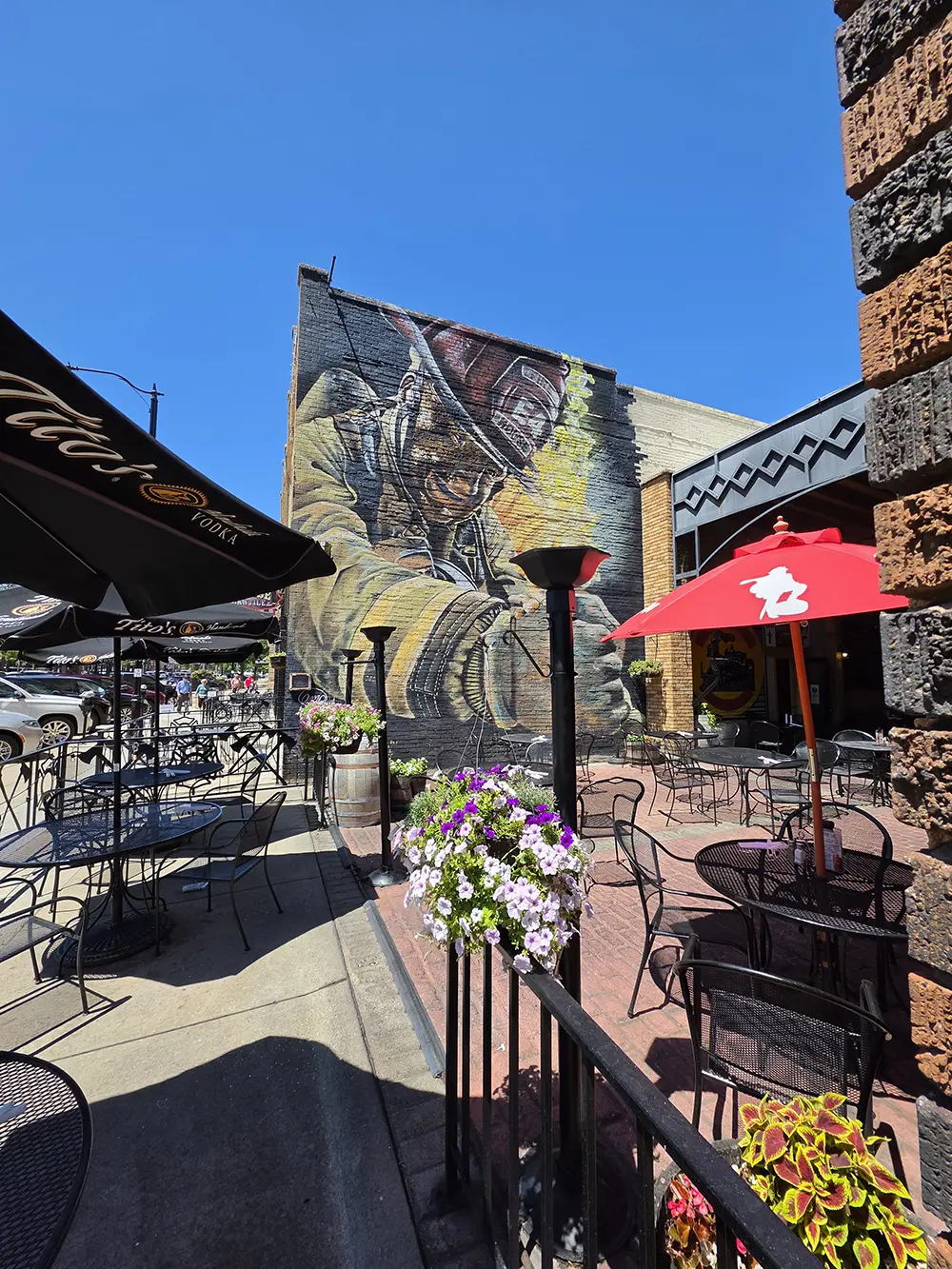
- Muriel at Entrance to Firehouse Brewing on Patio
-
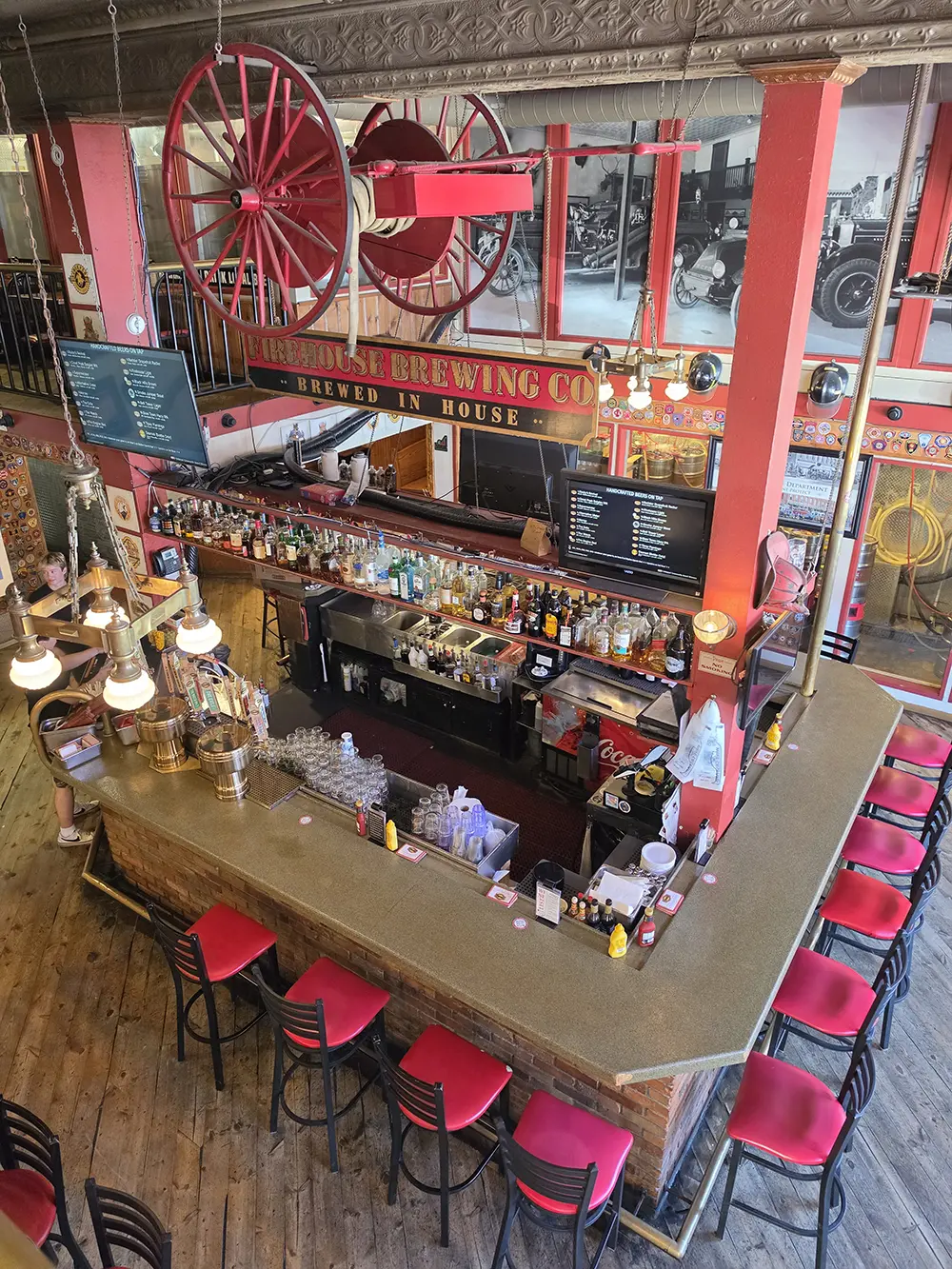
- Bar from upstairs seating looking down I hope
-
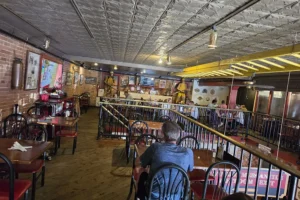
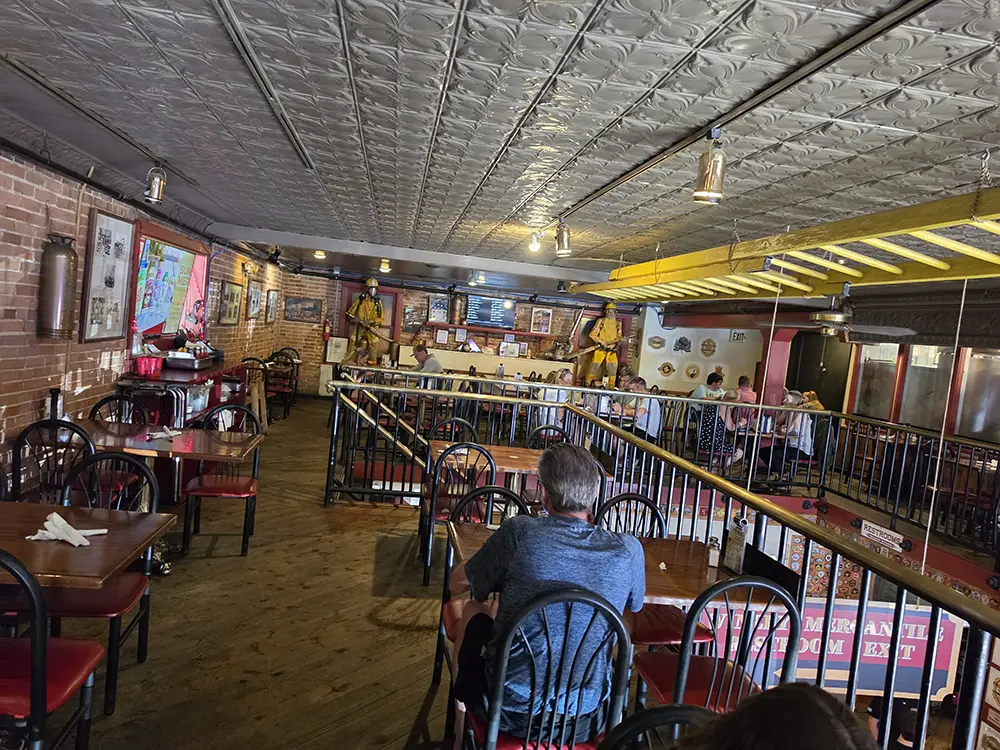
- Upstairs Seating at Firehouse Brewing, Rapid City South Dakota
-
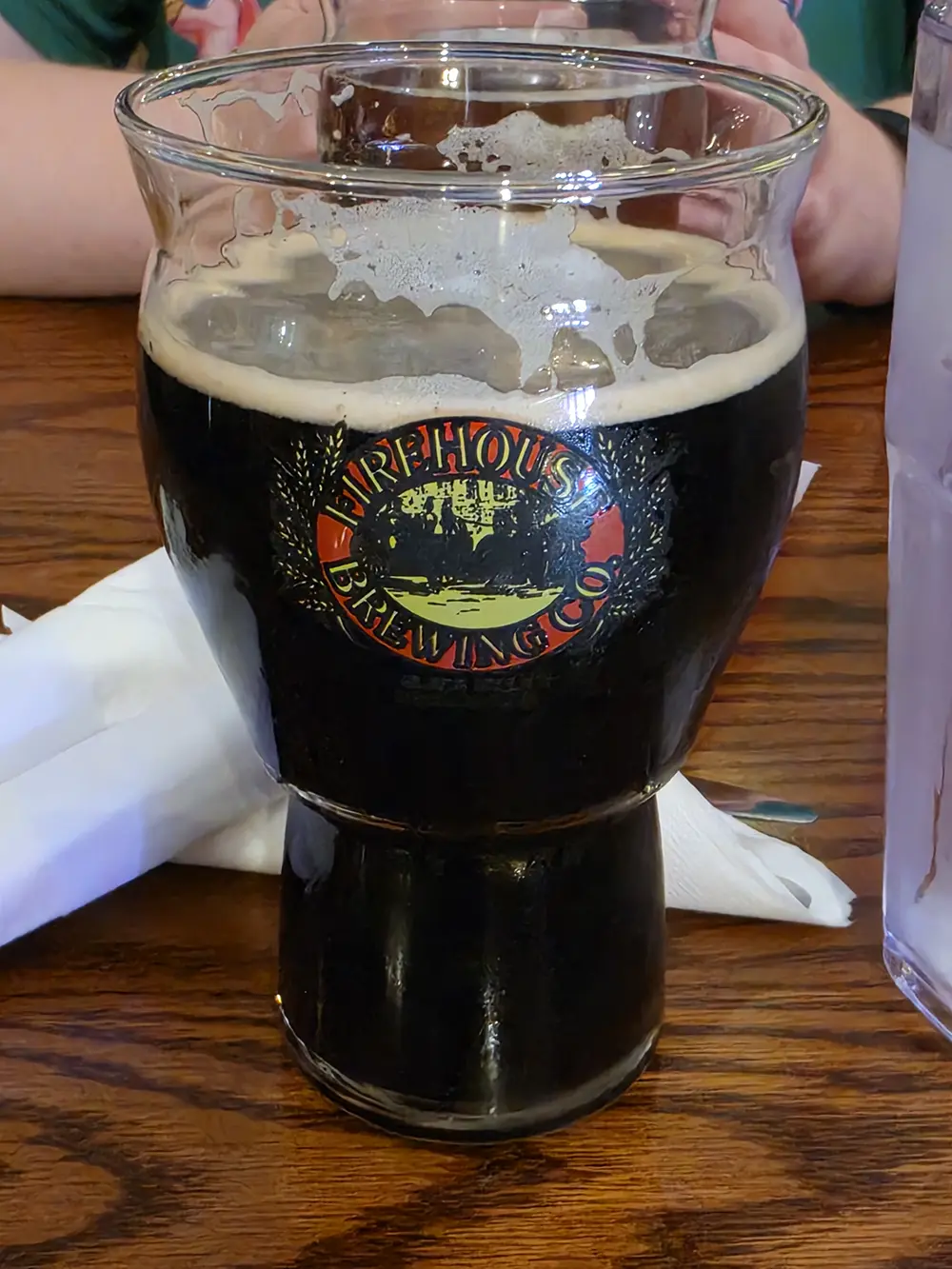
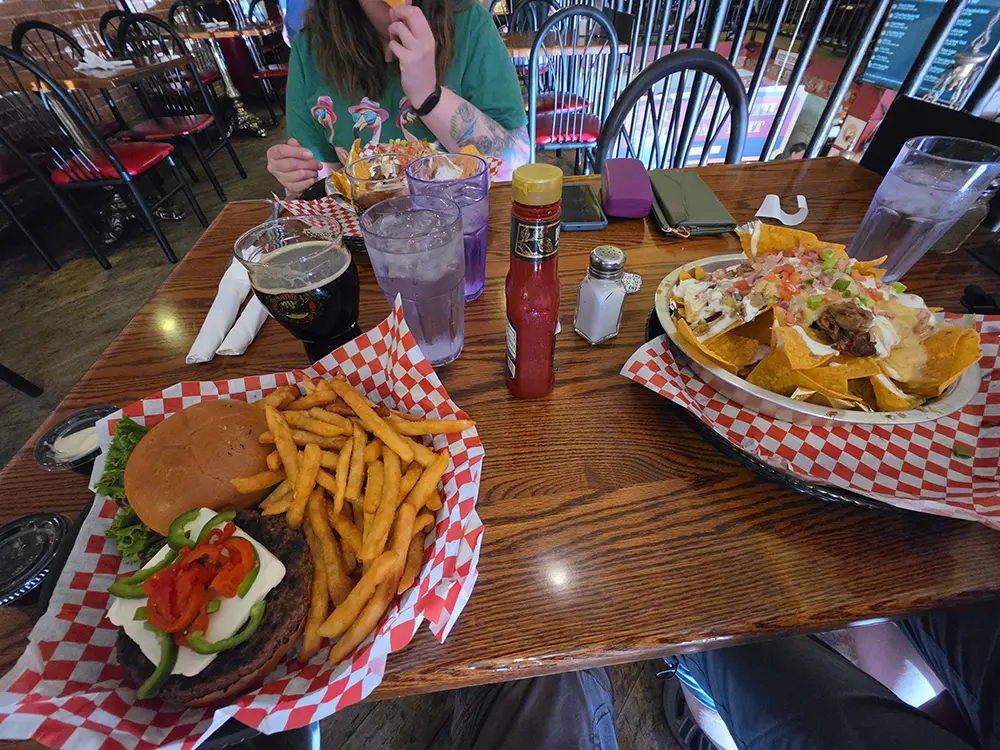
- Irish Stout
-
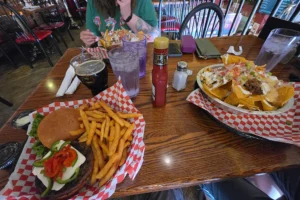
- Pork Nachos
-
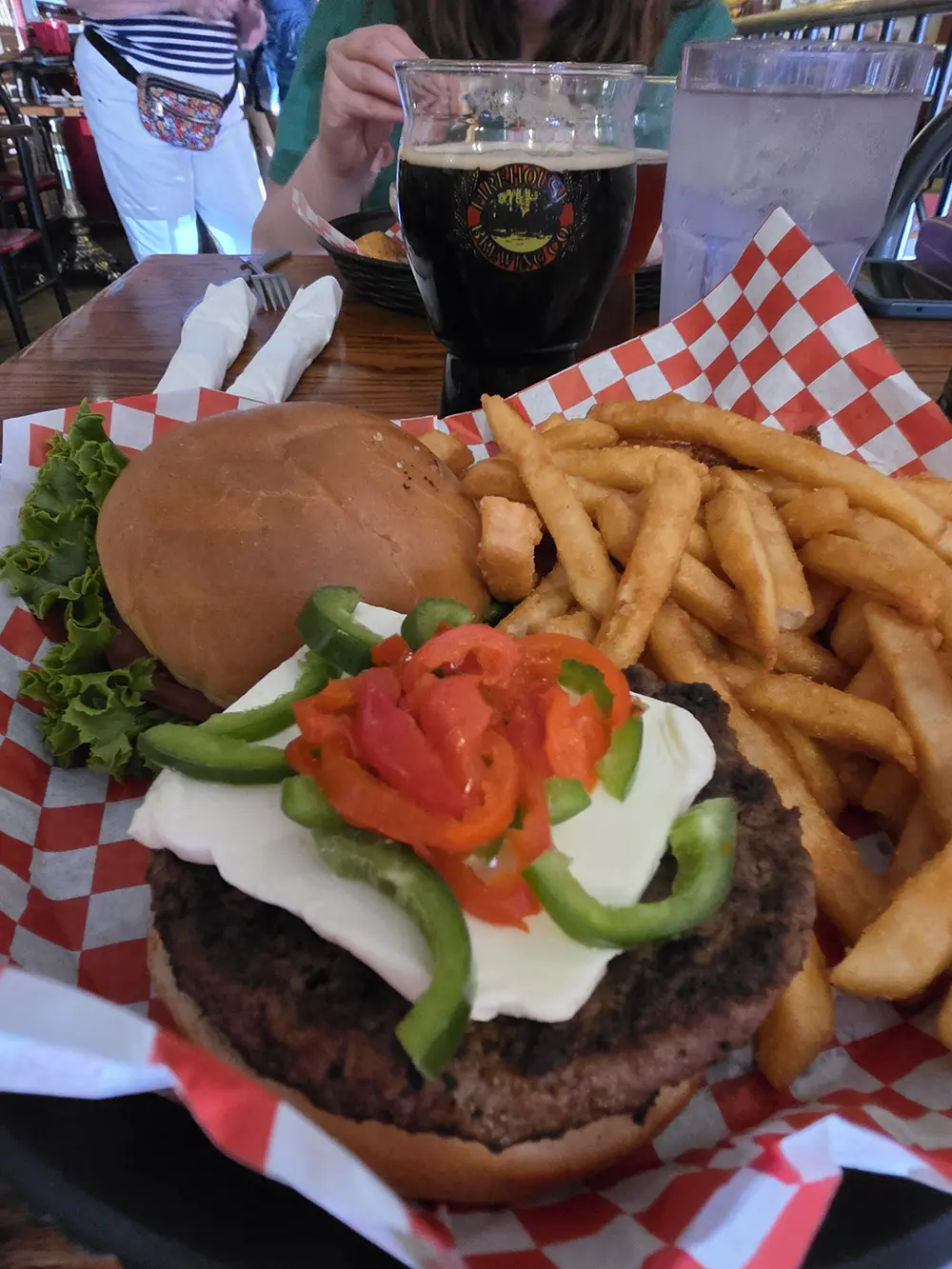
- Cricket Burger
-
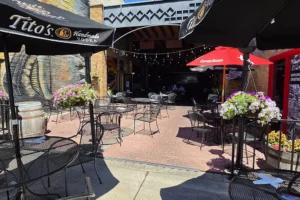
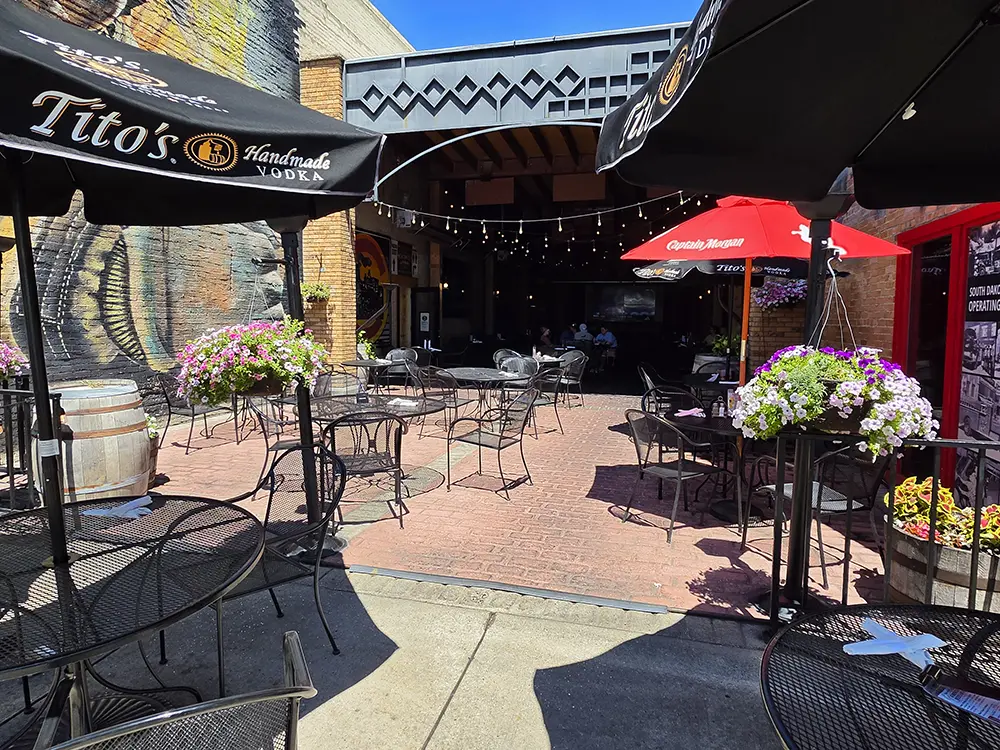
- Outside seating with a cover area, I have been here in the fall with a fire in the firepit.
Lunch in Rapid City: Firehouse Brewing Company
From Wall it’s about an hour west on I-90 to Rapid City, where we pointed ourselves at the Firehouse Brewing Company on Main Street — South Dakota’s first brewpub and its oldest operating brewery, pouring since December 1991 inside the city’s original 1915 firehouse. The building is on the National Register of Historic Places and still wears its history proudly: the original fire pole, brass fittings, ladders, and hundreds of first responder patches covering the walls. When the fire department moved out in 1975 the building could have quietly died; instead a group of locals took sledgehammers to it in September 1991 and opened a brewery 93 days later, which is faster than most people remodel a bathroom.
The Beer: ★★★★
I had the Irish Stout and sampled the American Stout, and I’m giving both four stars without hesitation. The Irish Stout was smooth and roasty with that proper dry finish — the kind of pint that makes you forgive a 101-degree morning. The American Stout brought more hop bite and bolder roast. After four hours of hiking through a landscape actively trying to dehydrate me, these were medicinal. Practically prescription-grade. Fitting, given we’d just come from a drugstore.
The Food: A Mixed Bag
- Pork Nachos — ★★: Two of our party ordered these and the kindest word at the table was “bland.” Nachos are not a complicated instrument. Season the pork, folks. The Badlands had more flavor, and the Badlands are made of rock.
- African Cricket Burger — ★★★½: Yes, I ordered a burger made with crickets 🙂 believe that? More to come because at my age you take your adventures where you find them and my knees have vetoed most of the other kinds. Verdict: genuinely good — solid texture, decent flavor — but it needed more zing. A bolder sauce or a hit of heat and this thing would sing. As it stands, it hums politely. Now the fries a different story, the were ok, I’ve had worst and better such as the Lake’s Inn in Michigan, an old parting stomping ground of mine in the 70’s, now a good restaurant with a lake view of Lake Nepessing.
The Winery: Firehouse Wine Cellars
Done eating, we wandered next door to the Firehouse Wine Cellars tasting room — same owners, separate operation, started in 2014 and now producing small-batch wines that have collected over a hundred international medals. I stuck to my stout convictions, but the two wine tasters in our group declared the pours excellent and backed the claim with cash, leaving with a couple of bottles. When people vote with their wallet on vacation, that’s a five-star review in my book.
From there we pointed the truck toward home, sunburned, well-fed (mostly), and carrying wine we didn’t plan on buying — which is how you know it was a good day.
Final Word
Badlands National Park is proof that “bad” is a matter of perspective. Bad for farming, bad for shade, bad for anyone attempting the Castle Trail at noon in July. But for hikers who start early, photographers who chase the light, campers who like their nights dark and their neighbors bison — it’s about as good as public land gets. Add free ice water at Wall Drug and a four-star stout in a century-old firehouse, and you’ve got yourself a proper Western day: equal parts wonder, sweat, and questionable lunch decisions.
Go early. Carry water. Order the stout. Skip the nachos.